
Food Truck vs Restaurant in 2025
The food business is one of the most exciting industries to enter in 2025, especially for those exploring the food truck vs restaurant route. But for new entrepreneurs, there’s one question that always comes up:
Is a Food Truck Better Than a Restaurant? Which One to Start First?
Both options can lead to success, but they follow very different paths. One offers mobility and lower startup costs. The other offers a fixed location and long-term brand potential. To make the right choice, you need to understand how each business works — and how it fits with your goals, lifestyle, and budget.
Over the past decade, food trucks have become more than just a trend. They are now a smart way to test new ideas, enter busy markets, and build a loyal customer base without the high costs of opening a full restaurant. On the other hand, restaurants are still powerful for those looking to create a strong brand, attract consistent foot traffic, and grow into a multi-branch business.
Why This Guide Matters
- Many people lose time and money by choosing the wrong format for their goals
- Social media and local events now make food trucks profitable and visible faster than ever
- Starting the right way can help you scale into a national brand or franchise
This blog is your full roadmap. It’s built for:
- First-time food business entrepreneurs
- Restaurant owners considering mobile options
- Investors or consultants seeking a scalable model
- Anyone looking for a low-risk, high-growth food business idea
You’ll get:
- Real startup cost comparisons
- Global and Malaysian case studies
- ROI breakdowns, daily operations, legal tips, and marketing tactics
- A final decision-making tool to guide your next step
By the end of this blog, you’ll have the full picture — not just theory, but real-world examples and strategic answers to help you launch with confidence.
Why Entrepreneurs Are Debating Food Truck vs. Traditional Restaurants Startups
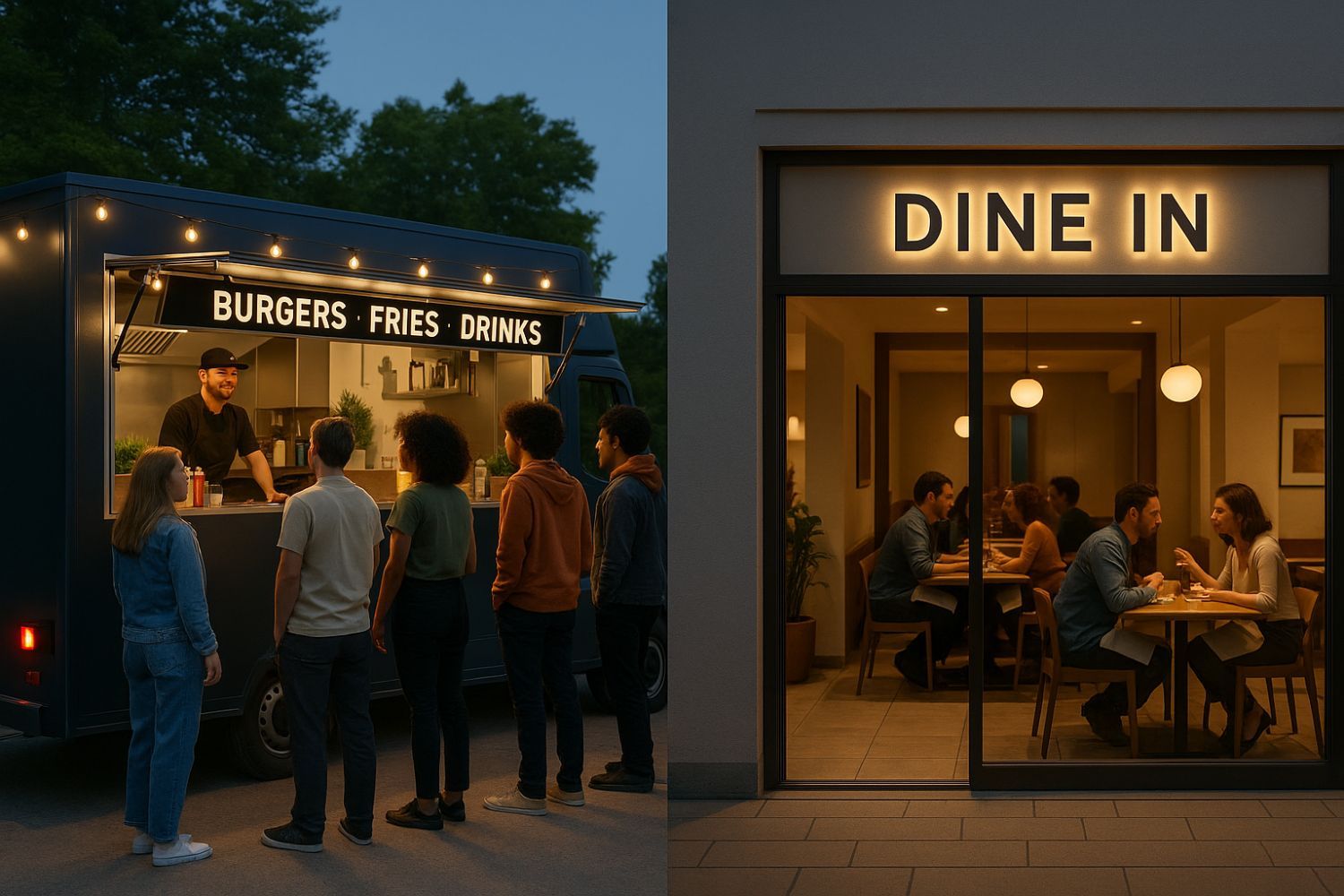
- The startup cost gap between trucks and restaurants is massive, which makes food trucks more attractive to new entrants
- Urban zoning, rental inflation, and flexible customer habits have increased interest in mobile kitchens
- Investors are backing scalable, low-risk ventures — and food trucks often offer better testing opportunities with less upfront risk
The food truck industry is no longer just street-side. Many successful brands today started from mobile units and evolved into permanent businesses with national reach. On the other hand, restaurants continue to provide a full-brand experience, customer loyalty, and year-round service when done correctly.
Success Stories from Both Sides
myBurgerLab – Malaysia
Founded in 2012 in Petaling Jaya, myBurgerLab is one of Malaysia’s top restaurant startup stories. They focused on handcrafted burgers with creative recipes, using social media to grow a cult-like community. The brand scaled to multiple outlets across Malaysia.
- Origin: Single-location brick-and-mortar store
- Strategy: Local flavors, online buzz, strong youth engagement
- Scaled through: branch expansion and collaborative marketing
- Known for: charcoal buns, limited edition menus
The Halal Guys – From Cart to Global Chain
The Halal Guys started in 1990 as a street food cart in New York City, serving affordable halal food to taxi drivers. Their simple menu, fast service, and consistent quality helped them build a cult following, leading to international expansion.
- Origin: Food cart in NYC
- Scaled into a multi-country restaurant franchise
- Known for: chicken over rice, white sauce, loyal fan base
- Business model: low-cost testing, proven demand, then scale
Core Differences Between a Food Truck and a Traditional Restaurant
How the Business Models Operate
Food trucks and restaurants function through two different business structures. A food truck is a self-contained mobile kitchen, while a restaurant is a permanent operation based on location and ambiance.
- Food trucks operate with lean teams and faster setup times
- Restaurants involve property, permits, renovations, and larger staffing
- Food trucks are built for flexibility; restaurants are built for stability
While food trucks can launch quickly and change directions based on demand, restaurants require more upfront planning but offer a stronger long-term presence.
Reaching Your Customers — Who Goes Further?
Food trucks meet customers where they are — at events, offices, or street hubs. Restaurants rely on customers finding them. Both models use location differently to reach and retain diners.
- Food trucks have mobile flexibility and event-based traffic
- Restaurants thrive on routine visits and fixed marketing zones
- Each requires a different approach to neighborhood selection and customer targeting
The food truck model allows early entrepreneurs to experiment with locations without permanent risk. Restaurants, however, offer deeper consistency once the location proves viable.
Where the Industry Is Headed in 2025
Consumer behavior has shifted. Quick service, mobility, and digital convenience now shape how people eat. In response, both models are evolving.
- Food trucks are more accepted and scalable than ever before
- Restaurants are blending with delivery-only kitchens and modular layouts
- Customers now expect great food with speed and tech-enabled service
This trend means entrepreneurs must think beyond tradition and consider what today’s diners value most — access, trust, and convenience.
Blending Models: Hybrid and Ghost Kitchen Expansion
Some of the most innovative food businesses in 2025 are combining the best of both worlds. For example:
- Food trucks are using shared prep kitchens to expand menus
- Restaurants are launching food truck spin-offs to test new concepts
- Hybrid models allow small brands to scale without heavy infrastructure
This shift opens new pathways for growth — whether you’re starting mobile or staying grounded.
What the Customer Actually Experiences
Beyond operations, customer expectations are different. Food trucks promise quick bites, novelty, and informality. Restaurants offer space, service, and curated moments.
- Food trucks appeal to crowds looking for variety and fast service
- Restaurants create comfort, trust, and loyalty through ambiance
- The emotional and sensory experience in each space can drive repeat visits
Understanding this difference helps you design your business not just around logistics — but around how you want people to feel.
Pros & Cons of Starting a Food Truck First
Why Food Trucks Are Easier to Start
One of the main reasons many entrepreneurs consider food trucks first is because of the lower financial barrier. Unlike traditional restaurants, you don’t need to lease property or renovate an indoor space. Most of your budget goes toward the vehicle, kitchen setup, permits, and branding.
- Setup costs range between USD 50,000 to 150,000, depending on region and equipment
- Most food trucks operate with just 2 to 4 people
- You can launch in weeks instead of months
This lean setup lets new business owners get started faster and learn by doing.
Go Where the Customers Are
Food trucks offer location flexibility. Instead of waiting for customers to find you, you go to them. That makes it easier to test different areas, tap into events, and serve busy office zones or late-night crowds.
- Choose your weekly routes based on traffic, trends, or weather
- Park near offices during lunch, events in the evening, or neighborhoods on weekends
- No long-term lease means you’re not tied to one slow location
If one area doesn’t work, you move. That freedom is powerful for first-time business owners.
Start Small, Learn Fast
Many food truck owners use their mobile setup as a testing lab. You can try limited menus, gather feedback quickly, and adapt based on what works. This approach lowers the risk of launching a full menu in a permanent restaurant with no data.
- Create a few strong items before expanding
- Build a following through consistent location and quality
- Learn real customer preferences before committing to scale
This early insight becomes your advantage if you later open a restaurant or scale to multiple trucks.
The Tough Side of Running a Food Truck
Running a food truck has its own challenges. You’re dealing with more than just food — you’re also responsible for vehicle maintenance, daily logistics, and weather risks. Each city may have different permits or restrictions that limit your hours or parking zones.
- Licensing varies across cities or districts
- Hot days or rain can affect foot traffic
- Equipment breakdowns can stop daily sales
These aren’t deal-breakers, but they do require planning and flexibility.
When a Food Truck Might Not Be Enough
A food truck isn’t the right choice for every food business. If your vision depends on fine dining, table service, or large-scale production, a mobile setup might limit you.
- Limited menu space and storage
- No dining atmosphere or long seating time
- Capacity issues during peak demand
Some food truck owners eventually outgrow the format and move into hybrid or permanent locations.
Who Should Consider Starting with a Food Truck
Food trucks are ideal for people who want to start lean, learn fast, and move freely. They’re especially well-suited for chefs with creative ideas or new entrepreneurs with limited capital.
- First-time business owners testing a concept
- Culinary creatives building their personal brand
- Anyone who wants to avoid the risk of fixed-location investments
In many ways, a food truck is not just a business — it’s a moving launchpad.
Pros & Cons of Starting a Restaurant First
What a Full Restaurant Allows You to Build
Opening a restaurant gives you more control over your brand and space. With a permanent location, you can create an experience that builds loyalty over time. Customers associate your space with trust, quality, and consistency.
- You can offer full dining service and a deeper customer experience
- There’s room for ambiance, theme, and brand storytelling
- Restaurants help build long-term recognition within a neighborhood
For entrepreneurs focused on establishing a long-lasting name or vision, restaurants provide the setting to do just that.
The Price You Pay to Get Started
While the brand potential is strong, restaurants require a higher investment to launch. Startups need to account for location lease, furniture, kitchen equipment, and trained staff.
- Typical startup costs range from USD 250,000 to 500,000 and above
- You’ll need to manage monthly rent, utility bills, and long-term contracts
- Hiring and training staff takes more time and cost than food truck models
If you’re not prepared for this level of commitment, the setup phase can quickly become overwhelming.
The Power of One Consistent Location
A fixed address has advantages. It creates routine. Your customers know where to find you, and you can build relationships within your local community.
- Great locations offer daily foot traffic and dependable business
- You can build relationships with suppliers and local marketing networks
- Larger kitchens allow for wider menus, more seating, and special offerings
Being known in one spot also makes you easier to rank on search engines, food apps, and review sites.
Challenges You Must Plan For
With higher investment comes higher risk. Restaurants face daily competition and must constantly deliver quality to stay ahead. If location or service slips, customer loss can be quick and hard to recover from.
- Restaurants need consistent marketing and operations to avoid downtime
- Competitive pricing in the area can affect profitability
- Fixed costs like rent and utilities don’t drop even if sales dip
Without a steady strategy, overheads can drain your budget quickly.
Who Should Choose a Restaurant First
This model suits entrepreneurs with a clear concept, long-term vision, and enough capital to sustain setup and growth. It’s ideal for those who want to:
- Deliver a premium dining experience
- Operate with full control of a branded space
- Invest in a business that reflects their culinary identity and customer values
If you have a bold idea and the resources to back it, a restaurant gives you the foundation to build something enduring.
Startup Cost Comparison – Food Truck vs. Restaurant in 2025
What It Takes to Launch a Food Truck
Starting a food truck is often more affordable than opening a full restaurant. In many countries, entrepreneurs are launching mobile food businesses with a starting investment of around USD 20,000. This covers basic equipment, a secondhand vehicle, and minimal branding. As you scale, costs can rise based on customization and compliance needs.
- Entry-level used food trucks: USD 20,000 to 40,000—costs can vary depending on your region
- Professionally fabricated trucks with custom kitchens: USD 50,000 to 100,000
- High-end setups with commercial-grade equipment: USD 100,000 to 150,000+
This model is ideal for entrepreneurs looking to test the market, build a brand, or enter the food business without the high pressure of full real estate investment.
The Real Cost of Opening a Restaurant
Restaurants involve significantly more capital. From location lease and renovations to kitchen installation and team recruitment, the setup requires long-term commitment and upfront spending.
- Small to mid-sized restaurants: USD 200,000 to 400,000—costs can vary depending on your region
- Larger or high-end concepts: USD 500,000 and above
- Rent, furniture, equipment, and pre-opening salaries all contribute to the cost
In some cities, even a basic sit-down restaurant requires at least six months of planning and funding before launch.
Expenses You May Not See Coming
Unexpected costs can cause setbacks if they’re not accounted for early. Whether mobile or fixed, these can appear during setup or after opening.
- Food trucks may face mechanical breakdowns, generator issues, or last-minute regulatory fees
- Restaurants often face construction delays, missed permit deadlines, or last-minute inspections
- Across both models: software, staff onboarding, maintenance, and utility deposits are easy to overlook
Many successful operators set aside 10 to 20 percent of their total budget to handle these unpredictable issues.
Tools, Licenses, and Launch Marketing
Your setup isn’t complete without tools, permits, and brand visibility. These essentials vary by country and region but are non-negotiable for opening day.
- Equipment: cooktops, fryers, freezers, POS systems, water supply, prep stations
- Permits: food handler licenses, health inspections, fire safety, and local business registration
- Marketing: menu design, brand visuals, signage, launch offers, social media and website setup
Food trucks often spend more on vehicle visuals and mobility tools. Restaurants invest more in ambiance, interior branding, and customer flow.
How to Plan Your Budget Based on Business Type
Deciding which model fits your finances depends on your available capital and business goals. A food truck gives you faster entry and flexibility. A restaurant delivers structure and long-term brand growth — but requires deep funding.
- Starting with USD 20,000 to 50,000: Mobile food truck or compact trailer—costs can vary depending on your region
- USD 80,000 to 150,000: Higher-end food truck or delivery-first concept
- USD 250,000 to 500,000 and above: Restaurant with full kitchen, staff, and seating
Plan for success by building a budget that includes core setup, operational runway, and a margin for the unknown.
Profit Margins & Revenue Potential – Which Is More Profitable First?
Comparing Gross and Net Profit Potential
One of the key questions for any food business is this: how much profit can you expect, and how fast? Both food trucks and restaurants can be profitable, but their margin structures are quite different.
- Food trucks often have gross margins of 50% to 65% and net profits of 10% to 25%, depending on pricing, location, and volume
- Restaurants may have gross margins of 60% to 70%, but their net profits often fall between 5% and 10% due to high fixed costs
- The difference comes down to overhead — trucks have lower rent, utilities, and staffing
This means a food truck can become profitable faster, while restaurants usually take longer to break even but may generate larger total revenue over time.
How Revenue Flows Throughout the Year
Food trucks are highly affected by seasonal demand and weather conditions. Many operators rely on warmer months, tourist seasons, or large event schedules. Restaurants, on the other hand, benefit from being open all year and less impacted by the weather.
- Food trucks earn more during festivals, summer weekends, and lunch hour in office zones
- Revenue may drop during rainy seasons, cold weather, or off-peak months
- Restaurants generate more stable, year-round income but must maintain sales to cover fixed costs
Understanding these cycles helps you plan cash flow, set aside buffers, and manage operating hours more strategically.
When a Food Truck Becomes a Restaurant
Some of the most successful restaurant brands started as food trucks. These trucks served as testing grounds where owners refined menus, built a following, and proved demand before making a bigger investment.
Eggslut Los Angeles
Eggslut began as a food truck in Los Angeles, offering gourmet egg sandwiches. Its popularity skyrocketed thanks to social media, long queues, and word of mouth. Eventually, the brand opened permanent restaurants in the U.S., Asia, and the Middle East.
- Built loyalty and menu recognition through mobile sales
- Scaled into global markets using proven customer demand
- Continued leveraging the “food truck origin story” as part of branding
- This model shows how a lean, focused start can turn into a strong restaurant business with much lower risk.
What Drives Profit in the First 12 Months
The first year is critical for both models. Profit depends on careful planning, menu control, smart sourcing, and good local marketing.
- Offer a focused menu with strong margins
- Use location strategy to maximize daily traffic
- Build upsells into your menu (combo meals, drinks, premium items)
- Monitor labor, food costs, and daily sales patterns from day one
If done right, both food trucks and restaurants can break even within 6 to 18 months — but trucks often get there faster due to simpler operations.
Flexibility & Scalability – Growing a Food Business Over Time
How Food Trucks Expand into Fleets or Permanent Spots
One of the biggest advantages of starting with a food truck is the flexibility it offers for expansion. Once your first truck is profitable, adding a second or third becomes more manageable. Some owners choose to run multiple units, while others convert their food truck into a fixed restaurant.
- Trucks can be operated across different city zones or event circuits
- Expansion costs are lower than opening new restaurants
- Proven demand in one area helps reduce risk when launching new units
Kogi BBQ – USA
Kogi BBQ started in Los Angeles as a single food truck serving Korean-Mexican fusion tacos. It quickly gained a massive following through Twitter and word-of-mouth. The brand scaled by adding more trucks and later introduced fixed-location concepts and merchandise.
This kind of expansion proves that food trucks can lead to long-term brand growth without the risk of opening multiple restaurants early on.
Restaurant Growth Through New Revenue Streams
Restaurants scale in different ways. Instead of adding vehicles, they often grow by opening new branches, adding private dining options, or tapping into delivery and catering services. These options help increase volume and reach new customer segments.
- Delivery apps help expand reach without more floor space
- Catering services turn the kitchen into a multi-use revenue center
- Branch expansion strengthens brand presence in key regions
While restaurant expansion involves more investment, it offers more long-term brand equity when done correctly.
Franchising: Which Model Is Easier to Replicate?
Both business models can be franchised — but food trucks often scale faster due to lower capital requirements and simpler operations. Once branding, systems, and menus are locked in, it’s easier to hand off a truck to a trained operator than replicate a full restaurant from scratch.
- Food trucks are easier to duplicate across cities and events
- Restaurant franchises need real estate scouting, full kitchen training, and high operational standards
- Food trucks attract franchisees looking for lower-risk business entry
However, restaurants can build stronger customer trust and long-term relationships, which benefits premium franchise models in the long run.
What to Consider Before Scaling
No matter which business you choose, scaling requires structure. A strong foundation — including processes, team management, and customer experience — is critical before expanding.
- Create detailed SOPs (standard operating procedures) for daily operations
- Build training systems to ensure quality across all locations or trucks
- Invest in brand consistency across menus, packaging, and visuals
- Plan your growth in phases — test one new unit before launching many
Whether you choose to grow through mobility or branches, your ability to maintain quality while scaling is what separates short-term success from long-term sustainability.
Target Audience & Market Fit – Which Option Suits Your Community?
Where Food Trucks Perform Best
Food trucks are designed for movement — which means they thrive where crowds naturally gather. If your area has festivals, corporate parks, universities, or nightlife zones, a food truck could perform extremely well with minimal marketing effort.
- Office lunch zones, tourist districts, and university campuses bring high foot traffic
- Music festivals, markets, and weekend events allow fast exposure to hundreds or thousands of new customers
- Food trucks are ideal for impulse buys, fast service, and low-cost meals on the go
Their strength lies in flexibility. You can experiment with different routes and time slots until you find your best-performing spots.
Where Restaurants Fit Naturally
Restaurants work best in areas where people expect to sit, dine, and return regularly. This includes neighborhoods with residential density, established shopping districts, and mixed-use developments with pedestrian access.
- Dining hubs and mall districts provide steady foot traffic and high dine-in intent
- Suburban and family zones encourage routine visits and repeat business
- Restaurants benefit from walk-ins, birthdays, business meetings, and evening meals
Unlike food trucks, restaurants rely more on being “discovered” and trusted — which makes location, signage, and convenience extremely important.
How to Validate Your Market Before You Launch
Whether you’re planning a food truck or a restaurant, doing basic market research helps reduce risk. You don’t need a research firm — just simple, hands-on tactics to understand your area’s food demand.
- Walk your target zones during peak hours and observe behavior
- Check how busy existing food trucks or restaurants are nearby
- Use Google Maps and Instagram to analyze what’s trending and what’s missing
- Run online surveys or soft-test your concept at a local event or pop-up
- Talk to suppliers and delivery partners — they know what’s selling where
This kind of pre-launch validation helps you avoid choosing the wrong location or misjudging your customer’s budget, habits, or taste preferences.
Matching Your Concept to Local Demand
A great food business fits into its environment. Even the best idea can fail if it’s in the wrong location or targeting the wrong customer base.
- A high-end fine dining concept in a college zone might struggle
- A food truck selling novelty snacks may not work near luxury office buildings
- A family-style restaurant with long service time may not attract fast-paced commuters
Instead of building your concept in isolation, shape it around real customer needs. Start with the people — then design the product.
Legal Requirements & Compliance – What to Know Before Starting
What Food Trucks Need to Operate Legally
Running a food truck involves more than just cooking and driving. You’ll need proper licenses, permits, and health compliance documents to operate safely and legally — and these often vary by city, state, or country.
- Most cities require a mobile food vendor license or equivalent registration
- Health departments usually inspect your food truck before granting approval
- You may need separate permits for each city or region where you plan to operate
- Trucks must often meet specific requirements for water supply, waste disposal, fire suppression, and food-safe surfaces
In some locations, you also need a parking permit or permission to sell at public events. Operating without the right paperwork can result in heavy fines or being shut down.
What Restaurants Must Prepare For
Opening a restaurant involves a more detailed compliance process. Since the business is tied to a fixed location, it must meet zoning rules, building safety standards, and ongoing health inspections.
- First, confirm the location is zoned for commercial food service
- Submit your kitchen and interior plans for approval before renovations begin
- You’ll likely need food handler certifications for all staff and fire department clearance for your kitchen
- Many governments also require business signage approval, trash management plans, and pest control contracts
Unlike food trucks, restaurants must stay compliant with a long list of ongoing inspections — sometimes on a monthly or quarterly basis.
Dealing With Red Tape and Delays
Whether you’re launching a food truck or restaurant, the legal setup process can take longer than expected. Many entrepreneurs make the mistake of underestimating timelines — especially when approvals are needed from multiple agencies.
- Prepare copies of all business documents, food safety plans, and identity proofs in advance
- If you’re unsure of requirements, visit your local council or licensing board before signing a lease or buying a truck
- Watch out for “grey zones” — like whether you can use a shared kitchen for food prep or park near certain venues
One delay in paperwork can push your launch back by weeks or even months. Staying organized will help keep things on track.
Why Legal Setup Can Make or Break Your Launch
Starting your food business without the proper legal foundation can damage your brand, delay your launch, or invite penalties. More importantly, legal compliance builds customer trust — especially when dealing with food safety and public space.
- It allows you to participate in festivals, work with delivery platforms, and scale with confidence
- It protects you from liability in case of customer complaints or accidents
- It shows investors, landlords, and partners that you’re serious and professional
Before you cook your first meal, make sure your paperwork is complete. It’s one of the smartest moves you can make.
Branding & Marketing Differences – Building Visibility with Each Model
How Food Trucks Build a Buzz
Food trucks often rely on fast, low-cost, and highly engaging marketing tactics. Because they’re mobile, their presence shifts daily — making real-time updates and visual content essential for keeping customers informed and engaged.
- Social media platforms like Instagram, TikTok, and Twitter are ideal for quick updates
- Posting daily locations, menu items, and behind-the-scenes content drives engagement
- Food trucks often join local events, festivals, and food parks, which naturally draw high foot traffic and social media shares
Most trucks also benefit from word-of-mouth marketing. A good review or customer post can travel quickly, especially when the food is unique or visually appealing.
Restaurant Branding Through Structure and Trust
Restaurants focus more on building a long-term brand presence. While social media still matters, their strategy is more structured and multi-channel. The physical environment — design, service, and ambiance — also becomes part of the marketing message.
- A professionally designed website, Google Business listing, and strong SEO presence help drive search traffic
- Online reviews on platforms like TripAdvisor, Google, and Yelp carry weight in customer decisions
- Restaurants may also invest in local advertising: flyers, banners, press features, and paid digital ads
Branding in a restaurant is often tied to trust. Interior decor, staff uniforms, printed menus, and customer experience all reinforce the business identity over time.
One more example of a food truck turning into a national brand
Ms. Cheezious (USA)
Ms. Cheezious started in Miami, Florida, as a gourmet grilled cheese food truck in 2010. Known for its comfort food twists, quirky branding, and social media-friendly menu, the business quickly gained local and national attention. Within two years, they expanded into a full-service restaurant while keeping their food truck active for events and catering.
- Built a strong following using Twitter and Facebook to announce locations
- Won multiple food truck awards and featured on Food Network’s Eat St.
- Opened a brick-and-mortar location in Miami in response to customer demand
- Continued to use their truck for mobile sales and private bookings
This brand shows how a simple concept with clear online presence and consistent local marketing can successfully scale into a multi-format food business.
Which Model Wins in the Early Marketing Stage?
Food trucks win when it comes to speed, visibility, and cost-effectiveness. Social content is easier to produce, and customers often discover new trucks through organic posts. Restaurants offer more depth and control once branding is developed, but require more time and resources to execute.
- Food trucks are better suited for storytelling, quick updates, and community buzz
- Restaurants focus on structure, consistency, and long-term customer loyalty
- Both models benefit from digital presence — but the approach differs
The right strategy depends on your concept. Food trucks need fast traction. Restaurants need a polished presence. Both must communicate clearly, consistently, and creatively to succeed.
Which Business is Better for First-Time Entrepreneurs?
The Learning Curve: What Beginners Face in Each Model
Starting a food business is exciting — but for first-time entrepreneurs, the learning curve can be steep. Food trucks and restaurants each present different challenges in the early stages, especially when it comes to risk, money, and operations.
- Food trucks offer a simpler structure, lower costs, and faster setup
- Restaurants are more complex and carry heavier financial responsibility
- First-timers in restaurants often face higher stress due to lease obligations and larger teams
For most new owners, the food truck model offers more breathing room. You can make mistakes, learn quickly, and adjust without being locked into a fixed overhead every month.
Using Your First Business to Learn Fast and Adapt
The ability to test and evolve is a major advantage for first-time food business owners. This is where food trucks usually shine.
- Trucks allow you to try new menu items with minimal risk
- You can move to new locations if sales are slow
- Operational feedback is immediate — you see what works and what doesn’t
Restaurants are less forgiving. Once you’ve designed the kitchen, printed menus, and staffed your team, it’s harder to pivot. But the tradeoff is brand depth. Restaurants help beginners learn about service, team leadership, and long-term planning.
If your goal is to gain hands-on experience while minimizing startup mistakes, a food truck offers more flexibility. But if you’re ready for a long-term commitment and have access to reliable capital, a restaurant may be right for you.
First-Time Success Stories You Can Learn From
Cousins Maine Lobster (Los Angeles)
Two cousins launched a single food truck in Los Angeles in 2012, selling authentic Maine lobster rolls. With no previous restaurant experience, they used social media and a clear concept to grow. After appearing on Shark Tank, they expanded into multiple cities and now run a franchise network across the U.S.
- Started small, bootstrapped, and scaled quickly
- Focused on one signature product
- Built trust through brand consistency and mobility
One more example — a local New York spot that expanded into a known restaurant chain.
The Meatball Shop (New York)
Launched in 2010 by two first-time owners, The Meatball Shop in NYC was built around a single food idea — meatballs in every form. They used simple decor, strong branding, and smart local marketing to attract attention and quickly expanded into multiple branches.
Turned one simple food into a scalable brand
- Used press coverage and word of mouth to grow
- Focused on friendly service and menu consistency
Both examples show that with the right idea, first-timers can succeed — whether mobile or fixed.
Which Business Matches Your Personality and Goals?
Before deciding, ask yourself:
- Do you want daily structure or freedom to move?
- Can you handle the pressure of high overhead from day one?
- Do you learn best by trying things live — or through systems and routines?
If you’re resourceful, creative, and willing to adjust quickly, a food truck may be your best teacher. If you value consistency and have a clear brand vision, a restaurant could be the long-term platform you’re looking for.
Which One to Start First Based on Your Goals, Budget & Market
The Big Picture: Budget, Vision, and Risk Tolerance
There’s no one-size-fits-all answer when it comes to choosing between a food truck and a restaurant. The best option depends on your budget, your business goals, and your ability to manage risk in the early stages.
Ask yourself:
- What is your realistic startup capital (not just what you hope to raise)?
- Do you want to test your idea before fully committing, or are you building a brand from day one?
- Are you prepared to take on long-term leases, staffing responsibilities, and higher fixed costs?
If you’re starting small, planning to learn on the go, and want financial flexibility, a food truck is likely the better fit. If you have a well-developed brand vision and stable funding, a restaurant might be the right first step.
Why a Food Truck Might Be Your Ideal Starting Point
Food trucks are especially useful for entrepreneurs who want to move quickly, test ideas, and keep costs under control. They’re more forgiving when it comes to mistakes — and give you the option to relocate if a location doesn’t perform well.
- Lower investment makes it easier to experiment and recover from missteps
- You can build customer loyalty without needing a fixed space
- Great for solo operators or small teams who want control and simplicity
If your goal is to validate your menu, learn operations, or grow organically, a food truck offers a faster and more flexible starting point.
When a Restaurant Is the Smarter First Step
For some entrepreneurs, starting with a restaurant makes more sense — especially if the business is tied to ambiance, full-service dining, or consistent customer experience. Restaurants also support larger menus, team expansion, and multi-purpose spaces.
- Best for well-funded concepts that require dining space or atmosphere
- Supports brand storytelling through location design, service, and interior branding
- Often ideal for entrepreneurs planning to build long-term neighborhood loyalty
If you have a clear concept, a target location with demand, and the financial support to manage higher costs, starting with a restaurant may give you stronger footing.
The Hybrid Model: Test, Prove, Then Scale
Many successful businesses follow a hybrid path: start lean with a food truck, and then grow into a full restaurant once they’ve proven demand and built a loyal following.
The Grilled Cheeserie (USA)
This Nashville-based business began as a food truck offering gourmet grilled cheese sandwiches. It built a strong local audience through events and social media, and eventually transitioned into a popular brick-and-mortar restaurant.
This model allows you to:
- Start with minimal risk
- Gather real customer feedback
- Build brand awareness before making a bigger investment
Whether your end goal is one location or ten, a food truck can act as your launchpad — not just your first step.
Conclusion – Food Truck or Restaurant: Choosing Your Best First Move
Make a Choice That Matches Your Reality
The decision to start a food truck or restaurant should never come down to trends or assumptions. It should reflect your budget, your personality, your market, and your long-term business vision.
Food trucks offer mobility, affordability, and room to learn. They’re perfect for first-time entrepreneurs who want to start lean, test fast, and adapt quickly. But they also come with limitations: weather sensitivity, smaller capacity, and daily logistics.
Restaurants offer structure, scale, and long-term brand potential. They suit those who are ready for a fixed operation, deeper customer experience, and consistent service. But they require higher investment, more planning, and a longer time to break even.
Before choosing, ask yourself:
- Do I need flexibility or stability right now?
- Is my idea something people want to grab and go, or sit down and enjoy?
- Can I afford a learning curve — or do I need instant structure?
This clarity helps you align your launch with both your lifestyle and the market you’re entering.
Build a Business That Can Grow in Any Direction
The most successful food businesses — whether trucks or restaurants — have one thing in common: they’re built to evolve.
No matter where you start, focus on:
- Building a strong brand identity that people remember
- Collecting real customer feedback to improve fast
- Developing operational systems you can scale or hand off later
- Creating a product or experience that fits changing customer behavior
A great food truck today can become tomorrow’s franchise. A small restaurant with solid systems can spin off new formats. Your path may shift — and that’s part of building a future-proof business.
Food Truck or Restaurant — You’re Already on the Right Track
The fact that you’re thinking critically about this choice already sets you apart. Most people jump in without evaluating their goals, budget, or market — but you’ve taken the time to look ahead.
Remember:
- Starting small is not starting weak
- Starting big is not starting wrong
- What matters is that you start with purpose and a plan that fits your reality
Whether your goal is to run a fleet of food trucks, open a small neighborhood restaurant, or build a brand that grows with time — it all starts with making the right first move.
Frequently Asked Questions (FAQs)
What’s cheaper to start — a food truck or a restaurant?
A food truck is generally much cheaper to start, with lower upfront costs and fewer overhead expenses compared to a traditional restaurant.
Are food trucks more profitable than restaurants?
Food trucks can be more profitable in the short term due to lower costs, but restaurants may generate higher long-term revenue if well-managed.
Should I start with a food truck to test my menu?
Yes — food trucks are ideal for testing new concepts, gathering feedback, and adjusting menus before committing to a larger investment.
Can I transition from a food truck to a restaurant later?
Absolutely — many successful restaurant brands started as food trucks and used customer demand to grow into permanent locations.
What are the biggest challenges with owning a food truck?
Common challenges include equipment maintenance, weather disruptions, permit restrictions, and the need to constantly move or relocate.
Do food trucks require the same licenses as restaurants?
Not exactly — food trucks often need different permits for mobility and local operation, but both must meet food safety and health standards.
How long does it take to become profitable with a food truck vs. a restaurant?
Food trucks can become profitable within 6 to 12 months; restaurants usually take 12 to 24 months due to higher setup and operating costs.
Ready to Start Your Food Business? Rozzario Will Help You Do It Right
Whether you’re launching a food truck or building your first restaurant brand, Rozzario provides expert support for business planning, licensing, website development, and marketing strategy — all in one place. We work with food entrepreneurs globally to turn ideas into thriving, scalable businesses.
Book your free consultation with Rozzario today and get expert guidance to choose the right starting point, validate your market, and build a brand that grows.
Schedule Your Free Consultation
