
GREW DIRECT BOOKINGS AND REDUCE OTA RELIANCE
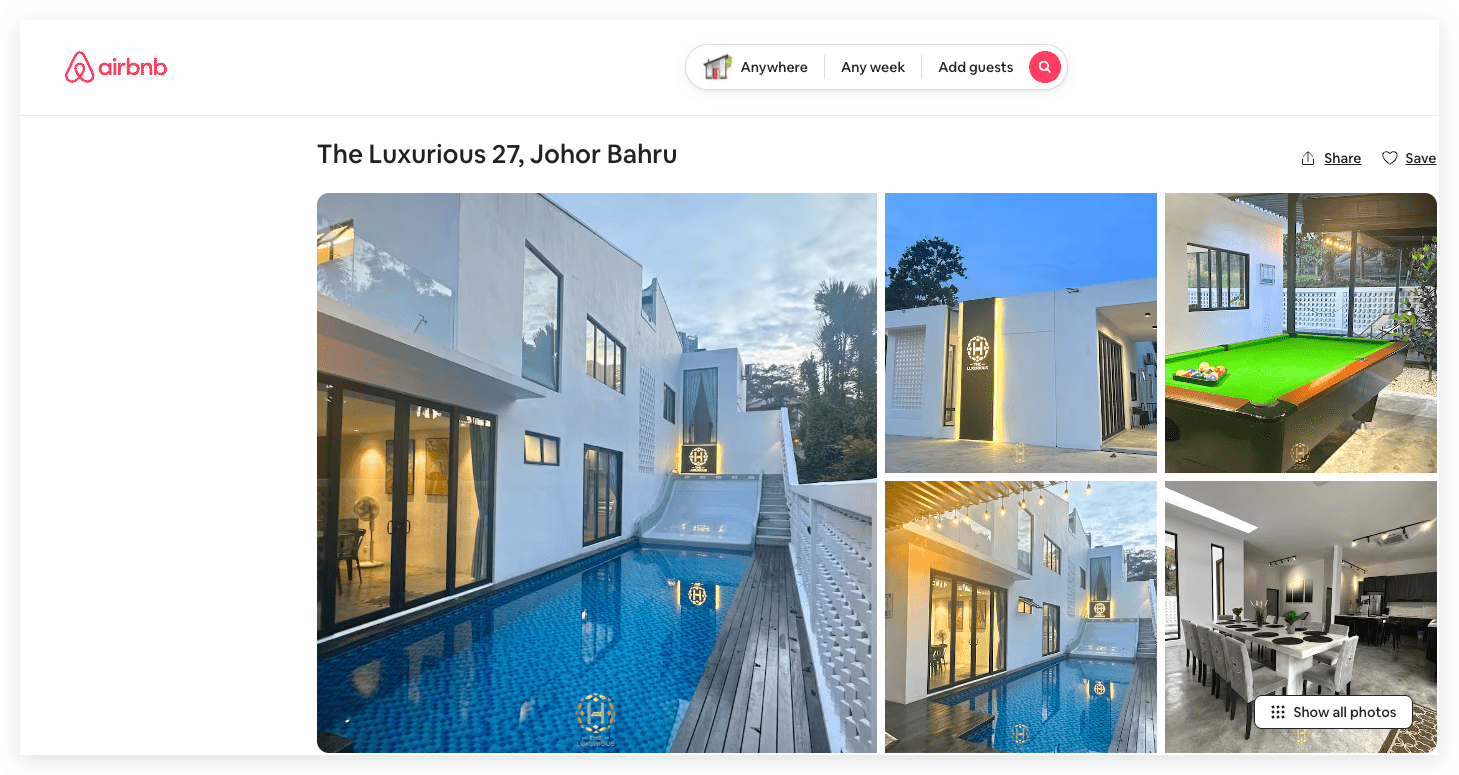
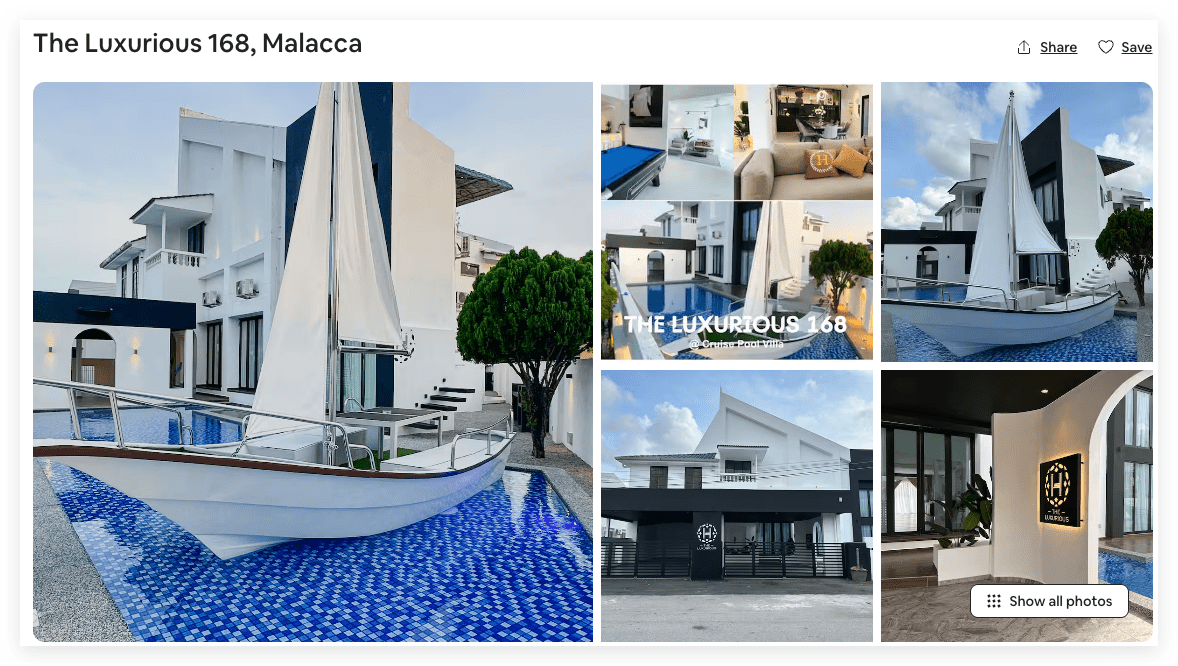
The Luxurious is a premium homestay and short-term rental brand operating across multiple locations in Johor Bahru and Melaka, offering themed luxury villas designed for large families, weddings, corporate retreats, and private celebrations.
Unlike a single-unit Airbnb host, The Luxurious operates as a growing hospitality group — with multiple properties, distinct themes, large guest capacities, and experience-driven positioning. Their villas were already performing well on platforms like Airbnb, Agoda, Booking.com, and Trip.com, generating steady occupancy and strong guest reviews.But like many fast-growing homestay and short-term rental operators in Malaysia, the business model was heavily platform-dependent.
Luxurious Homestay Business Position Before Engaging Professional Homestay Marketing Agency
Before Rozzario came in, The Luxurious homestay had:
- ✅ Strong marketplace presence (Airbnb, Agoda, Booking, Trip.com)

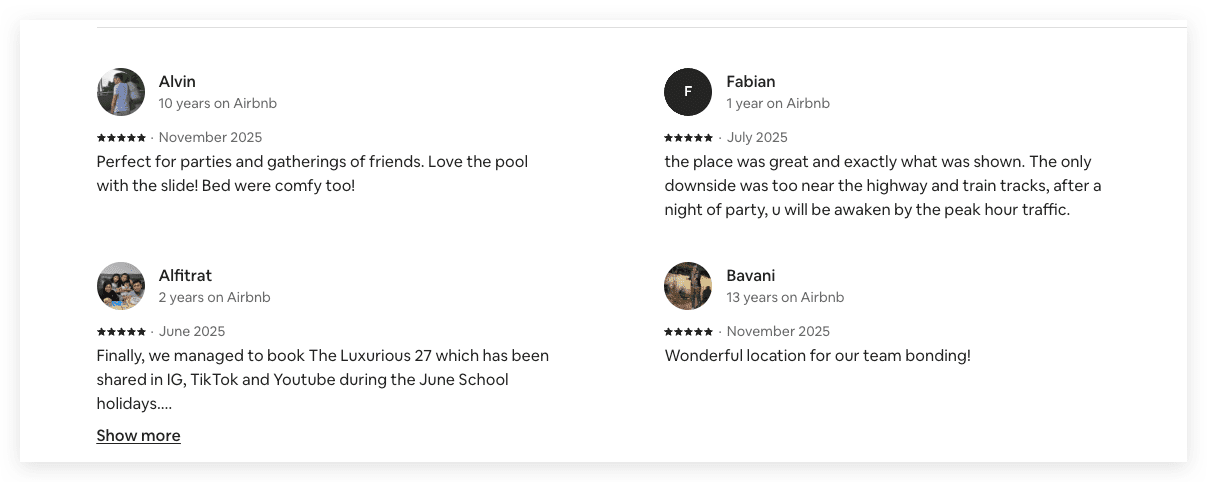
- ✅ Positive guest reviews and repeat bookings

- ✅ Attractive villa concepts and themed properties

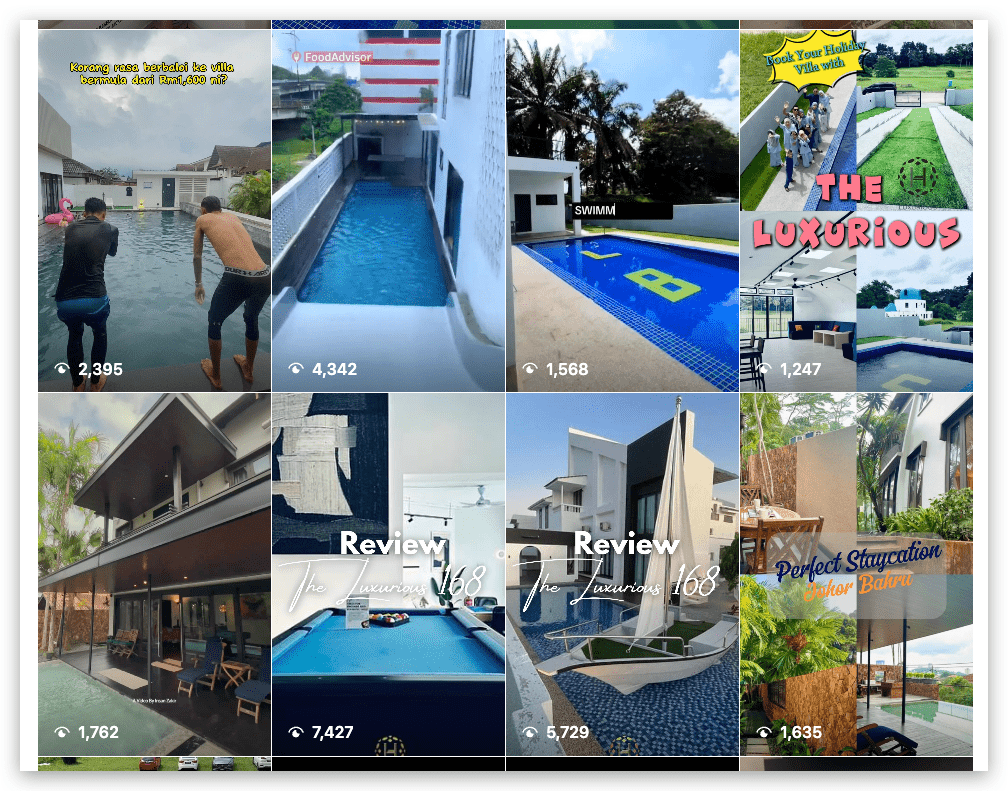
- ✅ Organic social media activity

However, growth had structural limitations:
- ❌ High OTA commission costs reducing profit margins

- ❌ No strong direct booking ecosystem
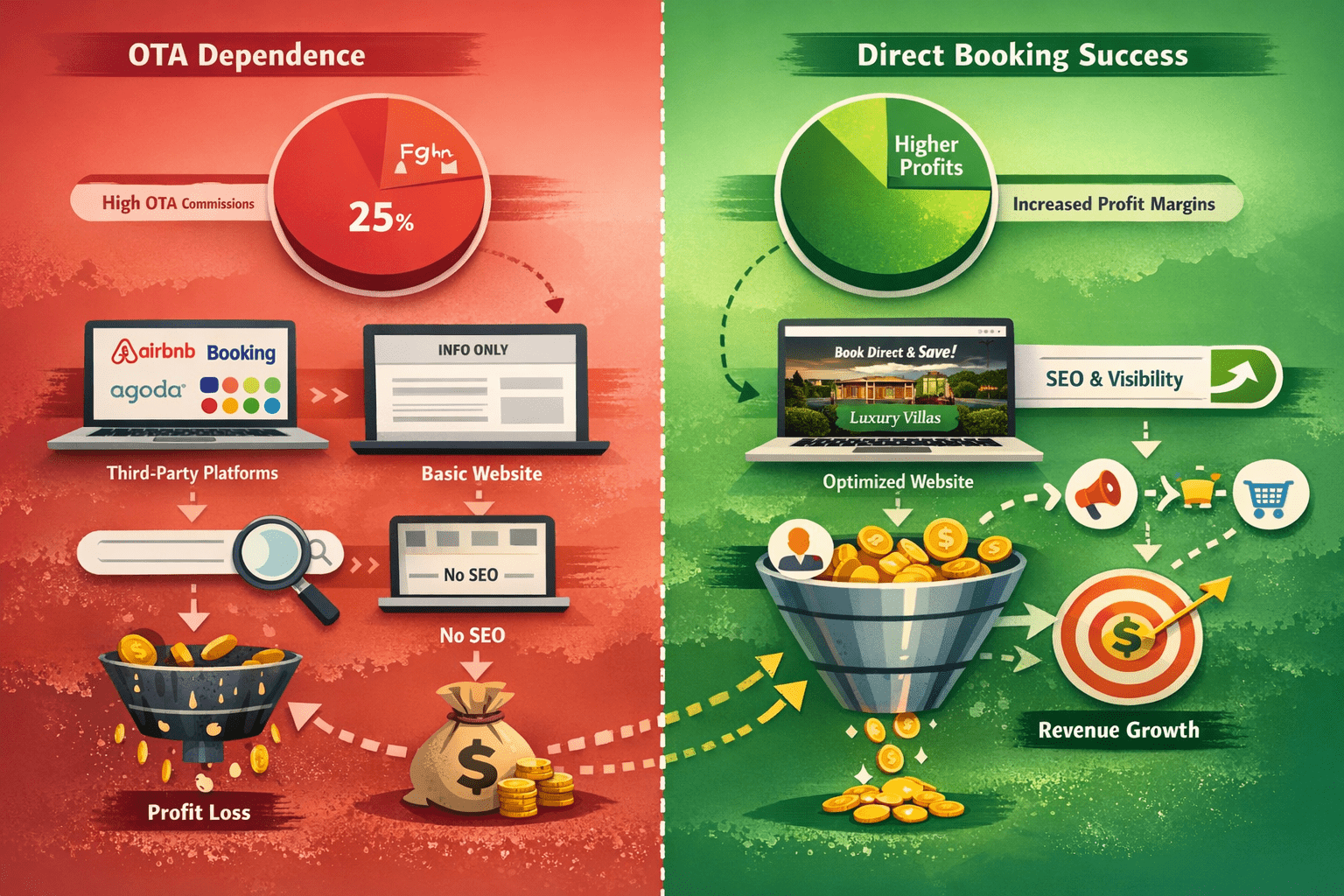
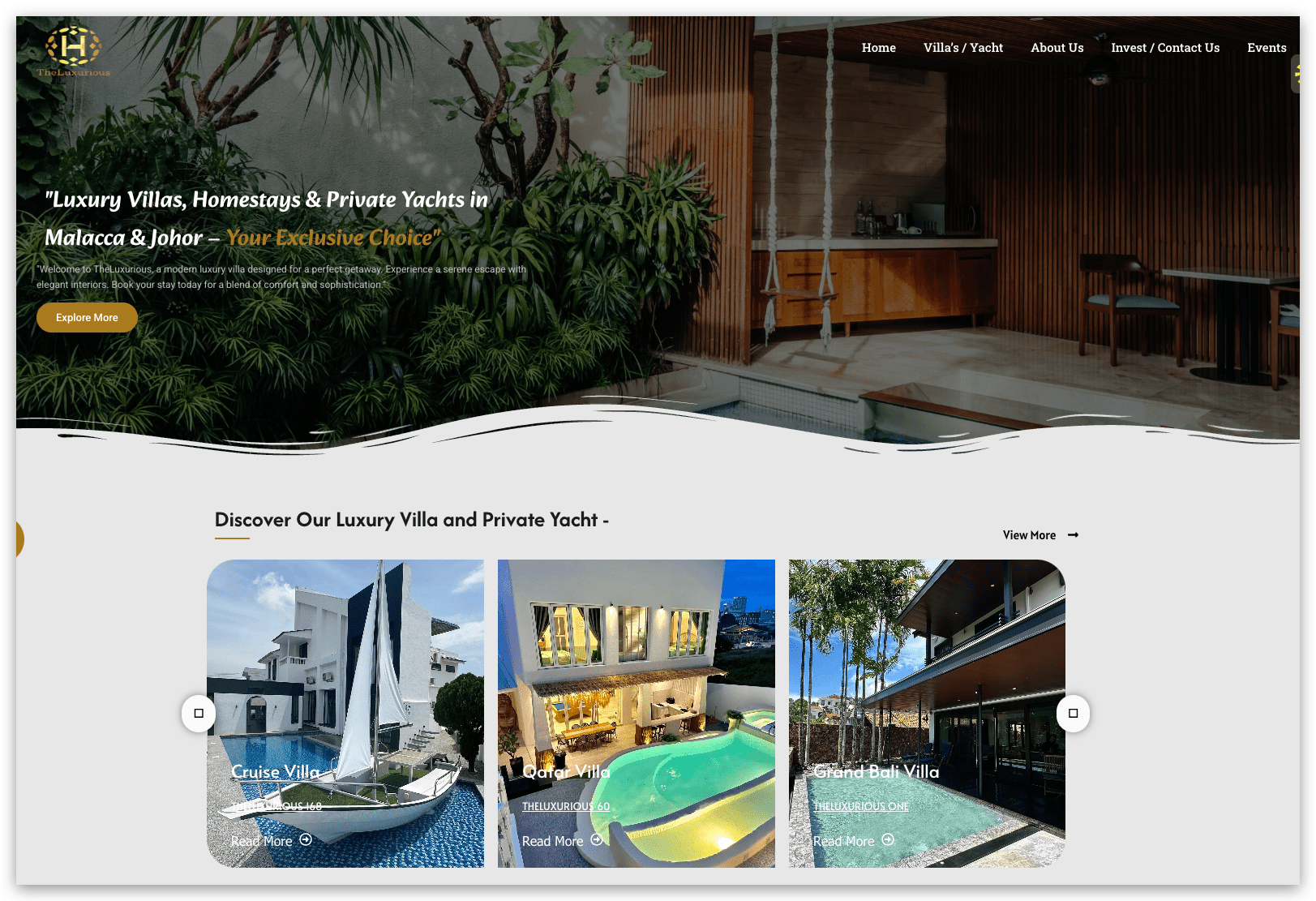
- ❌ Website functioning as a basic informational page, not a conversion engine

- ❌ No SEO structure for high-intent homestay or villa searches
- ❌ No performance marketing funnel
- ❌ No centralized revenue growth strategy
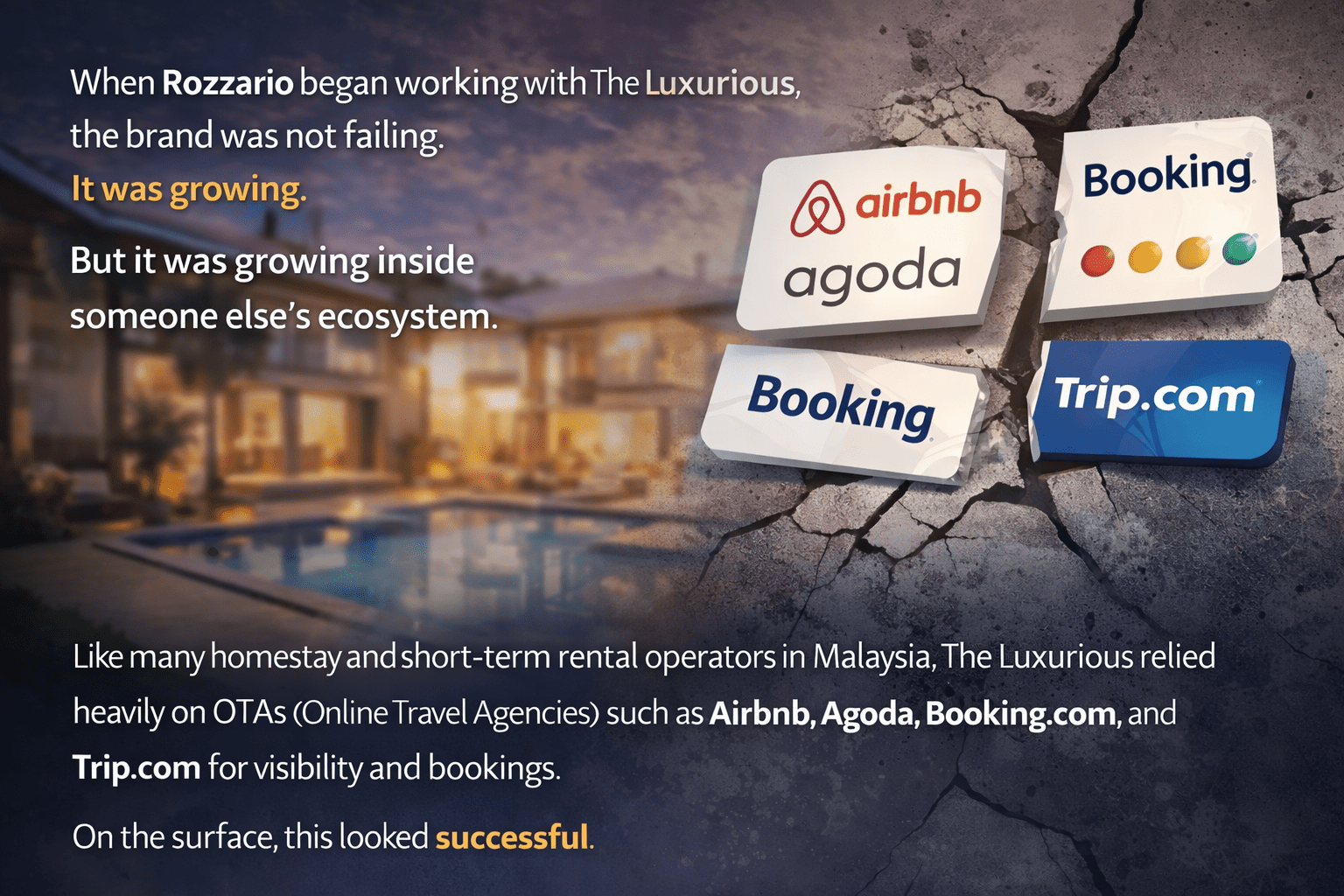
Revenue existed. Demand existed. But ownership of traffic and bookings did not. And in the hospitality and homestay industry, lack of ownership equals capped scalability.
Why Luxury Homestays Struggle With Direct Bookings
For many Malaysian homestay and short-term rental brands, growth comes from:
Airbnb visibility
→ OTA algorithms
→ Discounting to compete
→ Paying commission per booking
The Luxurious had reached the stage where:
More bookings required either
• Increasing platform spend
• Accepting higher commission costs
• Competing harder on price
Instead of building a controlled, brand-owned booking system. That’s where Rozzario entered — initially for social media marketing. But the real opportunity was much bigger.
The Problem: OTA Dependency & Price Competition
The Hidden Growth Ceiling
The business faced five critical limitations:
Commission Erosion
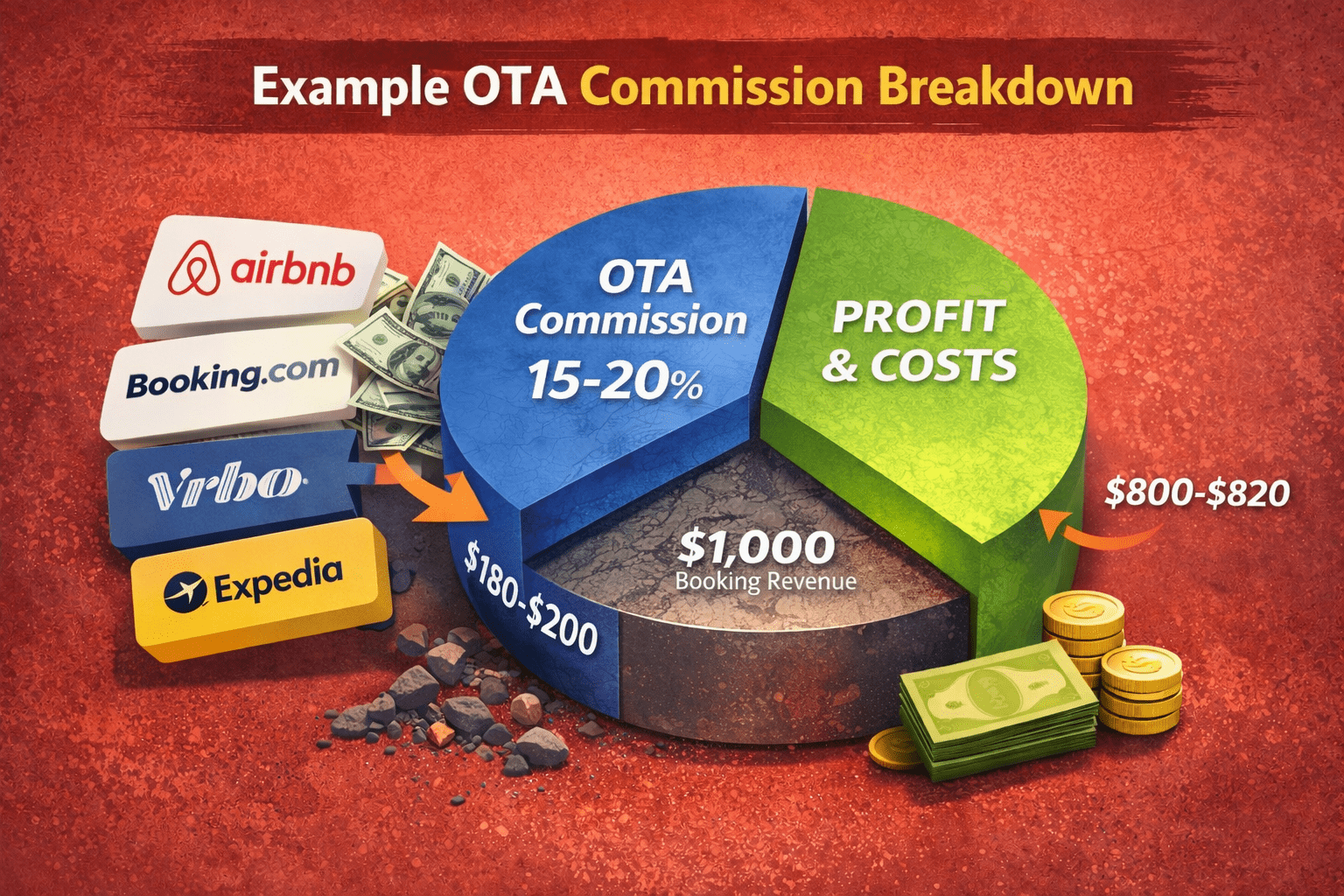
Every booking came with platform fees — directly impacting profit margins. Scaling revenue meant scaling commission payments.
No Direct Customer Ownership
Guest data belonged primarily to the platforms. Retargeting, upselling, and loyalty-building were limited.
Price Competition Pressure
In OTA environments, properties are displayed side-by-side. Competing often means discounting — not value positioning.
Weak Brand Authority Outside Platforms
The website lacked strong trust signals, conversion structure, and SEO visibility. Direct bookings were not the primary growth channel.
No Performance Funnel
There was no structured:
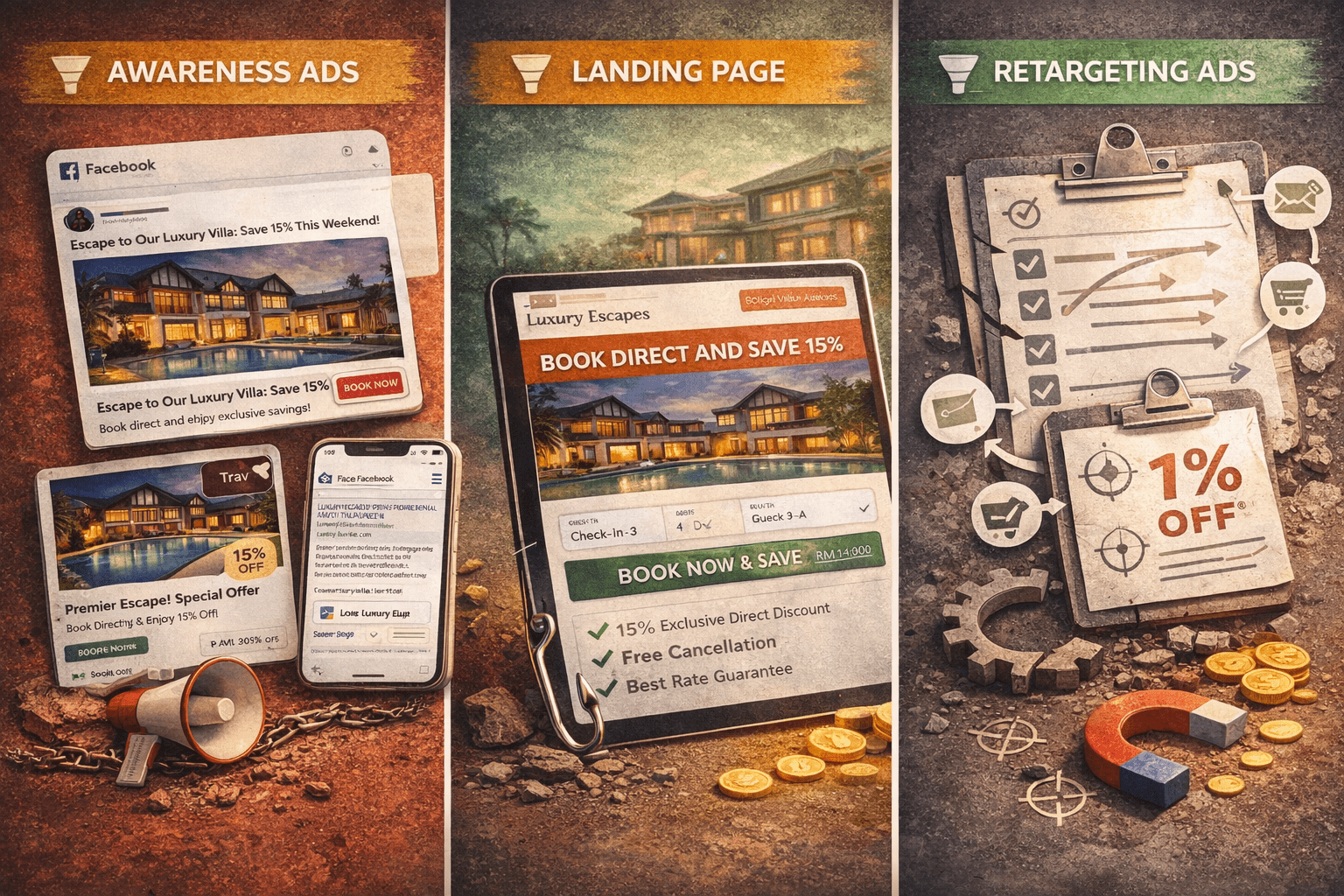
- Paid acquisition strategy
- Retargeting ecosystem
- Conversion tracking system
- Data-driven optimization loop
Traffic existed. Bookings existed. But control did not
Risk for Multi-Property Homestay & Villa Groups
For a single-unit Airbnb host, platform reliance may be sustainable.
For a growing multi-location hospitality group, it becomes dangerous.
Because:
- Revenue predictability depends on algorithms.
- Platform policy changes can impact listing visibility.
- Margin growth becomes constrained.
- Brand equity is secondary to platform ranking.
The Luxurious had strong assets — but no owned growth engine.
And without ownership, scaling becomes expensive.
The Real Question
The question was no longer:
“How do we get more bookings?”
It became:
“How do we build a direct booking system that increases margins, protects brand equity, and scales sustainably?”
That’s when the scope expanded beyond social media marketing.
Phase 1: Our Hospitality Marketing Strategy Framework
Rozzario was initially engaged to manage social media marketing and content creation for The Luxurious. The goal at that stage was straightforward: Increase brand visibility, elevate perception, and generate more inbound interest. We began by restructuring the brand’s digital presence on Instagram and other social platforms — not just posting content, but repositioning the brand visually and strategically.
What We Implemented
Instead of random villa posts, we introduced structured content pillars:
- 🎯 Themed villa showcases (positioning each property as an experience)
- 🎥 Short-form video strategy (Reels & performance-focused formats)
- 🏡 Occasion-driven storytelling (weddings, reunions, corporate retreats)
- 📸 Premium aesthetic direction (luxury positioning vs budget homestay look)
- 🧠 Conversion-aware captions (not just engagement-driven)
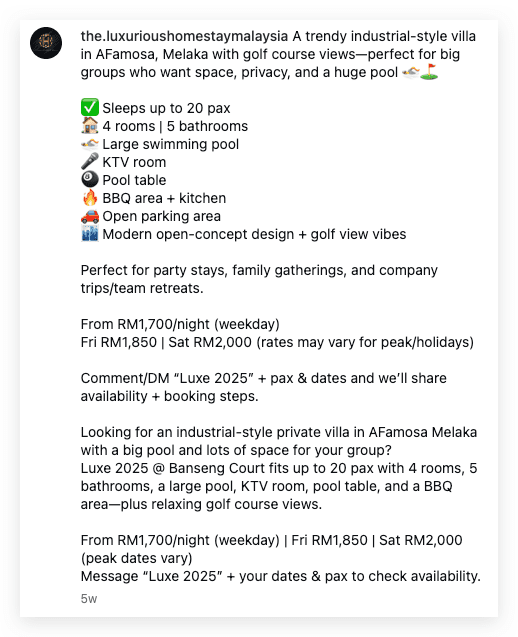
We shifted from:
“Here’s a villa.” To: “Here’s the experience you can host.”
Early Wins
Within the first phase, we achieved:
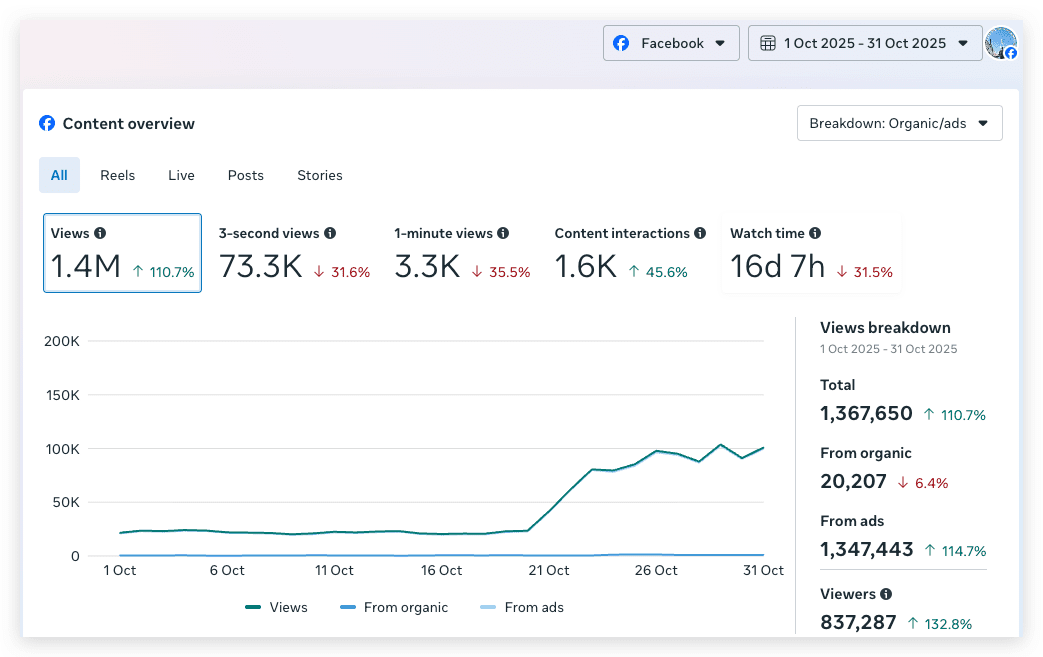
- Stronger brand cohesion across social platforms
- Increased engagement rates on video content
- Higher inquiry volume through DMs and WhatsApp
- Improved perceived brand value
- Better positioning against competing homestays
Attention increased. Interest increased. Enquiries increased. But something critical became clear.
The Conversion Gap
Despite rising traffic and social engagement:
- Direct website bookings were not scaling proportionately

- Most inquiries still defaulted to OTA references

- Social media was generating awareness — not a structured booking pipeline

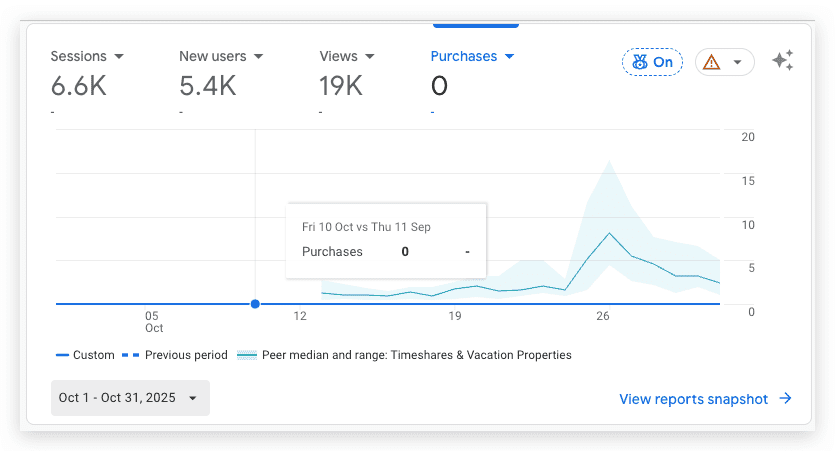
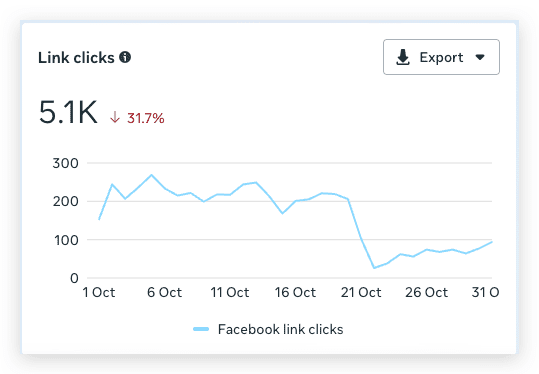
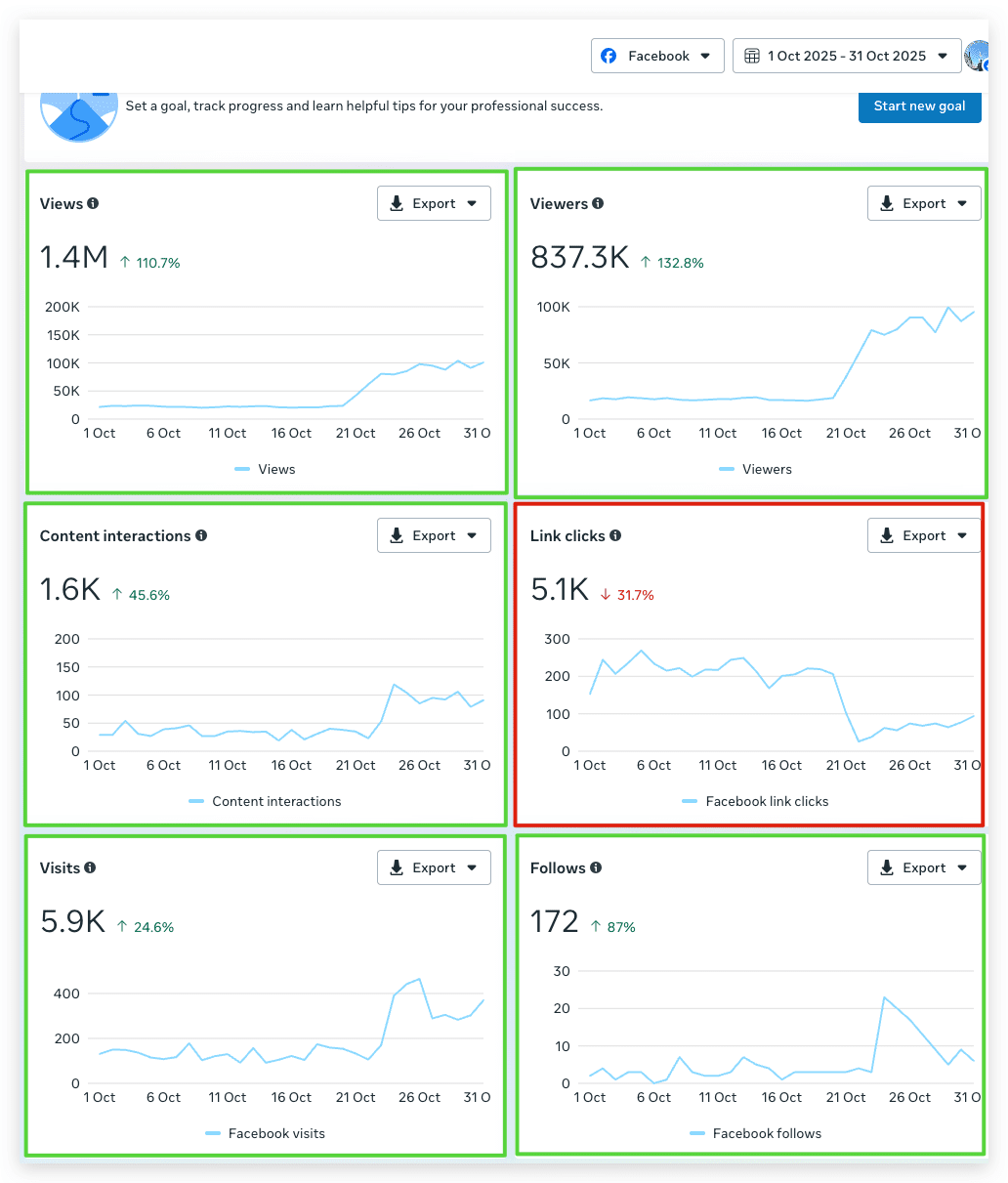
We had built visibility. But visibility without infrastructure cannot maximize revenue. This is where the strategic pivot happened.
The Strategic Pivot: Why The Website Revamp Became Non-Negotiable
As social media traction increased, one pattern became undeniable: Attention was growing. But ownership of conversions was not. Inquiries were coming in through Instagram and WhatsApp.
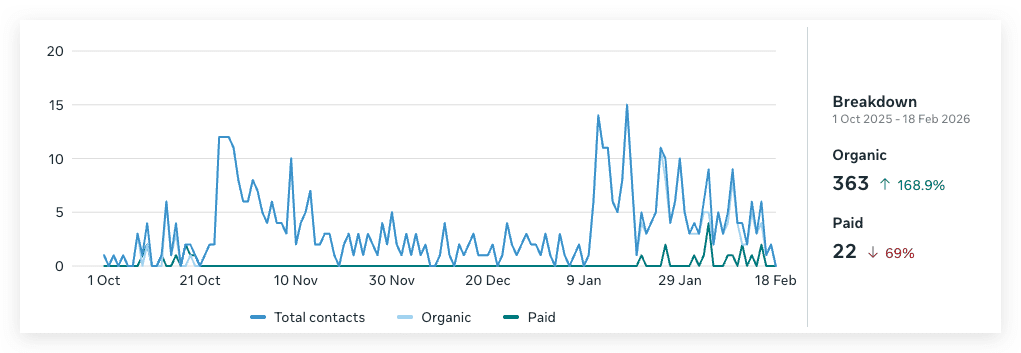
Yet when guests were ready to confirm bookings, many still reverted to OTA platforms for “trust.” The website existed — but it was not functioning as a revenue engine. It was functioning as a brochure. For a multi-location luxury homestay and short-term rental group, that is a critical bottleneck.
The Core Problem Identified
Through internal review and user-behavior analysis, we identified five structural weaknesses:
- ❌ No clear value positioning across multiple villas
- ❌ No structured landing pages targeting high-intent searches
- ❌ No comparison framework or package anchoring
- ❌ Weak trust architecture (reviews, authority signals, credibility stacking)
- ❌ No clear conversion journey toward direct booking
Guests trusted Airbnb. They did not yet trust the brand’s own booking ecosystem. And trust is the currency of direct booking.
Direct Booking Website Development
Rather than continue pouring traffic into a weak conversion system, we proposed a complete website transformation. Not a cosmetic redesign. But a structural rebuild focused on:
- Conversion psychology


- Search intent capture (SEO architecture)


- Revenue pillar landing pages


- Trust reinforcement
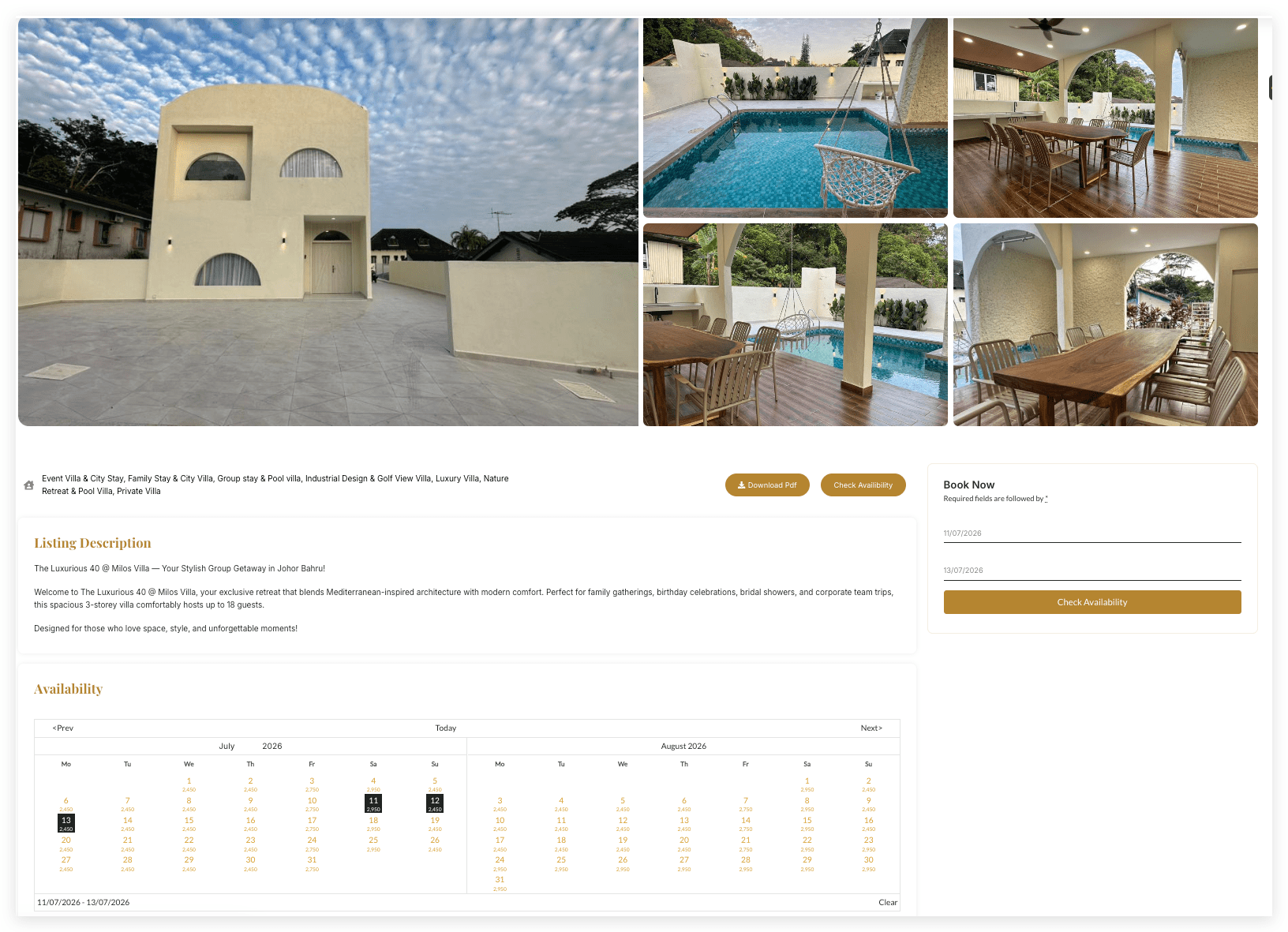
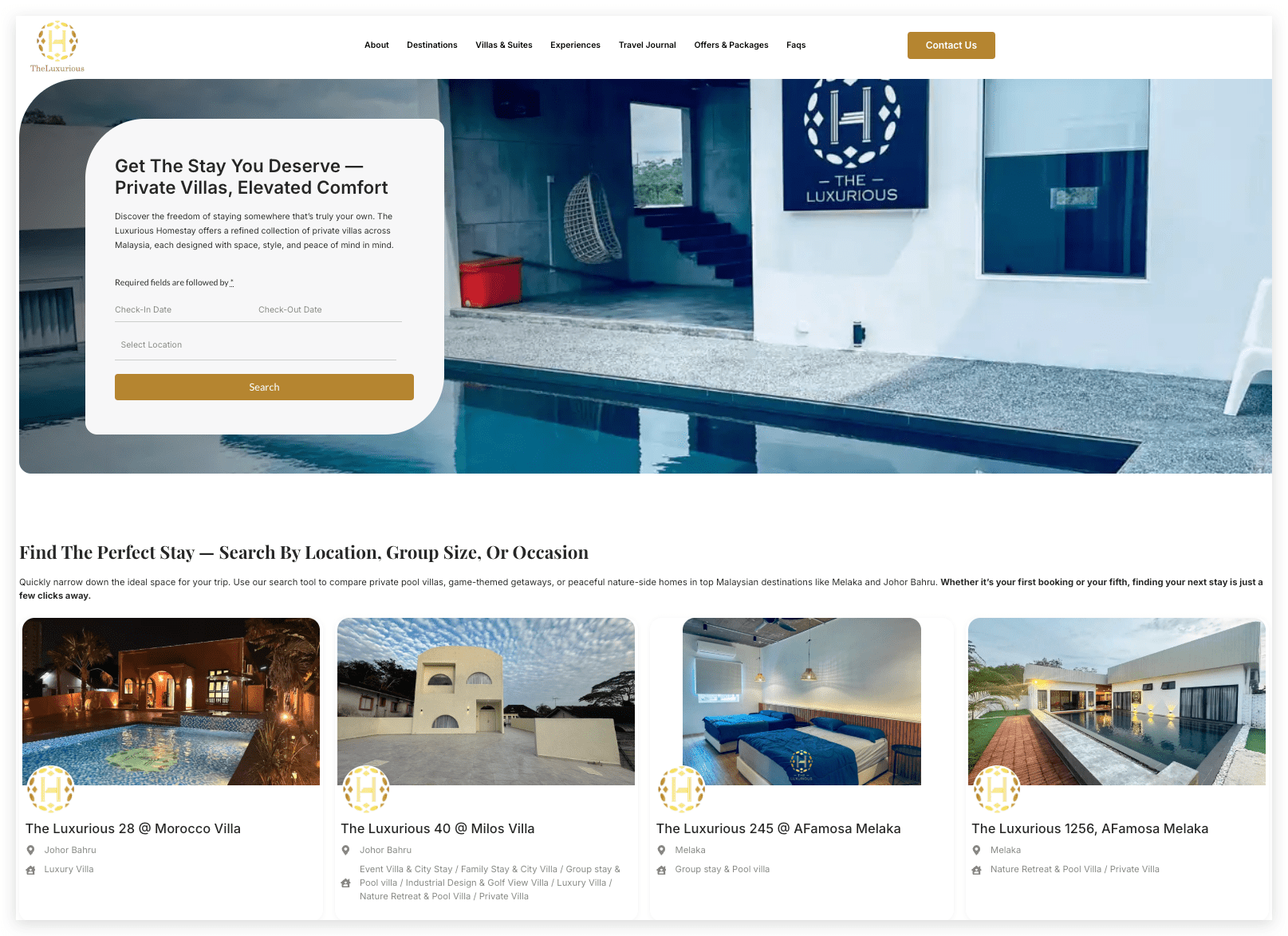
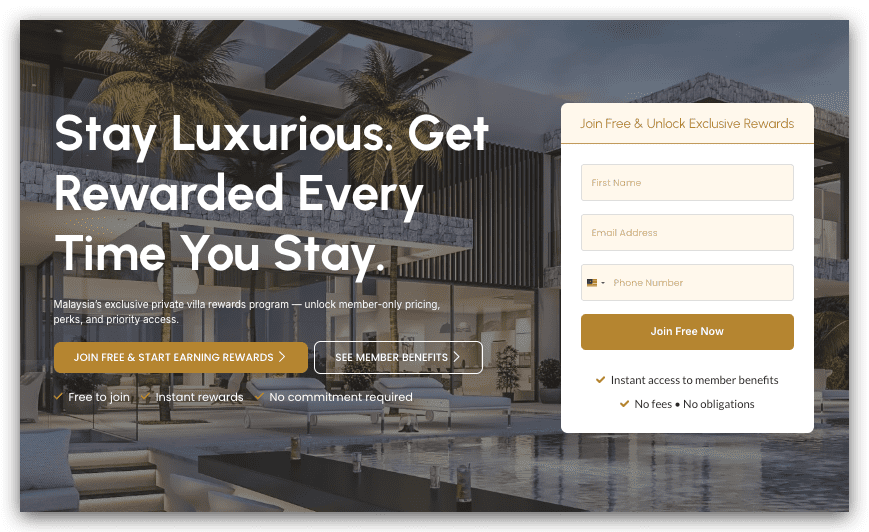
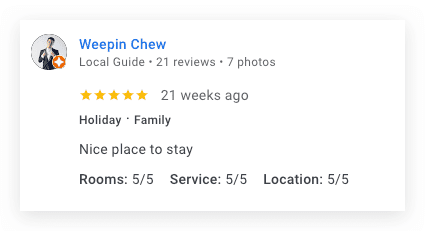
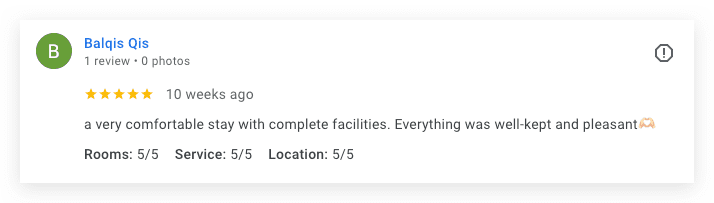
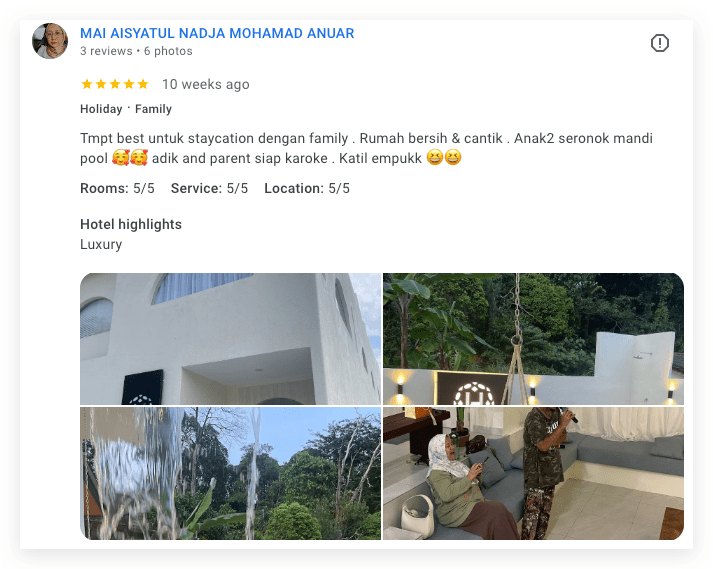
- Direct booking positioning

- Multi-property brand coherence

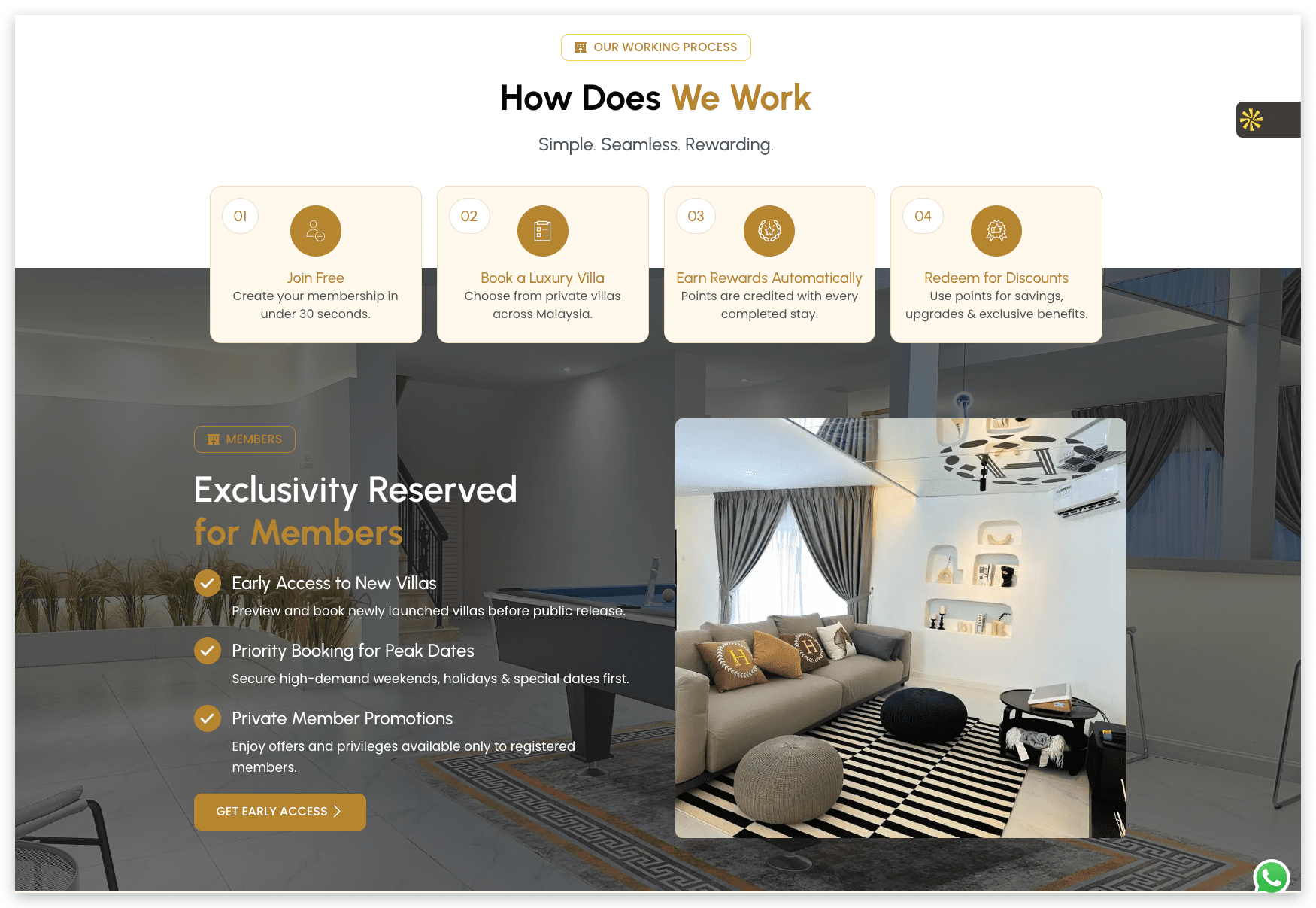
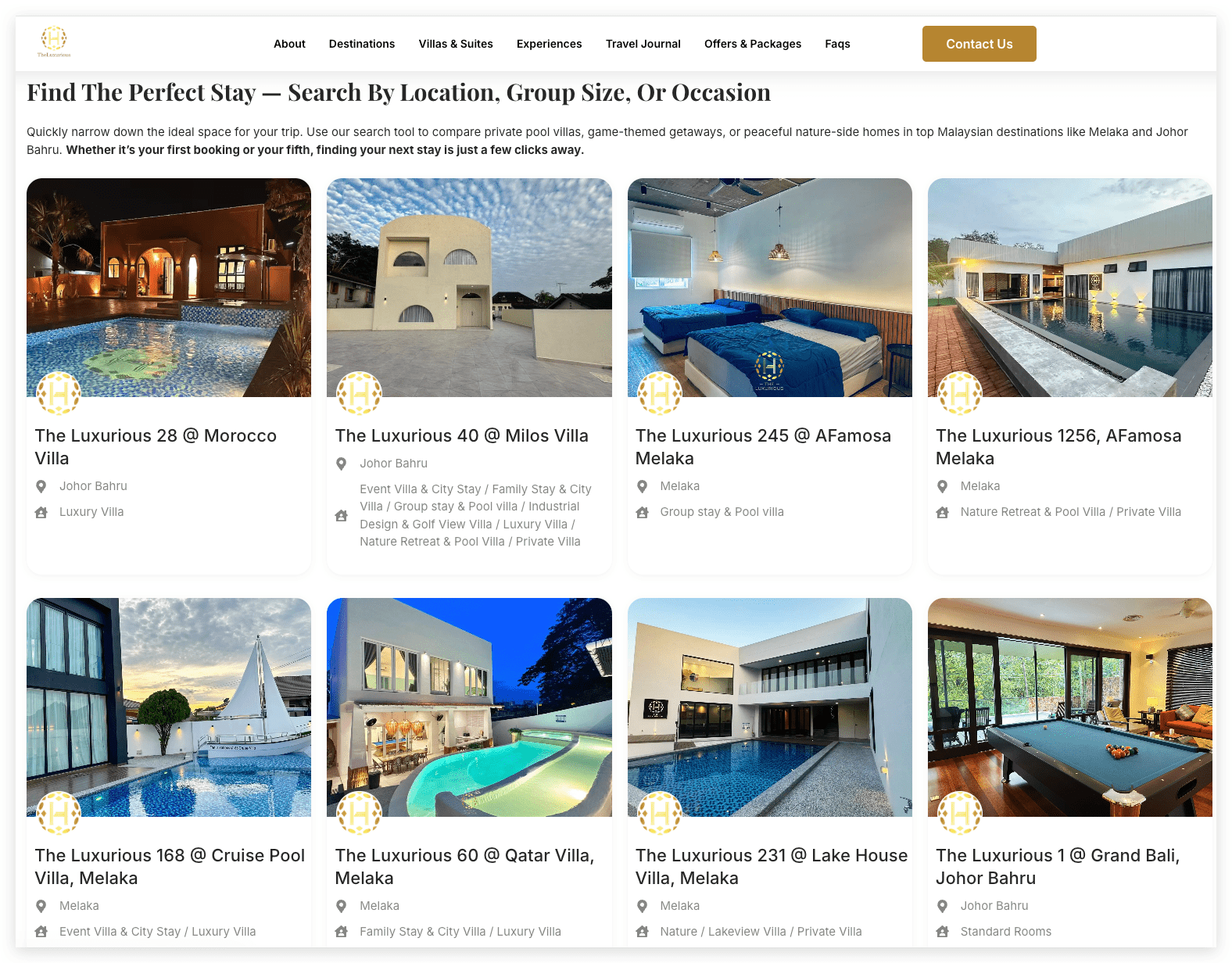
The objective shifted from: “Make the website look better.” To: “Turn the website into the primary growth asset.” This marked the transition from marketing support to full-scale hospitality growth strategy.
Search Intent SEO Strategy : Capturing High-Intent Homestay & Villa Searches (So Bookings Don’t Depend on Algorithms)
The objective was clear: Transform The Luxurious website from a static informational page into a high-converting, SEO-structured, direct booking platform for a growing hospitality and short-term rental group. This required more than visual upgrades. It required rebuilding the entire digital architecture around revenue.
1️⃣ Revenue Pillar Architecture
Instead of listing villas randomly, we structured the website around high-intent booking categories, and with proper SEO, The Outcomes are
- Private Pool Villas

- Big Group Homestays

- Family Reunion Villas

- Wedding & Event Villas

- Corporate Retreat Properties

- Premium Themed Villas

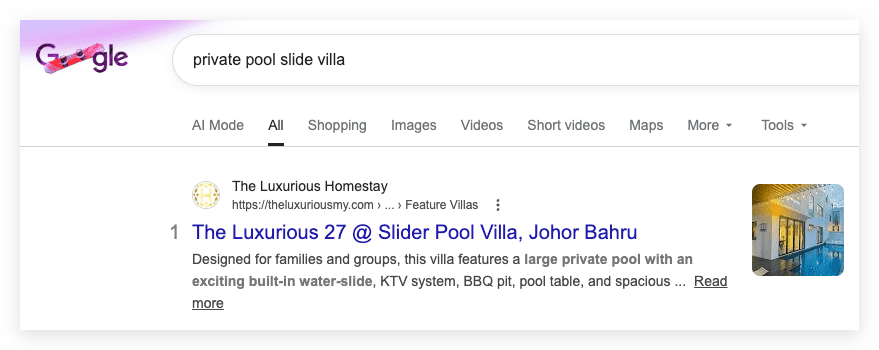
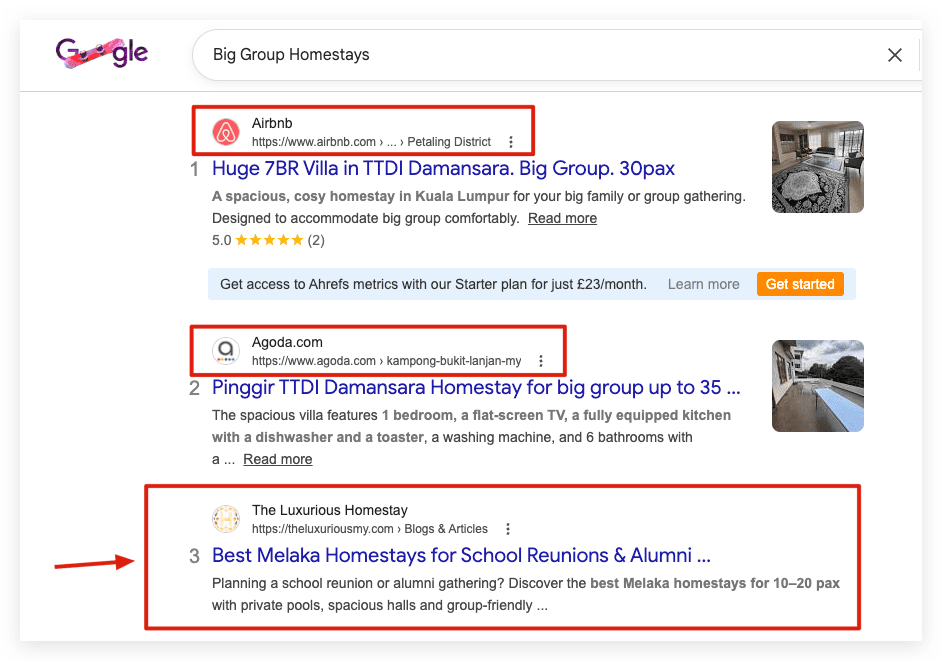
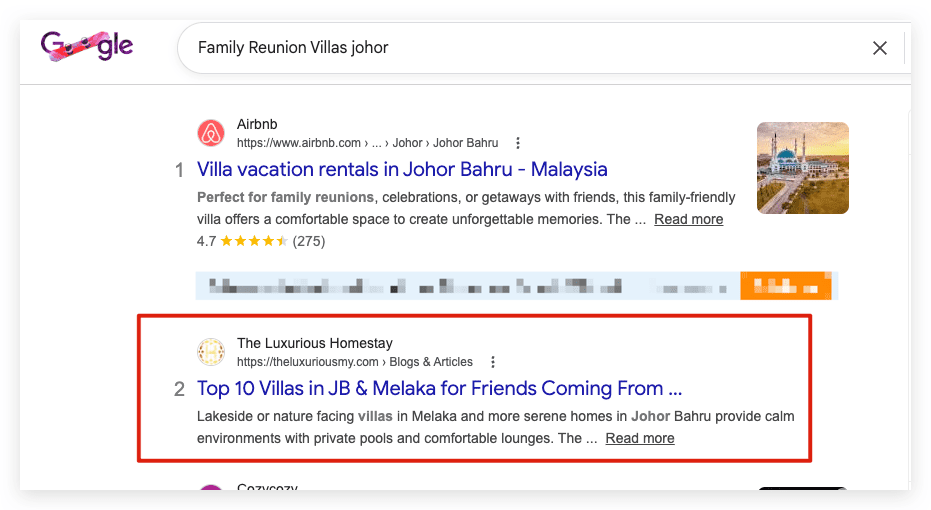
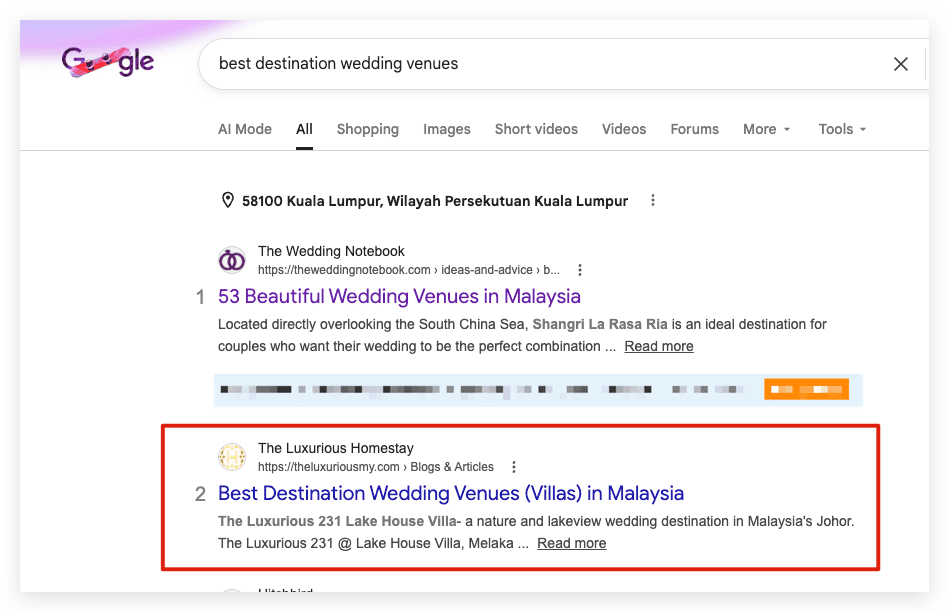
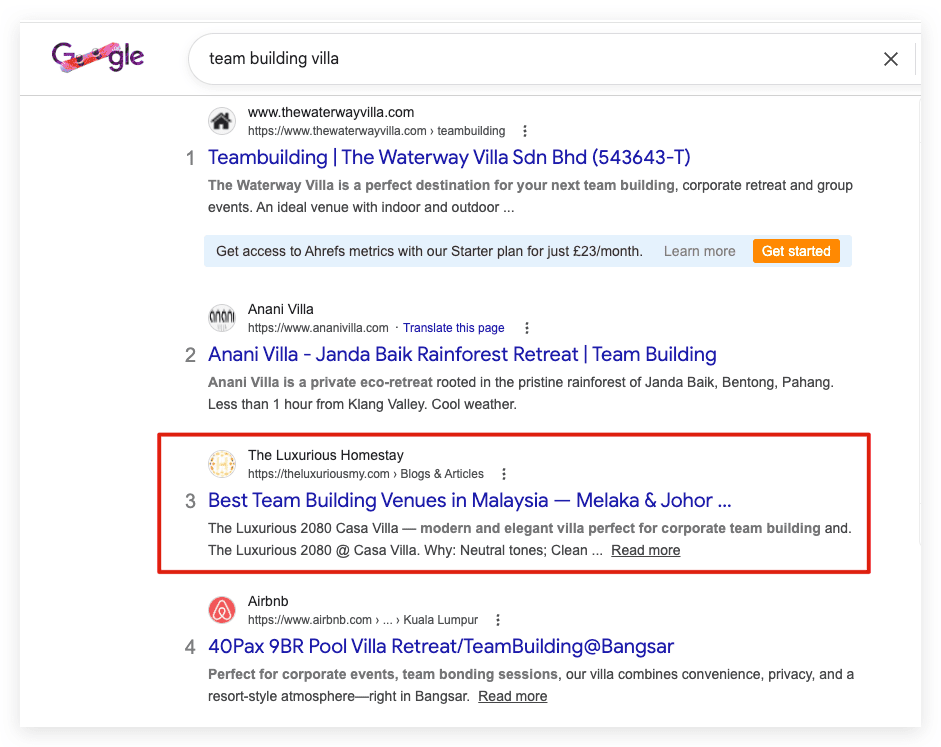
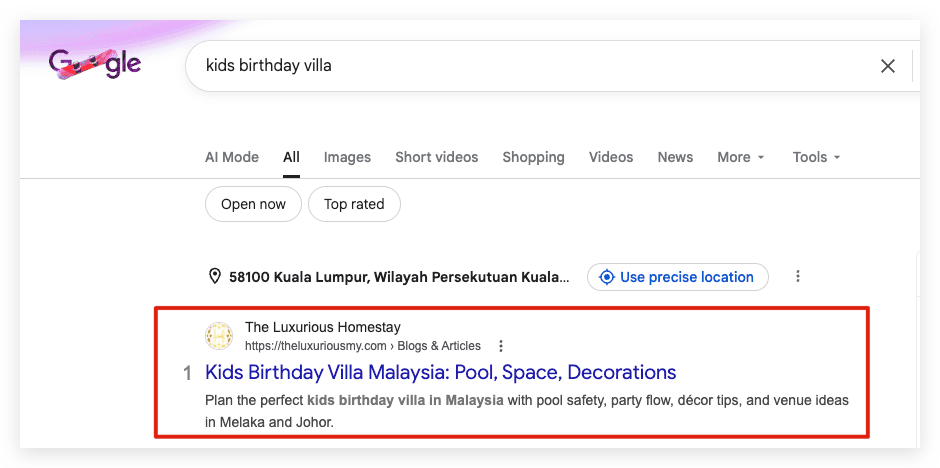
This allowed us to:
- Capture search intent

- Organize inventory strategically
- Improve user navigation

- Position villas by outcome, not just features
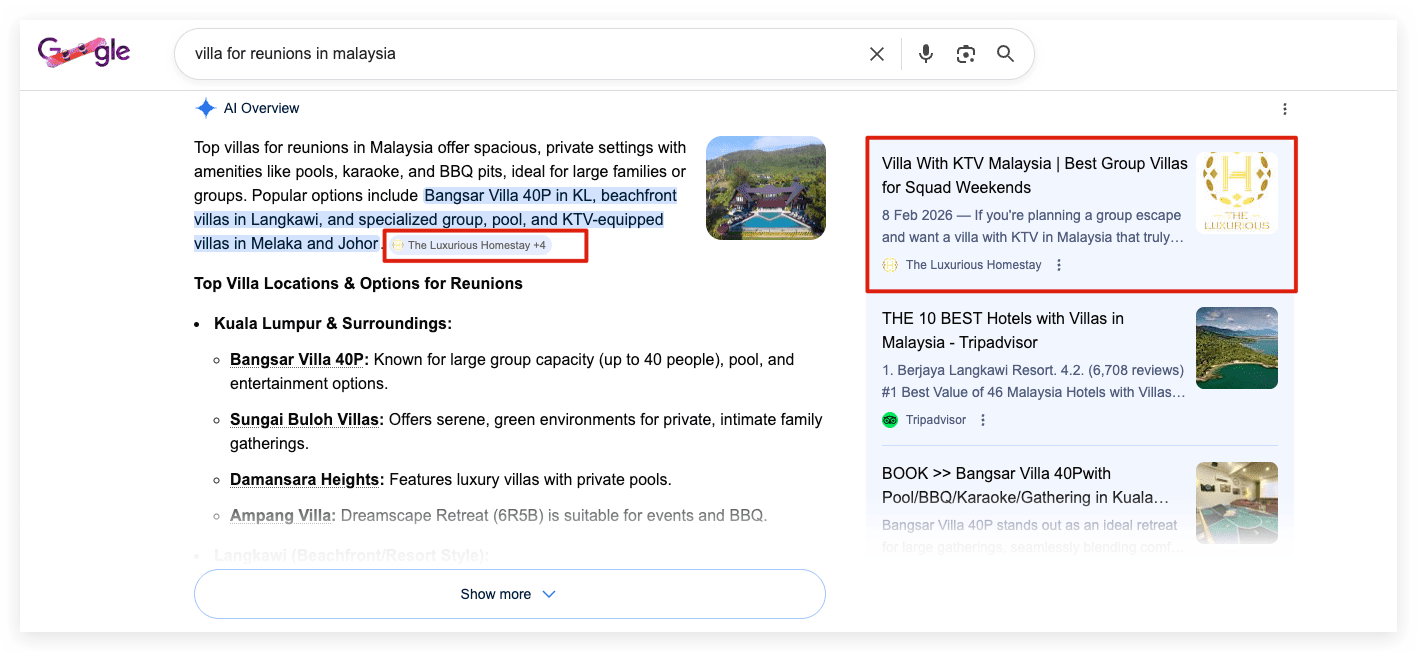
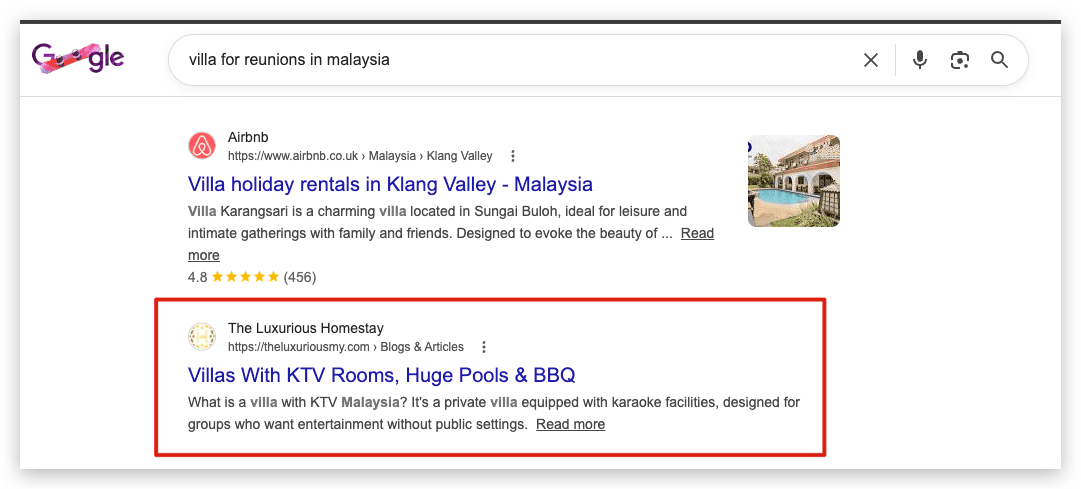
Guests don’t search for “Villa 27.” They search for: “Big group homestay in JB with private pool.” We built the site around how people search.
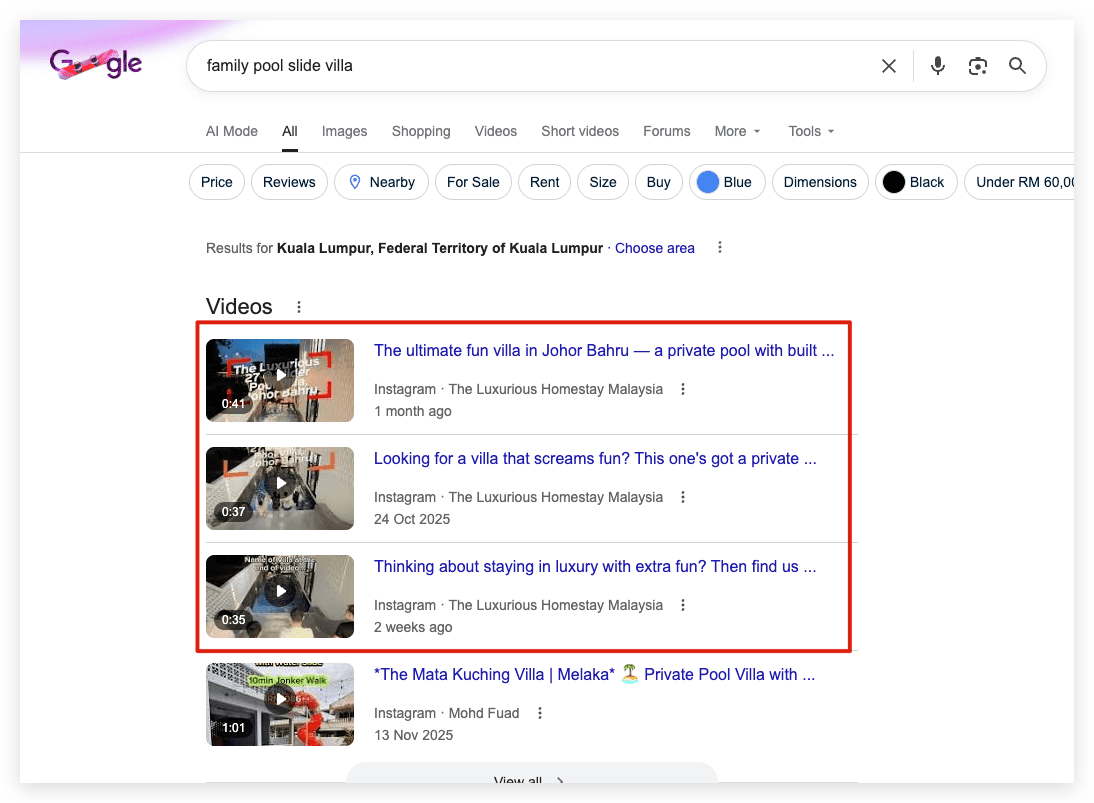
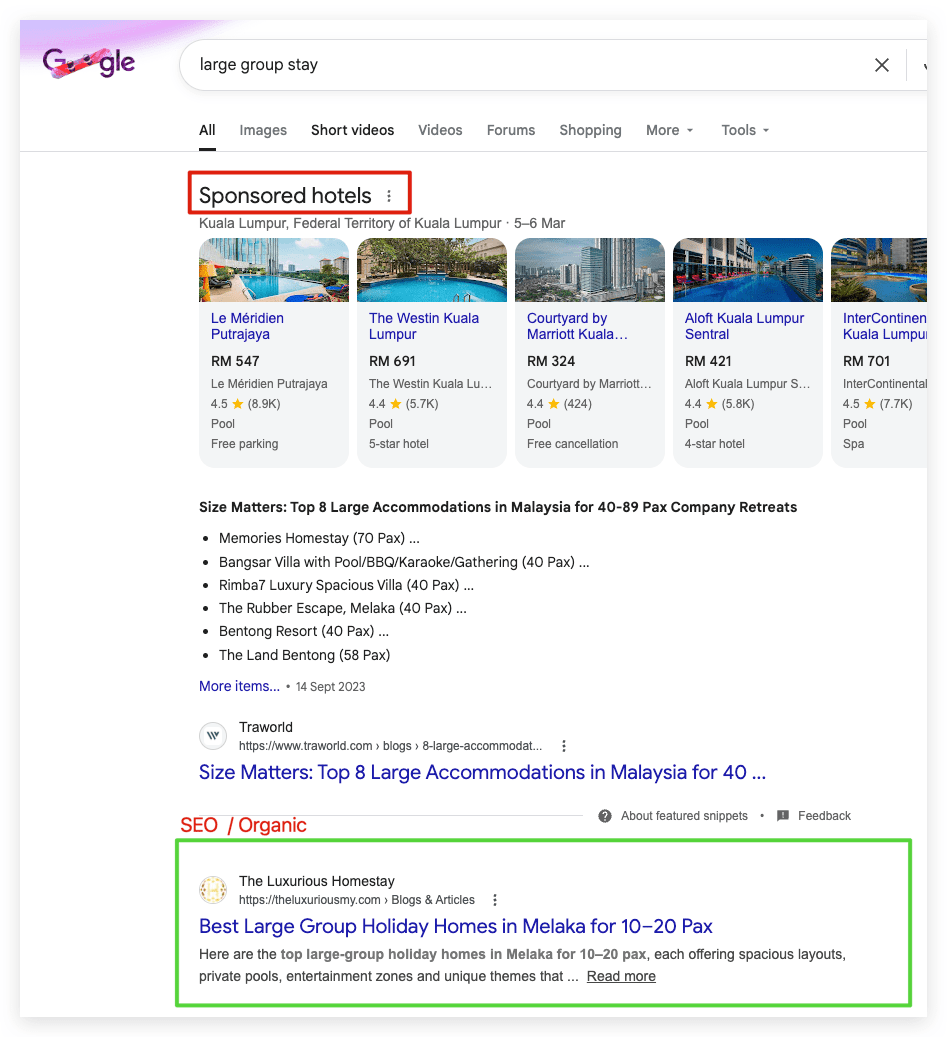
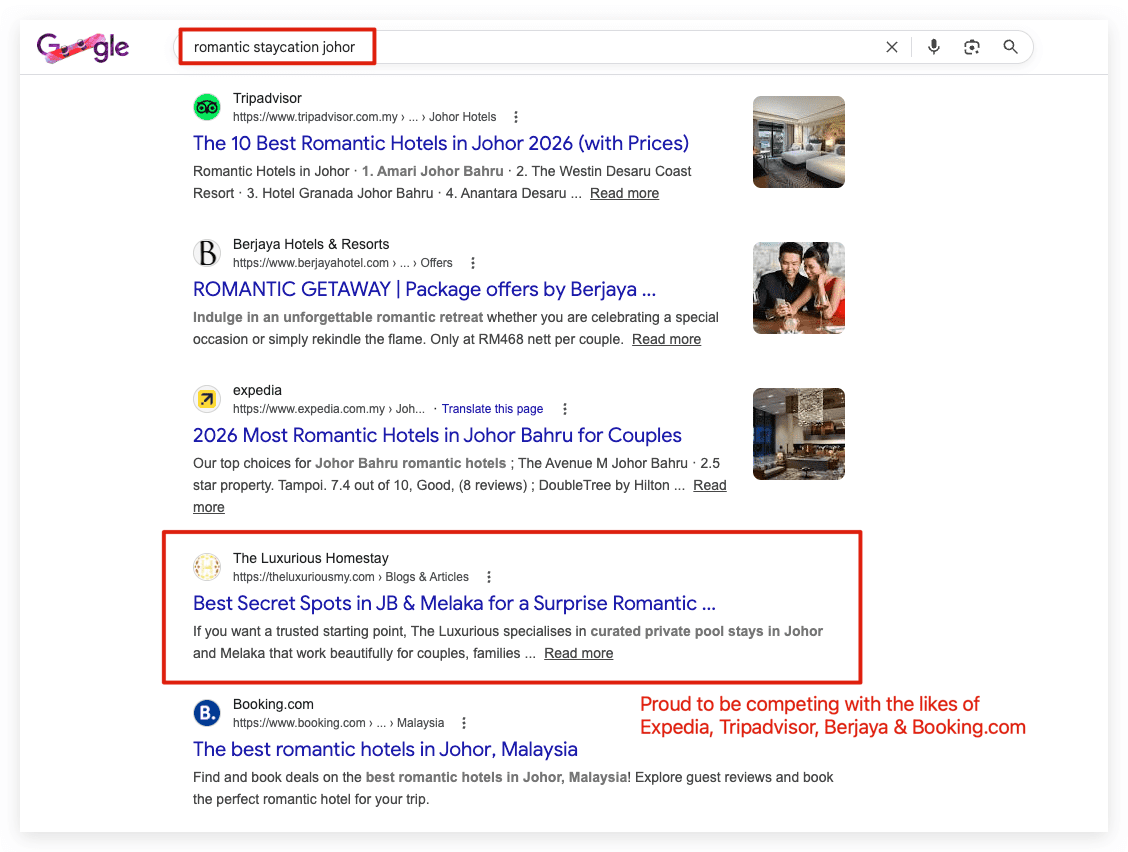
Outcome: Website Becomes an Asset, Not a Liability
Post-implementation, the website became:
- A primary channel for direct inquiries
- A trust bridge between social traffic and booking
- A Google-search capture system
- A brand authority platform
- A scalable infrastructure for paid ads
For the first time, growth did not require paying commission per booking. It required optimizing owned traffic.
Paid Acquisition & Retargeting System: Turning Attention Into Direct Booking Revenue (Not Just Views)
After building the trust-first website and SEO landing architecture, we layered performance marketing on top — not to “run ads,” but to create a measurable revenue system.
In hospitality and homestay marketing, ads fail for one common reason: People send traffic to pages that aren’t built to convert. We solved that first. Then we scaled acquisition.
1️⃣ The Funnel We Built (Hospitality-Specific)
We structured campaigns around a clear booking journey:
- Awareness: Reach new audiences with villa/experience hooks

- Consideration: Drive landing page views for specific intents (big group / private pool / occasion)

- Conversion: Retarget warm visitors with trust signals, packages, and urgency
- Close: Make WhatsApp + direct booking frictionless
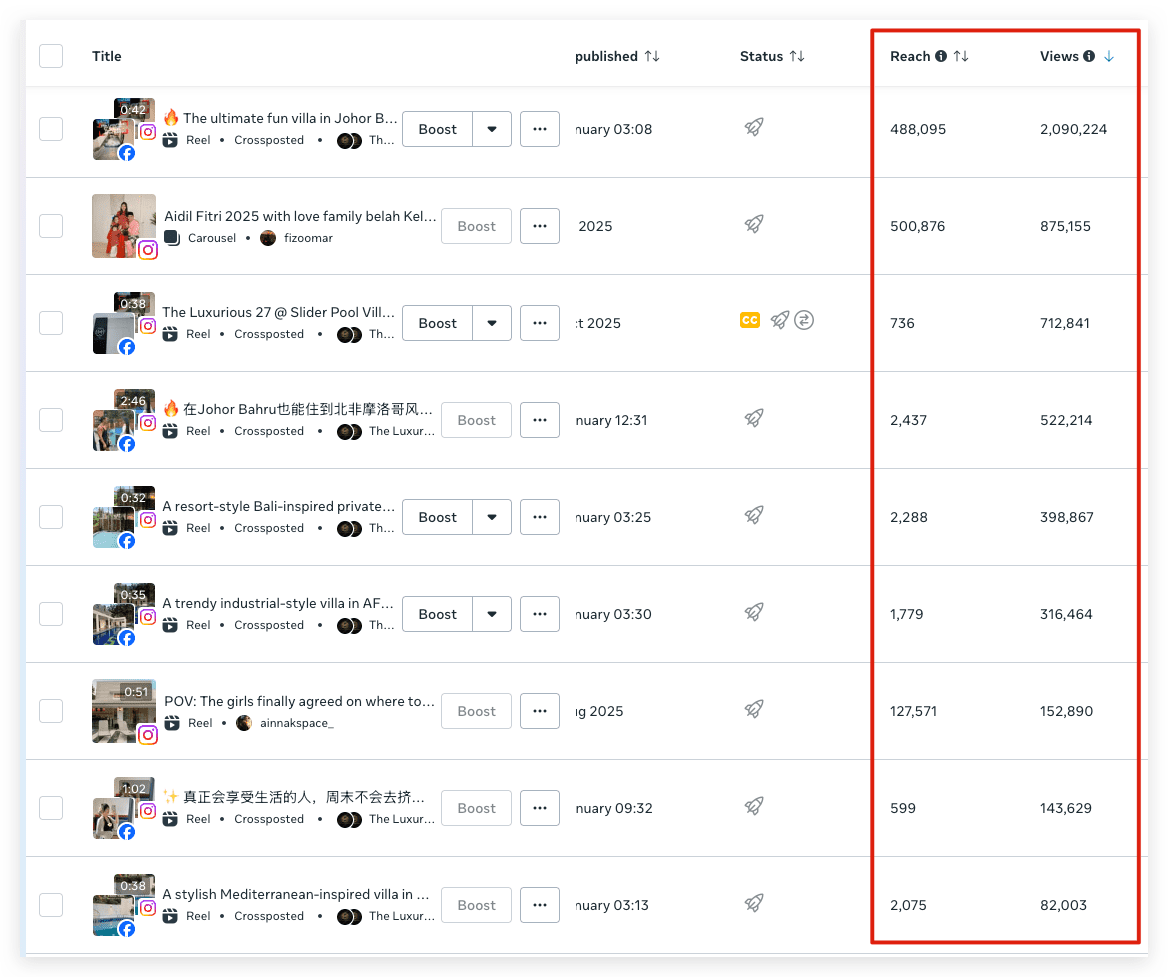
This is critical because most guests don’t book on the first click — especially for high-value group stays.
2️⃣ Meta Ads: Creative Testing + Retargeting Loops
On Meta (Instagram/Facebook), the focus was:
- Consistent creative testing
- Hook variations (occasion-based, feature-based, outcome-based)
- Short-form video for attention capture
- Retargeting that converts “browsers” into “bookers”
Key retargeting audiences typically included:
- Website visitors to key landing pages
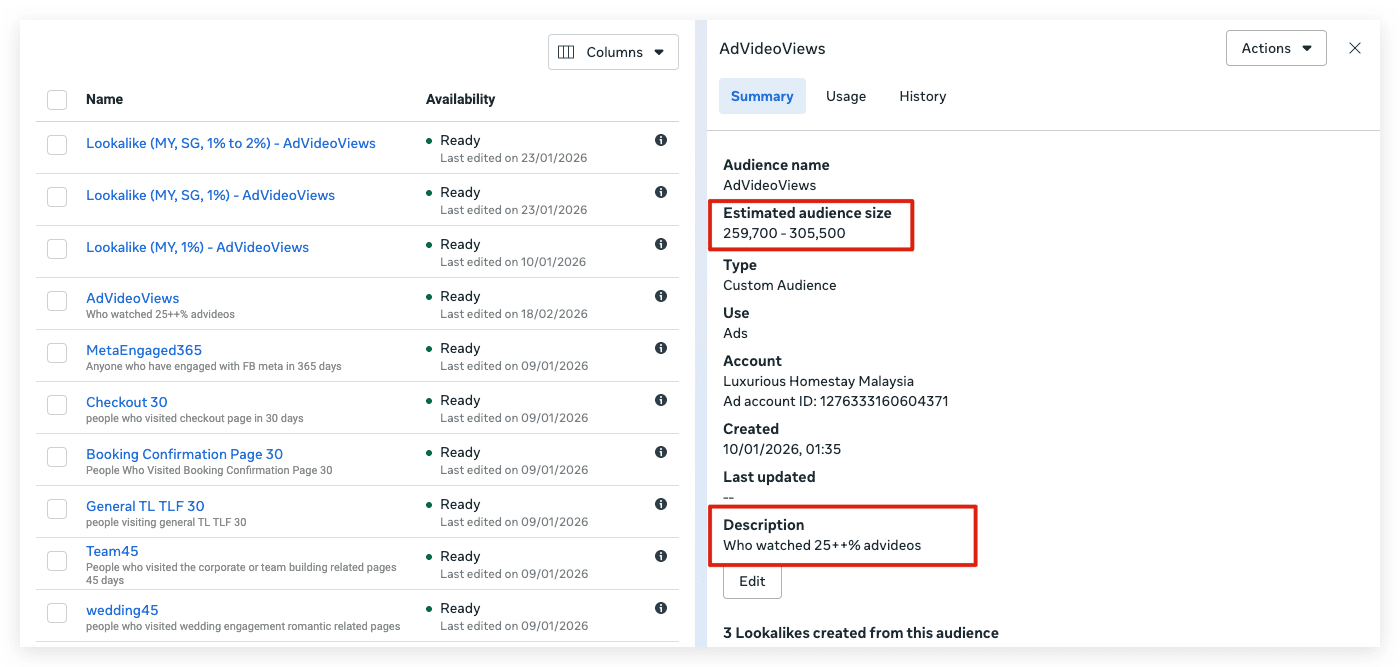
- Video viewers (high intent signals)
- Instagram engagers
- Inquiry starters (where trackable)
The objective wasn’t likes. It was bookable demand.
3️⃣ Google Ads: Capturing High-Intent “Ready to Book” Searches
Google Ads played a different role:
When someone searches:
“private pool homestay JB 20 pax”
…they’re not browsing.
They’re close to booking.
So we aligned Google campaigns with:
- Keyword clusters (matching SEO pillars)
- Landing pages built specifically for that search intent
- Conversion tracking (calls/WhatsApp clicks/booking actions depending on setup)
This avoids the most common waste in Google Ads: Paying for clicks that land on generic pages.
4️⃣ Creative Production Engine (So Ads Don’t Die)
Most hospitality ads stop working because creative production can’t keep up. So we built a repeatable content-to-ads system:
- Reels that double as ad creatives
- Villa walkthrough hooks
- Occasion scripts (birthday / wedding / corporate)
- Feature-specific showcases (pool, KTV, BBQ, big dining)
- Social proof inserts (reviews, “what guests say”)
The result: fresh creatives without reinventing the strategy every week.
5️⃣ Measurement: Ads as a System, Not a Gamble
Performance marketing only scales when measurement is reliable. We implemented a system that supports:
- Creative performance feedback loops
- Landing page conversion comparisons
- Audience segmentation results
- Budget scaling based on winners
The principle was simple:
Scale what converts. Kill what doesn’t.
Outcome: A Real Acquisition Machine (Not Random Campaigns)
With the right infrastructure in place, ads became:
- A predictable demand generator
- A direct booking accelerator
- A leverage point to reduce OTA dependency
- A growth channel that could be scaled by budget + creative output
In other words: We moved from “posting content” to “running a revenue engine.”
Offer Engineering: From “Villa Listings” to High-Value Experience Packages
One of the biggest revenue unlocks did not come from traffic. It came from positioning.
Originally, villas were primarily presented as properties: Rooms. Beds. Pool. Location. But in hospitality — especially for homestay and short-term rental groups — people don’t book square footage.
They book occasions. So we shifted the model from:
Inventory-based selling to Experience-based packaging.
1️⃣ Selling Occasions, Not Just Units
We reframed the offers around specific use cases:
- 🎉 Birthday Celebration Packages
- 💍 Wedding & ROM Stay Packages
- 👨👩👧👦 Family Reunion Bundles
- 🏢 Corporate Retreat & Team Building Stays
- 🌙 Festive Campaigns (Raya, CNY, School Holidays)
Each package spoke directly to:
- A problem
- A scenario
- A group size
- A specific emotional outcome
This increases conversion because it removes decision fatigue.
2️⃣ Anchoring Strategy to Increase Average Booking Value
Instead of asking: “Which villa do you want?”
We structured: “Which package fits your occasion?”
Using tiered options:
- Essential
- Enhanced
- Premium
This applies classic anchoring psychology: Most guests don’t choose the cheapest. They choose the option that feels like the best value.
Result:
Higher perceived value. Better margin per booking.
3️⃣ Add-Ons & Upsell Logic
We identified monetization opportunities such as:
- Catering / buffet arrangements
- Decoration packages
- BBQ setup
- Event coordination support
- Extended hours / late checkout
Instead of leaving revenue on the table, we created: Structured add-on pathways.
This transforms: One-night booking → Multi-layer revenue opportunity.
4️⃣ Campaign-Based Revenue Spikes
Seasonal campaigns were structured around urgency + limited capacity.
Examples:
- Raya open house packages
- School holiday big group promotions
- Wedding season pushes
- Corporate planning cycle offers
Each campaign included:
- Landing page
- Ad support
- Social amplification
- Retargeting
- Clear CTA window
This ensures campaigns don’t just create noise — they create measurable spikes.
5️⃣ Strategic Impact on Business Metrics
Offer engineering impacts more than conversion rate.
It influences:
- Average Order Value (AOV)
- Booking margin
- Upsell rate
- Brand perception
- Differentiation from competitors
Instead of competing with: “Cheapest homestay in JB”
The Luxurious competes on: “Complete experience solution.” That’s how premium positioning is protected.
Sales, Operations & Internal Systems Alignment for Scalable Hospitality Growth
Marketing can generate demand. But without internal alignment, demand turns into missed revenue. As The Luxurious scaled traffic, direct inquiries, and campaign activity, operational efficiency became the next growth bottleneck. To sustain performance, we aligned the backend with the frontend.
1️⃣ Sales Process Structuring (From Reactive to Systemized)
Before structuring, inquiries were handled in a more conversational, case-by-case manner.
We introduced:
- Standardized response frameworks
- Occasion-based qualification flow
- Structured follow-up sequences
- Clear call-to-action progression
This ensured:
- Faster response times
- Consistent brand voice
- Reduced drop-off between inquiry and confirmation
- Higher inquiry-to-booking conversion rate
Speed and clarity directly impact booking probability.
2️⃣ Booking Workflow Optimization
For a multi-location homestay and villa group, internal coordination matters.
We streamlined:
- Availability communication flow
- Package clarification structure
- Add-on confirmation process
- Payment and confirmation messaging
This reduced:
- Back-and-forth confusion
- Booking friction
- Operational misalignment
When friction reduces, closing rate improves.
3️⃣ Data & Reporting Mindset
Growth requires visibility. We encouraged a performance-oriented culture around:
- Inquiry volume tracking
- Campaign performance awareness
- Seasonal booking trends
- Channel source awareness (OTA vs Direct)
When teams see data, decision-making improves.
4️⃣ Team Training & Brand Alignment
We worked closely with the team to align on:
- Luxury positioning tone
- Handling price objections
- Communicating value over discounting
- Understanding package psychology
- Maintaining brand consistency across channels
This prevents: Marketing from promising one thing, While operations deliver another. Alignment builds long-term brand equity.
5️⃣ Strategic Outcome
The Luxurious evolved from:
A property listing business into
A structured hospitality brand with internal scalability. Marketing, sales, and operations were no longer separate.
They operated as one growth system.
That’s what allows:
More traffic
→ More inquiries
→ Higher closing rate
→ Higher margins
→ Sustainable scale
Measurable Results: Direct Booking Growth, Higher Margins & Stronger Brand Authority
This transformation was not measured by “better visuals” or “more content.”
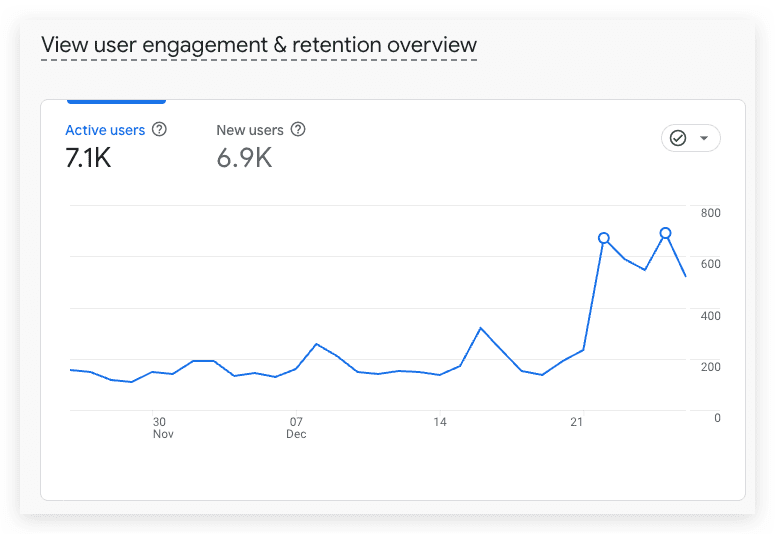
It was measured by business outcomes: more direct demand, stronger conversion trust, and a scalable growth system across a multi-location homestay and short-term rental group. Because in hospitality, the real KPI is simple:
Can your brand generate bookings without depending on platforms?
What Improved (The KPI Categories That Matter)
1️⃣ Direct Booking Momentum
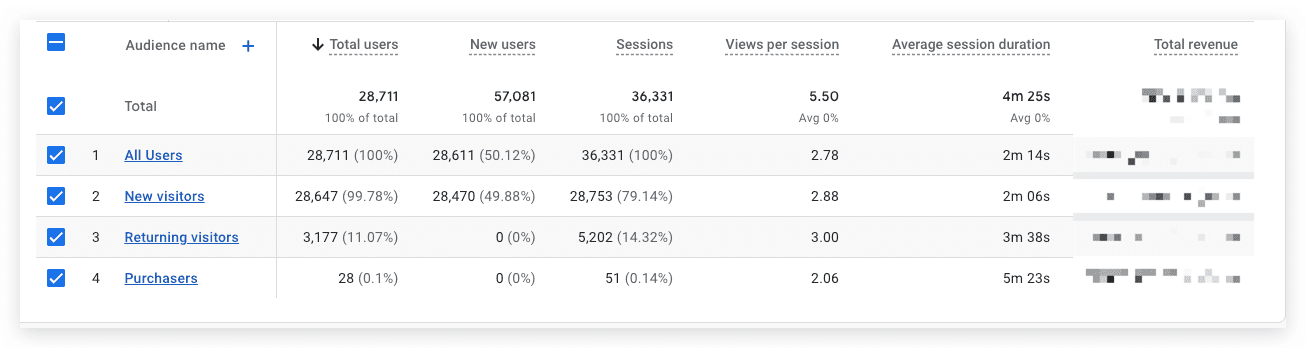
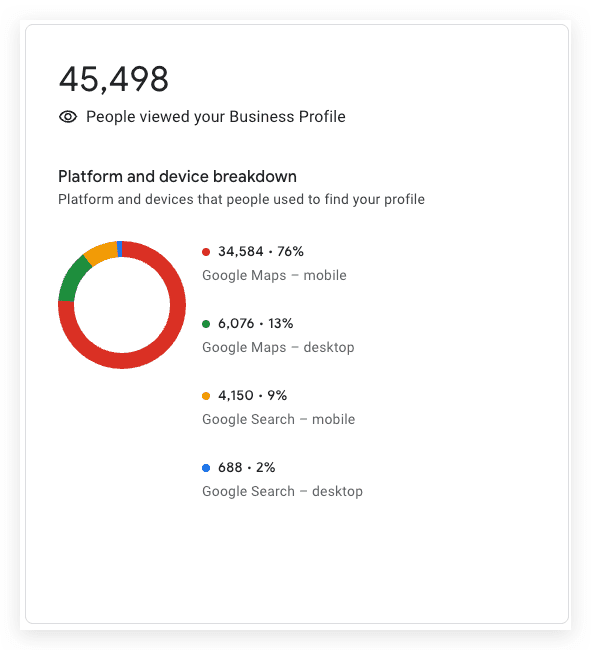
The website and funnel were rebuilt to function as a trust bridge and conversion engine — resulting in a stronger pipeline of direct inquiries and confirmations.
What to show here:
- Website → WhatsApp click volume trend
- Direct booking inquiry count trend
- % mix shift: OTA vs direct (even if directional)
Visual proof ideas:
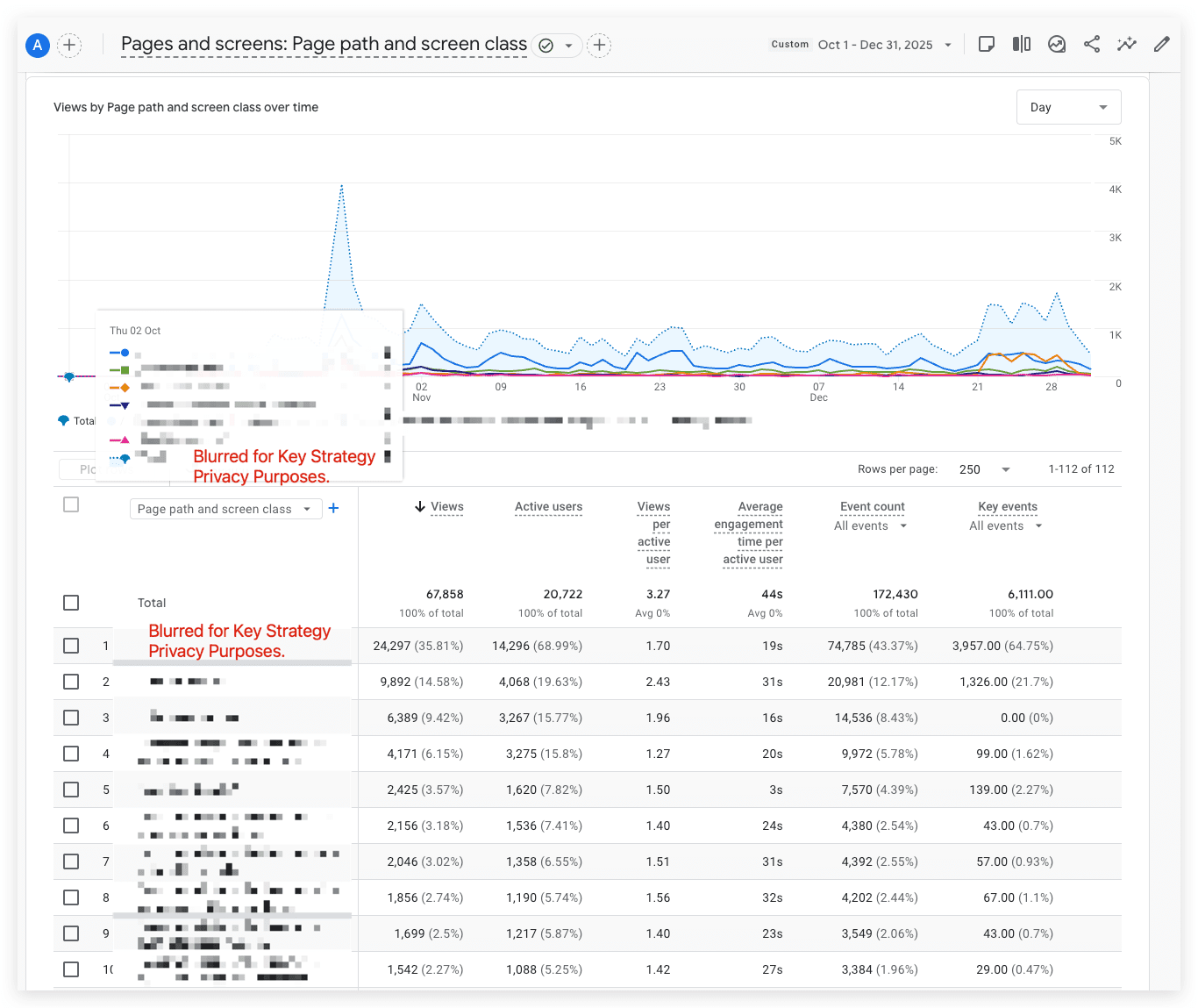
- GA4 events screenshot (WhatsApp/Call clicks)
- Inquiry tracker sheet screenshot (redacted)
- Booking source mix chart (Before vs After)
2️⃣ Reduced OTA Dependency Risk
We did not “delete OTAs.”
We changed the role of OTAs:
- OTAs become discovery channels
- Website becomes trust + conversion channel
- Retargeting moves guests toward direct
The strategic win is not “no OTA bookings.”
It’s:
Less dependency + better margins + more control.
Visual proof ideas:
- Diagram: OTA discovery → Website trust → Direct booking
- Commission savings example (simple graphic)
- Repeat guest strategy visual (OTA first stay → direct next stay)
3️⃣ Higher Margin Per Booking
Every direct booking improves unit economics.
Even without changing occupancy, the business benefits from:
- Reduced commission leakage
- Upsell via packages & add-ons
- Better perceived value (less discounting pressure)
Visual proof ideas:
- Example margin comparison graphic: OTA vs Direct
- Package tier table showing upgrade path
- Add-on menu screenshot
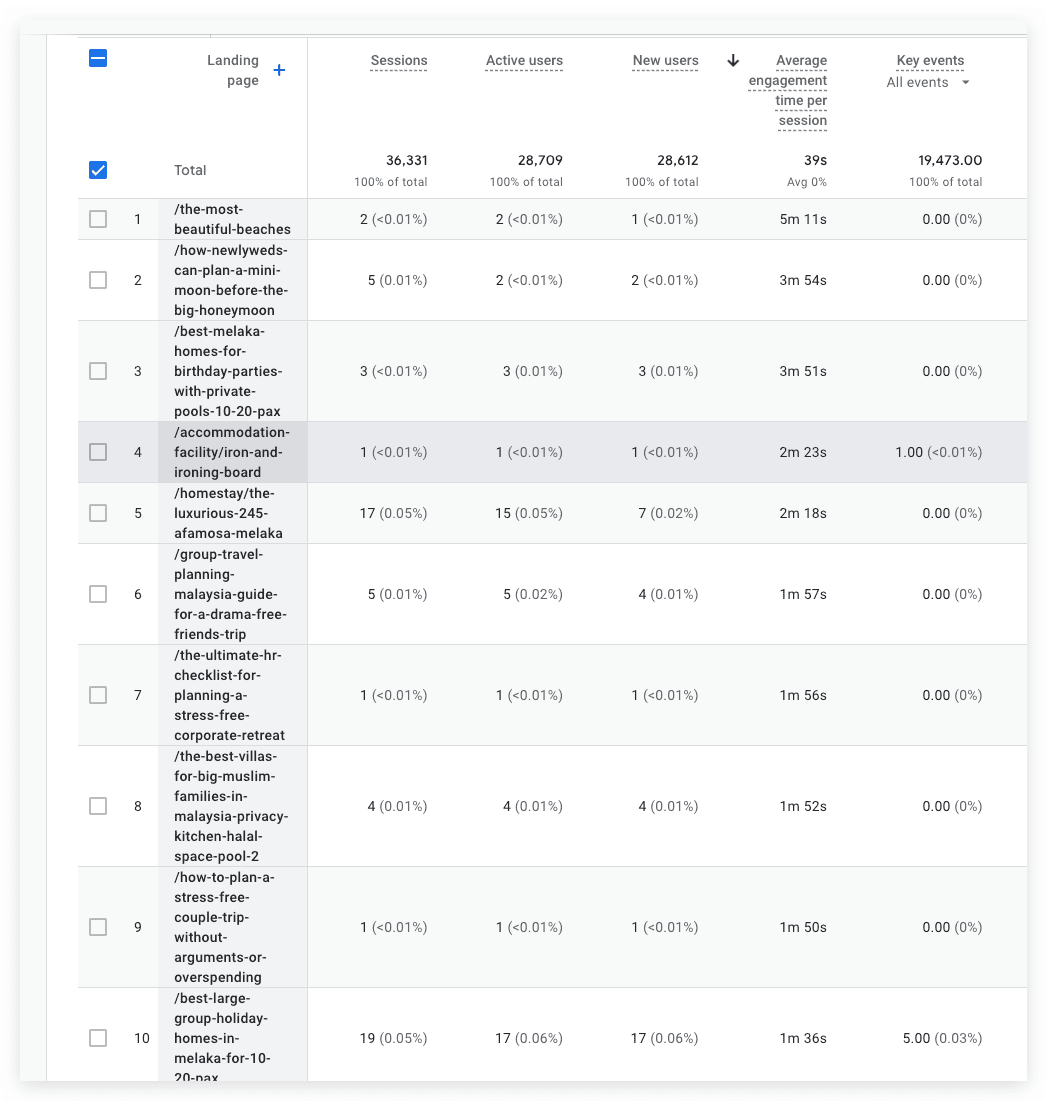
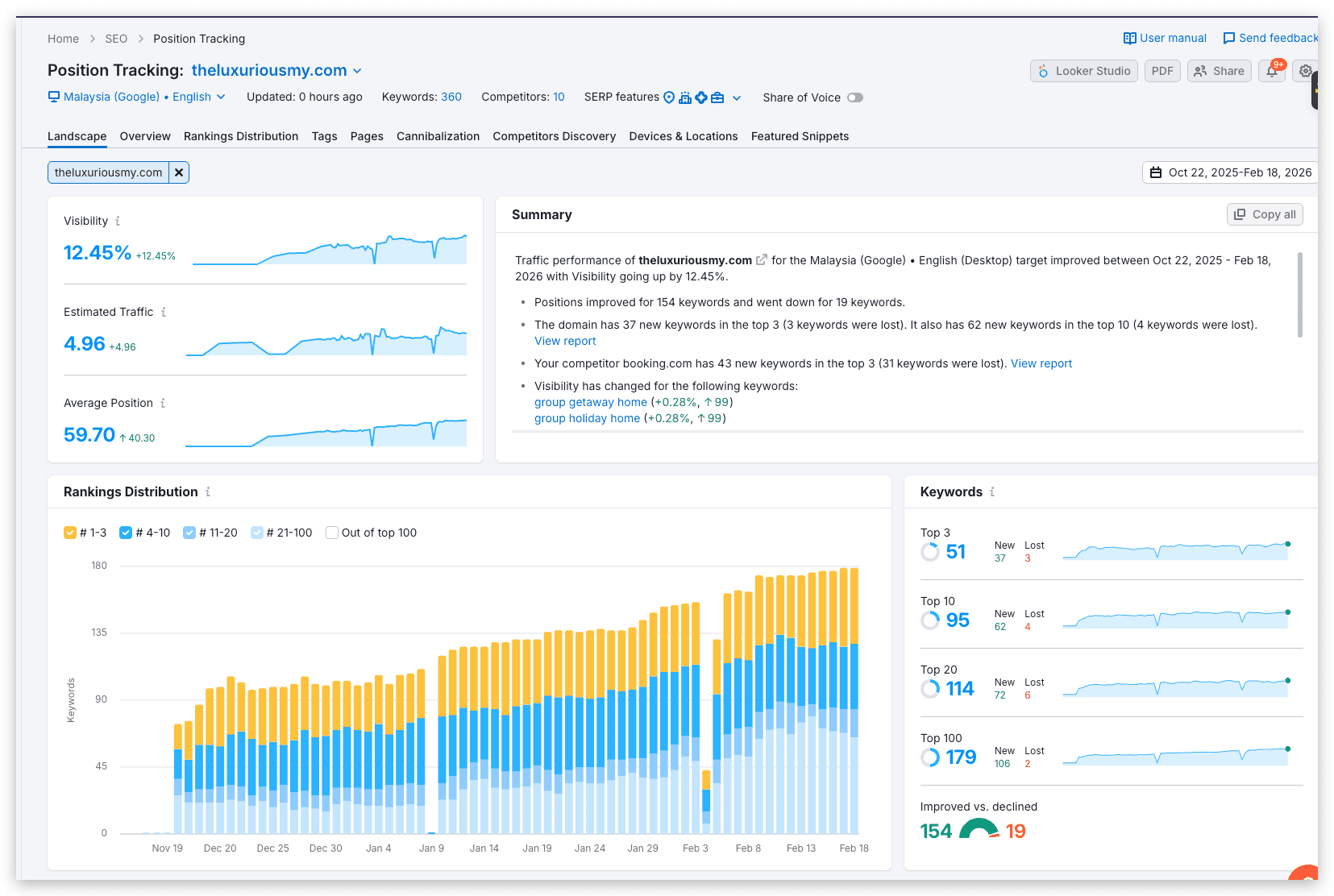
4️⃣ Search Visibility & Owned Demand Capture
SEO shifted The Luxurious from being visible only inside platforms to being discoverable through Google intent-based searches.
This is compounding growth:
- Pillar pages continue capturing demand
- Rankings reduce long-term paid dependency
- Paid ads perform better with relevant pages
Visual proof ideas:
- Google Search Console impressions/clicks growth
- Keyword cluster screenshot
- Landing page examples ranking for intent terms
5️⃣ Performance Marketing Efficiency
Ads became more efficient because:
- We aligned campaigns to intent-based landing pages
- Retargeting loops were structured
- Creative output was systemized
This typically improves:
- Cost per qualified inquiry
- Conversion rate from click → inquiry
- Retargeting conversion performance
- Budget scalability confidence
Visual proof ideas:
- Ads manager KPI screenshot (redacted)
- Creative testing board snapshot
- Funnel diagram with retargeting stages
6️⃣ Brand Authority & Trust Lift
This is the KPI that most operators ignore — but it’s the reason direct booking becomes possible.
The Luxurious began to look like a serious hospitality group, not just “another homestay listing.”
Signals that improved:
- Consistent luxury aesthetic
- Structured website credibility
- Offer clarity and professionalism
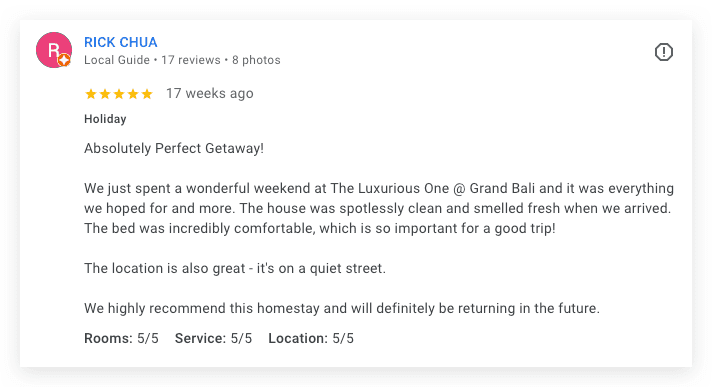
- Social proof stacking
Visual proof ideas:
- Before vs after website sections
- Before vs after Instagram grid
- Reviews/testimonials display section
- Press/mentions (if any)
The Outcome in One Line
The Luxurious moved from platform-reliant bookings to a brand-owned growth system designed to scale across multiple properties, locations, and customer occasions.
Not just marketing.
Infrastructure.
What This Transformation Proves for Homestay & Hospitality Groups in Malaysia
The Luxurious case is not just about one brand.
It represents a pattern we see across the Malaysian homestay, villa, and short-term rental industry.
Many operators have:
- Beautiful properties
- Strong OTA ratings
- Healthy occupancy
- Growing demand
But they lack:
- Direct booking infrastructure
- Search visibility ownership
- Structured performance funnels
- Margin-optimized offer systems
- Internal alignment for scale
And that gap becomes more expensive as they grow.
Key Strategic Lessons
1️⃣ OTAs Are Distribution Channels — Not Growth Strategy
Airbnb, Agoda, and Booking.com are powerful for discovery.
But they should not be the only engine driving revenue.
Ownership of traffic = ownership of margin.
2️⃣ A Website Must Function as a Booking Asset
If your website is only informational, it cannot compete with OTAs.
It must:
- Match search intent
- Build trust instantly
- Guide decisions clearly
- Reduce friction to inquiry
- Reinforce premium positioning
3️⃣ SEO + Paid Ads Work Only When Infrastructure Exists
Running ads without a structured landing system wastes budget.
Doing SEO without conversion structure wastes traffic.
Traffic is not the KPI.
Revenue efficiency is.
4️⃣ Experience Packaging Protects Margins
Competing on “cheapest homestay” erodes brand value.
Competing on:
- Occasion
- Experience
- Packages
- Add-ons
- Structured value
Increases:
- Average booking value
- Perceived luxury
- Conversion confidence
5️⃣ Growth Requires Backend Alignment
Marketing can generate inquiries.
But without:
- Structured response frameworks
- Clear SOPs
- Pricing confidence
- Brand consistency
Scaling breaks internally.
Sustainable growth requires systemization.
The Bigger Outcome
The Luxurious transitioned from:
A collection of attractive villas listed on platforms
To:
A structured, scalable hospitality brand with a brand-owned acquisition system.
That difference determines whether a homestay group remains reactive —
or becomes an asset that compounds over time.
The Team Behind the Transformation: Rozzario — Hospitality & Homestay Growth Partner
The Luxurious transformation was not a one-service engagement.
It was a full-stack growth collaboration.
Rozzario did not operate as a content vendor or ad manager.
We operated as a strategic growth partner — aligning marketing, positioning, systems, and revenue architecture for a multi-location homestay and short-term rental group.
What We Actually Did (End-to-End Scope)
For The Luxurious, our involvement included:
- Social media strategy & content restructuring
- Website architecture & direct booking conversion design
- SEO keyword clustering & landing page strategy
- Performance marketing (Meta & Google Ads funnel design)
- Offer engineering & package structuring
- Campaign planning (festive, wedding, corporate, seasonal)
- Trust & brand authority positioning
- Sales workflow alignment
- Internal SOP guidance
- Performance-driven optimization loops
This is not “marketing support.”
This is infrastructure building for hospitality growth.
Who We Work Best With
Rozzario partners with:
- Multi-unit homestay operators
- Villa groups
- Boutique hotel brands
- Resort operators
- Hospitality investors
- Short-term rental portfolio owners
Especially those who:
- Want to reduce OTA dependency
- Want stronger margins through direct bookings
- Want SEO + paid ads working together
- Want structured campaign systems
- Want a scalable brand, not just listings
Our Core Philosophy
In hospitality, growth should not rely on:
- Platform algorithms
- Random content posting
- Discount-driven competition
It should rely on:
- Structured positioning
- Owned demand capture
- Conversion-focused infrastructure
- Measurable performance systems
We don’t just generate attention.
We build acquisition engines.
Final Strategic Positioning Line
If you operate a homestay, villa, hotel, or short-term rental group in Malaysia and want to:
- Increase direct bookings
- Improve margins
- Build brand authority
- Create scalable systems
Then the real question isn’t:
“Should we run ads?”
It’s:
“Do we have the infrastructure to scale sustainably?”
That’s where Rozzario comes in.
