
In this blog, “How to Open a Takeaway-Only Restaurant: Step-by-Step,” we outline a proven method to start a profitable, delivery-first food business in 2025—ideal for startups and existing operators ready to adapt.
You’ll learn how to:
- Understand the takeaway-only restaurant model and why it’s booming right now
- Choose the right format — ghost kitchen, delivery-only, or walk-in takeout
- Set up your kitchen, menu, and ordering systems for speed and profit
- Handle business registration, licensing, and compliance step by step
- Market your brand, manage delivery, and scale your operations with confidence
This Blog is written for first-time founders, side hustlers, and even existing takeaway owners who are seeking real answers — If you’re serious about launching or upgrading a delivery-first restaurant built for today’s market, you’re in the right place.
Why Takeaway-Only Restaurants Are Booming in 2025
A New Era of On-Demand Eating Habits
In 2025, food isn’t just about flavor — it’s about convenience. People now expect meals that fit into fast-paced schedules, mobile lifestyles, and remote work routines. That shift has made takeaway and delivery more than a trend — it’s now a standard dining format.
This demand has been fueled by:
- The growth of food delivery platforms that put restaurants just a few taps away
- Consumers seeking quicker meals with less friction than dining out
- Changing work patterns that make home delivery a lunch and dinner staple
- Tech-savvy diners who prefer digital ordering and contactless options
The result? Takeaway-first businesses are thriving, especially in cities and commuter hubs.
Why Founders Are Leaning Into the Delivery-First Model
For entrepreneurs, the takeaway-only format offers a leaner, smarter way to enter the food business. It strips away the most expensive parts of traditional restaurants — the front-of-house, table service, and high-footfall locations — and focuses instead on kitchen operations and order fulfillment.
Key reasons more founders are choosing this model:
- Lower startup costs — no need for large spaces or interior decor
- Easier staffing models — fewer people needed to operate efficiently
- More control over order flow, food quality, and customer data
- Room to test and pivot fast without being locked into a fixed concept
In essence, it’s the ideal entry point for modern food entrepreneurs with limited capital and big ambition.
A Business Built for Digital Ordering and Repeat Customers
Takeaway-only concepts are designed from the ground up to succeed in an app-first world. When done right, they lead to predictable orders, low overhead, and strong customer loyalty — especially if you offer a focused menu that travels well and delivers consistent value.
These businesses are also easier to scale:
- You can expand to new zones without new storefronts
- Launch secondary brands from the same kitchen
- Optimize performance using real-time data and reviews
It’s not just a trend — it’s the future of fast casual.
Wonder, New York City (2024)
In 2024, Wonder, founded by Marc Lore, revolutionized the food delivery landscape in New York City. By repurposing vacant storefronts, Wonder established multiple delivery-only kitchens, offering a diverse menu from renowned chefs like Bobby Flay and José Andrés.
Key Highlights:
- Innovative Use of Space: Transformed 19 vacant storefronts into efficient delivery hubs.
- Diverse Culinary Offerings: Provided a wide range of cuisines from a single location.
- Rapid Expansion Plans: Aimed to grow to 95 locations by the end of 2025.
- Efficient Delivery Model: Utilized an all-electric kitchen setup for quick and sustainable service.
Wonder’s approach demonstrates the potential of the takeaway-only model when combined with innovative strategies and a focus on quality.
What is a Takeaway-Only Restaurant?
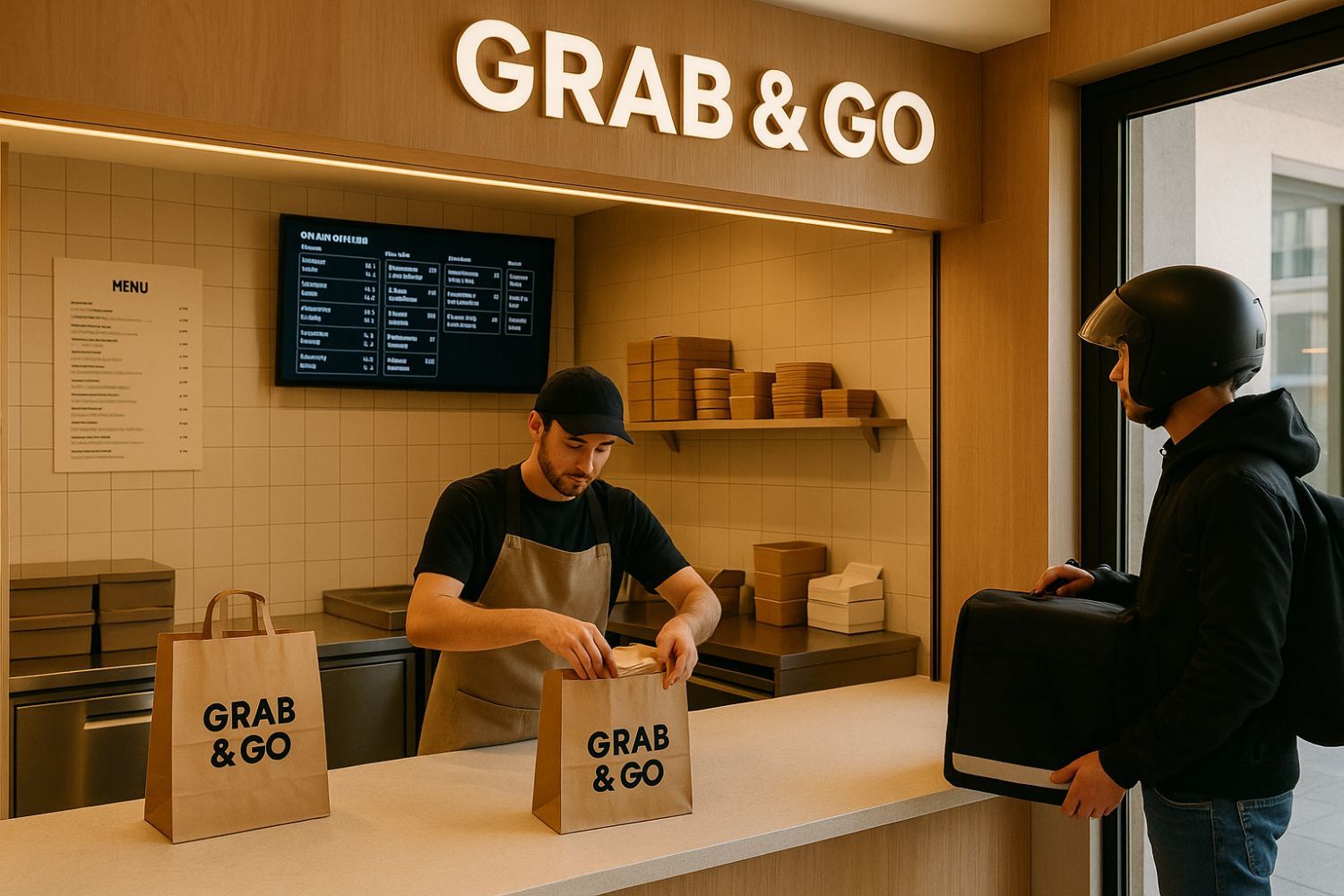
A takeaway-only restaurant is built for one thing: off-premise food service. There’s no dining area, no table service, and no sit-down experience. Every order is either picked up or delivered — a pure expression of the delivery-first restaurant strategy.
Unlike full-service restaurants, takeaway-only operations are:
- Compact and kitchen-focused, without a guest-facing floor plan
- Streamlined for speed and fulfillment, not in-house ambiance
- Designed for high-volume online ordering, not walk-in traffic
This model appeals to both new and experienced food entrepreneurs who want to avoid the cost and complexity of traditional setups.
Comparing Ghost Kitchens and Physical Takeaway Outlets
While all takeaway-only restaurants serve food off-premise, there are two common formats:
- Ghost Kitchens (a.k.a. cloud or dark kitchens)
- No storefront or public presence
- Orders placed entirely through apps or websites
- Often operate multiple virtual brands from one kitchen
- Brick-and-Mortar Takeaway Shops
- A visible, small physical location with a counter or pickup window
- Customers may order online or walk up to collect
- Often used to serve hyperlocal communities with strong foot traffic
Each has its benefits. Ghost kitchens offer low-cost scalability, while brick-and-mortar options can support brand visibility and impulse orders.
Why This Model Works So Well in 2025
The takeaway-only business model isn’t just a workaround — it’s a smarter, leaner way to serve modern demand. It offers:
- Lower real estate and operational costs
- Better control of delivery quality with a focused kitchen workflow
- Faster testing of new menus or concepts
- Simplified staffing needs, often run by small teams
And as customers become more reliant on apps and mobile ordering, the format continues to outperform many dine-in models — especially in urban, suburban, and mixed-use zones.
Tokyo Sando, Portland, Oregon (2024)
Tokyo Sando is a Japanese-style sandwich shop operating from a food cart in Portland, Oregon. Established in 2020, it exemplifies a brick-and-mortar takeaway model without dine-in facilities. Despite challenges during the COVID-19 pandemic, Tokyo Sando adapted by relocating and focusing on delivery and pickup services. Its success underscores the viability of compact, takeaway-only operations in urban settings.en.wikipedia.org
Key Highlights
- Format: Operates from a food cart, emphasizing takeaway and delivery services.
- Menu: Specializes in Japanese sandwiches, catering to niche market preferences.
- Adaptability: Successfully navigated pandemic-related challenges by shifting locations and service models.
- Customer Engagement: Built a loyal customer base through quality offerings and consistent service.
Tokyo Sando proves that small-format, delivery-driven models can thrive with the right product and adaptability.
Is a Takeaway-Only Restaurant Right for You?
Assess Your Budget, Market, and Readiness
Not every food business idea is a good fit for the takeaway-only model. Before you jump in, take a step back and look at your real-world resources. This model might be leaner than dine-in, but it still demands capital, planning, and operational discipline.
Here’s what you should evaluate honestly:
- Startup budget: Can you cover kitchen setup, licensing, packaging, staff, and marketing for at least 6 months?
- Experience level: Have you worked in kitchens, handled food safety, or managed a team before?
- Market demand: Is your area saturated with delivery-only brands, or is there room for a new concept?
Takeaway restaurants can be profitable — but only if they’re built on solid ground.
What You’ll Gain (and What You Might Sacrifice)
Like any business model, takeaway-only restaurants have strengths and drawbacks. Understanding them early can help you make better decisions and avoid startup stress.
Benefits:
- Lower rent and fewer overheads
- Faster launch timeline compared to dine-in
- Easier menu testing and cost control
- High-volume potential via delivery platforms
Trade-offs:
- Minimal customer interaction — loyalty must be built digitally
- Limited upselling without servers
- High dependence on logistics and packaging
- Smaller teams = more responsibility on each person
If you’re launching solo or with a lean team, these trade-offs become even more important.
Pick the Right Format for Your Skillset and Vision
The format you choose should work with your lifestyle, capital, and goals — not just trends.
- A ghost kitchen may suit you if you’re starting small and want to avoid upfront retail space costs
- A delivery-only counter may work better if you want some local walk-up presence
- If unsure, test with pop-ups or virtual brands before locking in a location
What matters most is aligning your format with your strengths, not just what’s popular.
Box Chicken, Los Angeles (2024)
Box Chicken, launched in 2024 in Los Angeles, is a delivery-only restaurant built inside a 200-square-foot ghost kitchen. Founded by Noah Clark and his mother, Reiko, the brand specializes in Japanese-American comfort food and operates entirely through delivery apps. With a lean startup budget, they focused on low overhead and menu simplicity.
- Format: Ghost kitchen, no dine-in or walk-up
- Startup approach: Family-run, limited capital, app-based ordering only
- Menu: Japanese soul food with American fusion
- Challenges: Low brand visibility, limited customer interaction
- Advantage: Fast launch and cost-effective operations
Box Chicken’s journey shows how ghost kitchens can offer both flexibility and real-world trade-offs.
Top Takeaway Restaurant Ideas That Work in 2025
Best-Selling Classics with a Fast Casual Twist
Some food categories never go out of style — but in 2025, they’re evolving. Pizza, burgers, fried chicken, and wraps are still top sellers in the takeaway restaurant model, especially when updated with smarter packaging and cleaner ingredient lists. These are the “comfort-first” formats that convert well on delivery apps and appeal to a wide audience.
Popular delivery-first spins include:
- Artisanal or wood-fired pizza with niche toppings
- Smash burgers, vegan patties, or brioche-based sliders
- Build-your-own bowls, burritos, or fried chicken combos
- Sides and sauces packaged for dipping, not spillage
These ideas are quick to prepare, scale easily, and offer high customer familiarity with room for creative twists.
Modern Menus for Health-Focused Lifestyles
If you want to stand out in a crowded market, health-focused menus are gaining real traction — especially in suburban and business districts. These takeaway concepts lean into clean ingredients, dietary needs, and wellness-conscious branding.
Winning plant-based & functional concepts include:
- Salad boxes and grain bowls with protein add-ons
- Vegan sushi rolls, tofu wraps, or jackfruit tacos
- Cold-pressed juice bundles or build-your-own smoothie kits
- Gluten-free, keto, or dairy-free meal packs
This segment not only draws repeat orders but also allows for subscription models and pre-order meal planning.
Global Cuisines and Street Food Built for Delivery
One of the fastest-growing areas in delivery is niche, ethnic, and regional food that’s hard to find elsewhere. These concepts appeal to younger, urban customers looking for flavor variety and cultural authenticity.
Examples of high-performing street food niches:
- Korean corn dogs, Taiwanese popcorn chicken, or Filipino silog meals
- Middle Eastern shawarma boxes or Indian chaat trays
- Mexican birria tacos with dipping broth
- Caribbean patties or jerk chicken bowls
These menus tend to drive social buzz and Instagram visibility — a bonus for low-budget brands.
Step-by-Step Guide to Opening a Takeaway-Only Restaurant
Market Research & Choosing the Right Location
Start with Demand — Not Just a Map
Before signing a lease or joining a ghost kitchen, your first step is understanding where customers are actually ordering food. The best takeaway locations aren’t always in crowded city centers — they’re in delivery “hot zones” with high online ordering frequency and minimal delays.
Here’s what to look for when scouting high-demand areas:
- Dense residential zones with busy working professionals
- Apartment-heavy neighborhoods where kitchens are small
- Areas near universities or business districts with steady weekday traffic
- Zones underserved by variety — especially niche or ethnic foods
Use data from apps like Uber Eats, Deliveroo, or Foodpanda to pinpoint gaps in the map.
Foot Traffic Isn’t Everything — Know Your Format
If you’re running a dine-in restaurant, footfall is key. But in a takeaway-only setup, your delivery radius and order density matter more. Choosing the wrong location — even if it looks busy — can cripple your reach and delay orders.
For ghost kitchens and delivery-first brands:
- Prioritize areas with strong app delivery coverage
- Avoid regions with limited rider availability or weak digital penetration
- Consider proximity to major roads for easy driver access
- Don’t get stuck in high-rent zones chasing walk-in customers
If you’re planning limited local pickup, placing yourself within a few blocks of schools, gyms, or office parks can help.
Study the Competition — But Look for What’s Missing
Competitor research is about more than who’s already popular — it’s about where gaps still exist. A saturated market might seem successful but could lack something essential: your angle.
To validate your concept:
- Analyze menus of top delivery restaurants in your target zone
- Look for overused categories — like generic pizza or wings
- Scan for missing cuisines, allergens, or dietary formats
- Study reviews to find complaints or unmet expectations
- Check if existing players have long delivery times or poor presentation
Validation means finding space in the crowd, not just entering a trend.
Market Research & Choosing the Right Location
Start with Demand — Not Just a Map
Before signing a lease or joining a ghost kitchen, your first step is understanding where customers are actually ordering food. The best takeaway locations aren’t always in crowded city centers — they’re in delivery “hot zones” with high online ordering frequency and minimal delays.
Here’s what to look for when scouting high-demand areas:
- Dense residential zones with busy working professionals
- Apartment-heavy neighborhoods where kitchens are small
- Areas near universities or business districts with steady weekday traffic
- Zones underserved by variety — especially niche or ethnic foods
Use data from apps like Uber Eats, Deliveroo, or Foodpanda to pinpoint gaps in the map.
Foot Traffic Isn’t Everything — Know Your Format
If you’re running a dine-in restaurant, footfall is key. But in a takeaway-only setup, your delivery radius and order density matter more. Choosing the wrong location — even if it looks busy — can cripple your reach and delay orders.
For ghost kitchens and delivery-first brands:
- Prioritize areas with strong app delivery coverage
- Avoid regions with limited rider availability or weak digital penetration
- Consider proximity to major roads for easy driver access
- Don’t get stuck in high-rent zones chasing walk-in customers
If you’re planning limited local pickup, placing yourself within a few blocks of schools, gyms, or office parks can help.
Study the Competition — But Look for What’s Missing
Competitor research is about more than who’s already popular — it’s about where gaps still exist. A saturated market might seem successful but could lack something essential: your angle.
To validate your concept:
- Analyze menus of top delivery restaurants in your target zone
- Look for overused categories — like generic pizza or wings
- Scan for missing cuisines, allergens, or dietary formats
- Study reviews to find complaints or unmet expectations
- Check if existing players have long delivery times or poor presentation
Validation means finding space in the crowd, not just entering a trend.
Hangry, Jakarta
Hangry, a leading multi-brand virtual restaurant in Indonesia, expanded across Jakarta by selecting ghost kitchen locations based purely on food delivery data. Instead of choosing high-traffic malls or streets, the team mapped order volume and cuisine gaps within specific delivery zones.
- Strategy: Used app analytics to find underserved areas
- Model: Multi-brand, delivery-only, ghost kitchen operation
- Growth: Expanded to 50+ kitchens in 2 years
- Results: Fast fulfillment, brand variety, and localized demand targeting
Perfect example for entrepreneurs who want to scale smart by launching delivery-first brands based on real-time customer demand.
Creating a Profitable Takeaway Menu
Designing Food That Travels Well and Sells Fast
Not every great dish makes a great delivery item. In the takeaway restaurant model, your food must hold up in transit, retain flavor, and arrive in top condition. That means shorter prep times, smart combinations, and ingredients that don’t fall apart in a box.
Ideal delivery menu items include:
- Compact foods: Burgers, wraps, grain bowls, and curries
- Layered meals: Stir-fries, noodle dishes, or rice platters that retain heat
- Items with minimal assembly: Ready-to-eat and no on-site garnishing
- Sides that complement mains: Dips, seasoned fries, sauces, or desserts
Start with 6–10 items and expand only after validating what sells.
Packaging Isn’t an Afterthought — It’s Part of Your Product
Your packaging isn’t just a container — it’s part of the customer experience. It affects taste, texture, presentation, and brand perception. Poor packaging can ruin a great dish before it even reaches the customer’s door.
When choosing your packaging materials:
- Use breathable containers for fried foods to prevent sogginess
- Opt for compartmentalization to separate wet/dry or hot/cold items
- Brand your packaging (stickers, printed boxes) for marketing impact
- Prioritize eco-friendly materials — customers notice this in 2025
Test how your food travels across 20–30 minutes before finalizing your setup.
Build a Menu That Maximizes Margin and Reduces Waste
A profitable takeaway menu isn’t just tasty — it’s engineered for margin and efficiency. The best menus use overlapping ingredients, simplified prep methods, and smart bundling.
To engineer your menu:
- Highlight 3–4 high-margin items and promote them as house specials
- Cross-utilize ingredients to cut inventory waste
- Group meals into bundles or combos that increase average order value
- Design with station-based prep so staff can execute faster under pressure
Simplicity is strength. Don’t overcomplicate your first menu — dial it in, then expand.
Registering Your Business & Legal Requirements
Licenses and Permits You Can’t Skip
Starting a takeaway-only restaurant still requires full legal setup — even if you don’t have a dining room. Your first step is registering your business as a legal entity and applying for the appropriate operating licenses. These vary by country and region but usually include food safety, business tax, and operational permits.
Typical requirements include:
- Business registration as a sole proprietorship, LLC, or partnership
- Food service license from the local health authority
- Kitchen inspection certificates to verify sanitary conditions
- Employer Identification Number (EIN) for tax purposes (where applicable)
- Sales tax or VAT registration depending on local regulations
Always check your local council or government portal — every city has its own checklist.
Choosing a Location That Meets Zoning Laws
Before renting a space or joining a ghost kitchen, you must confirm the area is zoned for commercial food production. Even shared commissaries or cloud kitchens need local approval to legally serve takeaway.
Key zoning points to consider:
- Ensure the address is zoned for food use — not residential or restricted commercial
- Verify signage and customer pickup rules (if applicable)
- Check for delivery restrictions, especially in noise-sensitive zones
- Comply with fire, waste, and ventilation regulations
- Understand vehicle access rules if managing in-house delivery
Renting a space without confirming zoning compliance can get you shut down quickly — even if your kitchen is spotless.
Health and Safety Compliance for Takeaway Kitchens
Health compliance doesn’t change just because you’re not serving guests onsite. You’ll still need regular inspections, temperature monitoring, cleaning routines, and food handler training.
What health authorities often look for:
- Proper cold and hot food storage procedures
- Safe prep surfaces and sanitization protocols
- Labeling for allergens and expiry dates
- Use of gloves, uniforms, and cleanliness tracking logs
- Valid food handler certificates for all staff
Failing to meet these standards risks fines or business suspension — so treat it seriously from day one.
Setting Up Your Takeaway Restaurant Space
Which Kitchen Setup Fits Your Budget and Growth Plan?
The space you choose sets the foundation for your entire operation — and in the takeaway restaurant model, flexibility and cost control matter most. You typically have three main setup options, each with its own pros and limitations.
Common formats include:
- Ghost Kitchens — Shared or private spaces in centralized locations; low visibility, app-driven growth
- Commissary Kitchens — Rented prep space with shared storage, utilities, and equipment; ideal for low-volume startups
- Standalone Units — Dedicated small storefronts with pickup windows or compact interiors; higher control but higher cost
Your decision should reflect your startup budget, delivery plan, and whether you want a walk-up counter or not.
What Equipment You’ll Actually Need
You don’t need a fully loaded commercial kitchen to launch — but you do need enough to operate smoothly, safely, and efficiently. Focus on essentials that match your menu and volume expectations.
Start with core tools like:
- Prep counters and worktables for multi-station cooking
- Commercial refrigeration and freezer units
- Griddles, fryers, or ovens depending on your main dishes
- Shelving and cold storage for ingredients
- Label printers and delivery bag stations for order flow
- Sinks and sanitizing systems for compliance
Avoid investing in high-end appliances too early — get reliable mid-range tools that won’t eat your budget.
Design for Flow, Not Looks
In takeaway kitchens, design isn’t about aesthetics — it’s about operational flow. Your layout should reduce movement, cut prep time, and support simultaneous tasks under pressure.
To keep your kitchen running efficiently:
- Use a U-shaped or linear layout for visibility and reach
- Organize stations by task (cold prep, hot line, packing, dispatch)
- Keep cleaning zones separate from cooking areas
- Allow clear paths for staff and delivery handoff
- Mount vertical racks to save space in tight rooms
Even small design decisions can save minutes — and that adds up when you’re running 60+ orders a day.
Technology & Ordering Systems for Takeaway Restaurants
Choosing the Right Apps to Get Discovered
Third-party delivery platforms like Uber Eats, Foodpanda, Deliveroo, and DoorDash are often the first stop for new takeaway restaurants. They offer visibility, logistics, and a built-in customer base — but they also take a hefty commission.
To get started:
- List your business on 1–2 top apps in your region
- Use high-quality food photos and clear menu formatting
- Take advantage of launch discounts or free delivery promos
- Monitor reviews and delivery timing to improve ranking
Apps are useful for discovery, but over time, the goal should be to bring customers to your own channels.
Building Direct Ordering That Converts
While apps bring reach, owning your customer relationship brings profitability. Having a mobile-optimized website with integrated ordering is essential to reduce fees and build long-term loyalty.
Best practices for direct ordering:
- Use an online ordering tool like GloriaFood, Square, or Flipdish
- Integrate secure payment gateways with saved card options
- Set up mobile-friendly menus with filters, add-ons, and clear pricing
- Offer pickup, pre-ordering, and custom delivery time windows
- Capture customer emails and phone numbers for future marketing
This is where you’ll keep more margin and get better control over branding and feedback.
Discover which online ordering platform is best for your restaurant—click here.
Back-End Tools That Power Fulfillment
Technology doesn’t stop at the customer side — you’ll need a reliable system to manage orders, track sales, and handle delivery flow. A good POS system ties it all together.
Look for features like:
- Order syncing across channels (app, direct, phone)
- Real-time order dashboards for the kitchen
- Inventory and ingredient tracking for menu forecasting
- Multi-location support if you plan to scale
- Quick integration with delivery dispatch or rider systems
Your POS is the brain of your takeaway operation — invest in one that saves you time, not just money.
Hiring & Staffing for a Takeaway-Only Operation
Build a Lean Team That Can Deliver Under Pressure
In a takeaway-only restaurant, you don’t need waiters or hosts — but you still need a capable team that can cook, pack, and fulfill dozens of orders per hour. Your focus should be on building a compact, cross-trained crew that knows how to handle volume with consistency.
A smart lean team might include:
- 1–2 cooks or food prep specialists who rotate between stations
- 1 expediter or line lead to check orders before dispatch
- 1 packer or handoff coordinator for bagging and labeling
- 1 delivery runner or external app partner liaison
In early stages, founders often play multiple roles — which is fine, as long as systems are tight.
Who You Actually Need to Hire (and When)
The first hires you make will depend on your menu and order volume. Start with essentials, then expand based on clear demand. Over-hiring too soon can eat into profits — especially if you’re paying hourly rates during slow periods.
Here are the must-fill roles:
- Kitchen prep staff — Chop, marinate, assemble, clean
- Cook or line operator — Execute orders consistently
- Order packer — Label and double-check for accuracy
- Delivery support — Hand off to drivers or coordinate dispatch
You may also consider part-timers or weekend shifts if your demand is seasonal or peak-based. Staff with prior experience in delivery or QSR environments tend to onboard faster and require less micromanagement.
To retain talent, offer:
- Flexible shifts and team-based scheduling
- Cross-training opportunities so roles stay dynamic
- Staff meals or shift incentives when order targets are met
Your team isn’t just labor — they’re the backbone of your brand experience.
Marketing Your Takeaway Restaurant for Maximum Orders
Rank Higher Where It Matters — “Takeaway Near Me” Searches
If people can’t find you online, they can’t order from you. Most customers will discover your brand by searching “takeaway near me” or browsing delivery apps — which is why local SEO is your starting point.
To improve local visibility:
- Claim and optimize your Google Business Profile
- Use consistent NAP (Name, Address, Phone) info across all directories
- Include relevant keywords like “takeaway,” “delivery,” and dish names in your profile
- Add menu links, high-res photos, and clickable ordering buttons
- Encourage happy customers to leave reviews (and respond to them)
A strong local SEO footprint leads to more map views, phone calls, and app orders.
Looking to bring more customers? Work with Rozzario, Malaysia’s top SEO agency — click here.
Turn Social Media Into a Local Buzz Engine
Social media helps small takeaway brands punch above their weight. You don’t need a huge following — just a consistent presence and content that resonates with your audience.
Simple strategies that drive engagement:
- Share behind-the-scenes prep clips, staff highlights, and daily specials
- Use Reels or TikToks showing packaging, pickup, or “satisfying order” prep
- Run small giveaways tied to order pickup or first-time customers
- Tag your delivery apps and repost customer reviews
- Geo-target hashtags like #LondonTakeaway or #KualaLumpurEats
A well-managed Instagram or TikTok page can drive real traffic without paid ads.
Use App Promotions and Paid Ads to Scale Faster
Once your organic channels are running, you can amplify reach through paid strategies. These aren’t mandatory from day one — but they’re useful for driving awareness during launches or slow weeks.
Smart paid tactics include:
- Sponsored listings on Uber Eats or Foodpanda
- Google Local Ads for searches like “burgers near me open now”
- Facebook and Instagram ads with geo-targeted delivery radiuses
- Retargeting ads to reach past website or app visitors
Just set a small test budget — even $5/day — and track conversions closely.
Ready to grow your takeaway brand with expert marketing?
At Rozzario, we help food businesses dominate local searches, drive orders through PPC, and build loyal followings on social media. Whether you’re launching or scaling, our tailored strategies turn clicks into real customers.
Let Rozzario handle your digital marketing — so you can focus on serving great food.
Book your free consultation now
Delivery Logistics & Partner Management
Why Delivery Is the Core of Your Brand
In a takeaway-only model, delivery isn’t just a service — it’s your storefront, customer experience, and reputation all rolled into one. From the moment a customer places an order to the second it reaches their door, every touchpoint matters.
Customers judge your business based on:
- Speed and accuracy of each delivery
- Packaging quality and food condition
- Driver professionalism and order tracking
- Communication during delays or issues
Treat delivery like a product. It must be refined, predictable, and consistently excellent.
In-House vs. Third-Party Delivery: What to Choose
You have two main delivery models: use third-party platforms or manage it yourself. Each comes with trade-offs.
Third-party pros:
- Wider reach through app discovery
- Instant logistics without needing drivers
- Integrated payments and support
Cons:
- 20–35% commission on every order
- Less control over handoff and driver conduct
In-house pros:
- More margin per order
- Better branding and delivery experience
- Flexibility with promos and routes
Cons:
- Requires managing drivers and dispatch systems
- Costly if you don’t have steady volume
Many takeaway businesses start with platforms and gradually shift to hybrid or in-house.
Systems That Improve Delivery Efficiency
Whether you’re using apps or your own drivers, the real performance gain comes from back-end systems. Your goal is fast dispatch, minimal errors, and smooth kitchen-to-customer flow.
To get there:
- Use delivery dashboards integrated with POS or app APIs
- Implement batching and smart routing for high-volume hours
- Automate delivery status updates via SMS or app
- Set clear order packing protocols for accuracy
The more orders you handle, the more automation you’ll need to stay consistent.
Enhancing the Customer’s Last-Mile Experience
Even with great food, one bad delivery can cost you a repeat customer. The final step — the handoff — should feel just as intentional as the menu.
Tips for great last-mile impressions:
- Brand your packaging, seals, and bags
- Offer real-time tracking links or SMS ETA updates
- Include a printed thank-you note or QR for reorders
- Ask for feedback to improve and build trust
Great delivery makes people return — not just once, but again and again.
Launching Your Takeaway-Only Restaurant Successfully
Start Quiet, Launch Smart — Then Scale Loud
A big grand opening isn’t necessary when launching a takeaway-only brand. In fact, starting small with a soft launch gives you time to fix hiccups, refine order flow, and test the customer experience before serious volume kicks in.
Your soft launch game plan should include:
- A short menu preview week for friends, family, or local beta testers
- Exclusive early-bird deals for pickup or first-time delivery customers
- Testing your full kitchen workflow, packaging, and handoff
- Gathering early feedback on food, service, and tech
Think of your soft launch as a rehearsal — it’s how smart brands build confidence before scaling up.
Engage Real People Before You Chase Clicks
A few real conversations can be more valuable than 1,000 ad impressions. If you’re a neighborhood or city-based brand, start by showing up where your potential customers already are — online and offline.
Ways to build early local buzz:
- Partner with a nearby gym, café, or co working spaces for flyer drops or bundle deals
- Offer sample deliveries to apartment buildings or student housing
- Join or sponsor a local Facebook group, foodie page, or WhatsApp community
- Reach out to community admins for barter posts, giveaways, or early feedback
- Host a small “menu testing” day for your pickup zone
The goal isn’t just exposure — it’s trust. Earned attention sticks longer than paid traffic.
Turn Early Orders Into Social Proof That Sells
Customers trust other customers. One of the most powerful assets during your first 30 days is real social proof — and the easiest way to build it is by making it part of your order flow.
Encourage every early customer to:
- Leave a review on Google, Uber Eats, or your direct ordering page
- Tag you on Instagram with photos or unboxing stories
- Share feedback via QR codes or post-order SMS
- Refer friends with discount codes or bundle offers
- Get featured in your highlights or posts
Every review or tag is a free ad — and builds credibility fast.
Your first month can make or break your restaurant’s image, so plan it carefully.
Launching a great takeaway concept isn’t enough — you need people talking, sharing, and reordering.
That’s where Rozzario comes in. We help new food brands run launch campaigns that actually work — from soft openings that generate word-of-mouth, to community-first social content, to 5-star reviews that build instant trust. Whether you’re starting small or thinking big, we’ll help you turn every early order into long-term momentum.
Launch louder. Launch smarter. Talk to Rozzario — your growth team starts here.
Growing & Scaling Your Takeaway Restaurant Over Time
Start Small, Then Stretch: Menu, Hours & Zones
Once your kitchen runs smoothly and orders are steady, growth is about expanding wisely — not just doing more for the sake of it. You can scale in stages by extending menus, adjusting hours, and widening your delivery zones based on data.
Simple ways to grow with control:
- Add 1–2 new dishes or bundles based on bestsellers
- Test late-night or weekend hours to catch new traffic
- Open up new zip codes or postcodes using delivery partner heatmaps
- Launch limited-time offers in different areas to gauge demand
Scaling doesn’t have to mean chaos — it just means serving more of what already works.
Expand Without the Overhead: Virtual Brands & New Sites
If your kitchen still has downtime or unused prep space, you don’t need a second location yet. You can launch a virtual brand — a second identity that uses the same team, tools, and ingredients under a new menu and name.
Other ways to expand efficiently:
- Partner with ghost kitchen providers in other cities using your existing brand
- Create spin-off menus like a dessert-only or vegan version of your original concept
- License your concept to franchise or satellite kitchens
- Use cross-kitchen promotion (e.g. two brands sharing one delivery zone)
A second brand doesn’t need a second team — just smart planning and clear product identity.
Let Your Data Tell You What’s Working (and What’s Not)
Growth without visibility is just guesswork. To scale profitably, you need to look at your numbers — not just sales, but prep times, customer behavior, repeat rates, and order performance.
Metrics that matter as you scale:
- Order frequency and repeat customer rate
- Dish popularity and margin by item
- Delivery success rates and driver efficiency
- Customer reviews by location or hour
- Prep time averages for every shift
Use tools like Google Data Studio, POS dashboards, or app analytics to track what’s scaling well — and what’s dragging you down.
Common Mistakes to Avoid When Starting a Takeaway-Only Restaurant
Not Planning for the Real Cost of Operations
A major mistake many founders make is assuming that because there’s no dining room, a takeaway-only business will be cheap and easy to run. But rent, equipment, staff, packaging, and platform commissions add up quickly — and without good systems, small problems multiply fast.
What often gets missed:
- Delivery platform fees cutting into margins
- Packaging costs that scale with volume
- Staff shortages during peak hours
- Lack of budget for cleaning, maintenance, or gear replacements
Takeaway doesn’t mean low-effort — it means every part of the system has to be tighter, faster, and more cost-aware.
Building a Menu That Fails in Transit
Some dishes just don’t travel well. New food founders often launch with a dine-in mindset, choosing recipes that sound great on paper but fall apart in a box. Poor packaging, over-complicated items, and lack of heat retention lead to disappointed customers — even if the food was cooked perfectly.
Common menu design issues:
- Items with soggy or melting textures during transit
- Meals that require last-minute assembly or presentation
- Missing sides, labels, or dipping sauces in delivery bags
- No packaging strategy for hot vs. cold items
Your food must be made to move — not just to impress.
Ignoring Local Visibility and Repeat Business
Marketing isn’t just about being online — it’s about showing up where your target customers live, scroll, and eat. Many takeaway brands pour money into ads but forget to build local trust, loyalty, and visibility.
Mistakes to avoid:
- No Google Business Profile or app reviews
- Weak or inactive social media pages
- No incentives for first-time or repeat customers
- No collection of customer data (email, phone) for retargeting
Marketing helps you get customers. But to keep them coming back, you need to stay useful and keep in touch.
Real Success Stories: Entrepreneurs Who Launched Profitable Takeaway Restaurants
Rebel Foods (India): A Ghost Kitchen Model That Went Global
Rebel Foods, the company behind Faasos, is one of the most successful ghost kitchen pioneers in the world. While their journey began earlier, their 2024 expansion across Southeast Asia and the Middle East proved that the cloud kitchen model can scale internationally with the right strategy.
Key growth tactics:
- Operated multiple virtual brands (e.g., Behrouz Biryani, Mandarin Oak) under one kitchen roof
- Optimized delivery with tech-integrated prep stations and smart routing
- Used in-house logistics + app partnerships for blended fulfillment
- Scaled to over 450 kitchens across 10+ countries by 2024
Rebel Foods demonstrates how virtual kitchens can evolve into global platforms.
Box Chicken (Los Angeles): A Family Recipe Revived in a Ghost Kitchen
In 2024, Noah Clark and his mother, Reiko, launched Box Chicken in Los Angeles, operating from a modest 200-square-foot ghost kitchen. Their venture centered around cherished Japanese-American family recipes, offering delivery-only services through platforms like Uber Eats and DoorDash.
Success factors:
- Low overhead costs due to the compact kitchen space
- Authentic, family-inspired menu resonating with local customers
- Efficient delivery operations leveraging major platforms
- Plans to expand into a physical storefront while maintaining the ghost kitchen model for broader reach
Box Chicken exemplifies how traditional recipes can find new life and success in modern delivery-focused formats.
Wonder (New York City): Transforming Vacant Storefronts into Delivery Hubs
Founded by Marc Lore, Wonder is revolutionizing food delivery in New York City by repurposing vacant storefronts into multi-brand, delivery-focused kitchens. By 2024, Wonder had transformed 19 locations, offering menus from up to 30 renowned chefs and restaurants, all prepared in all-electric kitchens.
Innovative strategies:
- Utilizing vacant retail spaces to reduce setup costs and revitalize neighborhoods
- Collaborations with celebrity chefs to offer diverse, high-quality menus
- In-house delivery fleet ensuring timely and efficient service
- All-electric kitchen setups promoting sustainability and rapid deployment
Wonder showcases how innovative use of space and technology can redefine the food delivery landscape.
Your Brand Could Be Next — Let’s Build It Right
These brands didn’t just survive — they grew because they made the right strategic moves early. At Rozzario, we help new food founders build what lasts — through branding, digital marketing, platform optimization, and smart launch strategies.
Want to turn your kitchen into a scalable brand?
Start with a free consultation and let’s craft a takeaway growth plan that fits your budget and vision.
Partner with Rozzario — your success story starts here
Frequently Asked Questions (FAQs)
What are the startup costs for a takeaway-only restaurant?
Costs typically range from $5,000 to $50,000, depending on your kitchen setup, equipment, licenses, marketing, and most importantly—your region.
Is a takeaway-only restaurant profitable?
Yes — with low overhead and efficient operations, many takeaway restaurants become profitable within 6 to 12 months.
How do I market a takeaway-only food business?
Use local SEO, social media, influencer outreach, and app visibility to attract first-time customers and build brand awareness.
Should I use third-party delivery apps or focus on direct orders?
Start with delivery apps for exposure, but gradually shift regular customers to direct ordering to keep more profit.
Can I start a takeaway-only restaurant with no prior experience?
Yes — many founders do, especially with the right research, support team, and a focused launch strategy.
What are the best takeaway food concepts for beginners?
Simple, profitable dishes like rice bowls, burgers, fried chicken, or noodle boxes work best for fast delivery.
How do I manage quality for takeaway and delivery orders?
Use the right packaging, labeling, and timing systems to keep food hot, fresh, and consistent in every order.
Need Help Launching Your Takeaway-Only Restaurant? Get Expert Support
Whether you’re starting from scratch or refining your concept, Rozzario offers everything you need to launch with confidence. We’ll help you craft a smart business plan, build a delivery-optimized menu, set up the right tech tools, and create a brand that stands out.
From branding and marketing to website development and digital growth, we’re with you every step of the way.
Book your free consultation today →
Let’s turn your vision into a high-performing takeaway business. Contact Now.
