Why Law Firm Branding is No Longer Optional
The Rise of Online-First Impressions in Legal Services
In today’s hyper-connected world, a potential client’s first interaction with your law firm is likely to be digital — whether through your website, social media, or even a Google search. Before they speak to you, they’ve already formed an opinion based on your brand presentation. That’s why branding is no longer a luxury or an afterthought — it’s a necessity.
Unlike a few decades ago when referrals and physical offices defined trustworthiness, clients now rely on what they see and feel online. A well-branded firm immediately communicates credibility, competence, and care. A poorly branded one? It often leaves a trail of doubt, hesitation, or confusion.
How Branding Impacts Client Trust, Case Selection & Loyalty
A consistent and professional brand doesn’t just look good — it influences decision-making. From color schemes and font choices to tone of voice and logo design, every branding element signals who you are and what clients can expect.
Trust: Clients trust firms that look established, modern, and polished. If your brand appears outdated or inconsistent, it may imply your practice is equally out of touch.
Case Selection: Your brand determines the types of clients and cases you attract. A clear, premium identity draws higher-quality leads aligned with your practice goals.
Loyalty: Strong branding nurtures loyalty. When clients feel emotionally connected to a law firm — through messaging, service, and presentation — they are more likely to return or refer others.
✅ Fact: According to LexisNexis, 76% of legal clients visit a law firm’s website before making contact. Your online brand is your first — and sometimes only — chance to make an impression.
Data-Backed Insights: The Link Between Brand Perception & Client Acquisition
Research shows that brands influence consumer trust and behavior more than price — especially in service-based industries like law. A study by Nielsen found that 59% of consumers prefer to buy new services from familiar brands, and similar patterns apply to legal professionals.
In legal marketing specifically:
Firms with consistent branding across all platforms see up to 3.5x more visibility than firms with fragmented messaging.
Law firms that invest in visual design and content branding experience higher engagement and conversion rates on their websites and ad campaigns.
Perception is reality. A credible brand positions you as a leader. A weak brand opens the door for competitors to win your clients.
The Financial Cost of Neglecting Professional Branding
Failing to invest in a clear, consistent brand doesn’t just cost you prestige — it costs you money. Here’s how:
Poor branding leads to lower lead quality, forcing your firm to spend more on paid acquisition.
Inconsistent messaging causes confusion and higher bounce rates on your website.
An outdated or generic brand makes it harder to charge premium rates, because your value isn’t clearly communicated.
Consider this: Would you hire a firm to defend your rights that doesn’t take its own image seriously? If your branding lacks professionalism, potential clients will likely question your competence — even if your legal skills are outstanding.
The Branding Imperative for Law Firms
Branding in 2025 is about more than logos and color palettes — it’s about creating a unified, emotionally resonant experience that builds trust before the first consultation. In a saturated legal market, branding is your most powerful weapon to differentiate, attract ideal clients, and build long-term relationships.
The rest of this blog will walk through the five biggest branding mistakes law firms make, why they happen, and exactly how to fix them. Let’s start with the first: failing to define and communicate your brand identity.

Branding Mistake #1: Operating Without a Clear Brand Identity and Strategic Positioning
What “Brand Identity” Means for Law Firms Beyond Just a Logo
Most law firms mistakenly reduce branding to a logo and tagline. But in the digital age, brand identity is the entire perception your firm creates — visually, emotionally, and strategically. It includes your tone of voice, mission, color palette, typography, content style, website design, and the values you communicate across every client touchpoint.
For a law firm, your brand identity answers the question: Why should a client choose us over another firm with similar legal expertise? It’s not about practicing law — it’s about presenting your practice in a way that builds trust and emotional connection.
The Consequences of Inconsistent Messaging Across Touchpoints
One of the most damaging branding mistakes law firms make is inconsistency — when your website says one thing, your social media says another, and your in-person experience doesn’t align with either.
Imagine a client finding a polished homepage, only to receive poorly written emails or see dated content on your LinkedIn page. These small disconnects damage credibility and signal disorganization or lack of attention to detail. For a profession built on trust, inconsistency is branding poison.
✅ Stat: Consistent brand presentation across all platforms can increase revenue by up to 23% (Lucidpress).
Failing to Communicate Unique Value Propositions (UVPs) Clearly
In a saturated legal market, clients are not just choosing legal knowledge — they’re choosing a brand experience. If your messaging is vague, generic, or cliché (e.g., “We fight for justice” or “Committed to excellence”), you blend in rather than stand out.
Every law firm needs a clear Unique Value Proposition (UVP) that defines:
What you specialize in
Who your ideal clients are
How your approach is different from competitors
Why clients should trust your team specifically
For example, a family law firm might position itself as “Helping families resolve conflict with compassion, discretion, and clarity — backed by 30 years of experience.” That’s far more effective than “Trusted family lawyers.”
Examples of Law Firms with Strong, Differentiated Brand Positioning
Some law firms have mastered brand identity by aligning every element with their niche and audience:
YLaw Group (Canada): A bold, modern family law firm using confident language and emotional messaging to appeal to clients going through tough family transitions.
Harris Bricken (U.S.): Specializes in international law with a minimalist, forward-thinking brand identity that mirrors their tech-savvy clientele.
Stanchieri Family Law: Leverages content-rich storytelling and personalized visuals to convey warmth and professionalism.
These firms didn’t achieve branding success by chance — they invested in clear positioning and consistent identity across all channels.
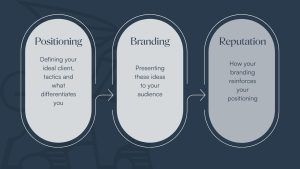
Real-World Impact: How Confusion Drives Clients to Competitors
When a potential client feels unsure about what your firm stands for, they hesitate. And hesitation in the digital world often means clicking the next Google result.
Brand confusion — like mixed messages, unclear services, or inconsistent design — makes it harder for clients to trust you. Without trust, there’s no inquiry, no consultation, and ultimately, no conversion.
Think of your brand as a decision-making shortcut. If your identity is clear, clients know who you are and what you stand for. If it’s muddy, they go elsewhere.
✔ Key Questions Answered
“What defines a law firm’s brand identity?”
A law firm’s brand identity is the full experience it delivers — across visuals, messaging, tone, values, and digital presence. It’s how clients recognize, trust, and remember your firm.
“How do clients perceive inconsistent legal branding?”
Inconsistent branding creates uncertainty and distrust. Clients may question your professionalism, attention to detail, or ability to represent them confidently in legal matters.
Summary: Brand Identity Is the Foundation of Legal Branding
Without a clearly defined and consistently communicated brand identity, even the most experienced law firm will struggle to stand out. Strategic branding is no longer a luxury for law firms — it’s your primary trust signal and competitive advantage.
Up next: We’ll explore the second critical mistake — relying on outdated, unprofessional visual identity — and why modern design matters more than ever in 2025.
Branding Mistake #2: Relying on Outdated, Unprofessional Visual Identity
How Outdated Logos, Fonts, and Colors Damage Credibility
Visual identity is often the first impression your law firm makes — and in a digital-first legal marketplace, clients judge your credibility based on how you look. Outdated logos, generic color schemes, and overused fonts signal a lack of innovation and attention to detail.
Imagine a potential client searching for a law firm specializing in tech or startups. If your brand still uses a serif-heavy logo from the early 2000s, you immediately appear behind the times, no matter how sharp your legal skills may be.
Your visual design should reflect:
- Professionalism
- Relevance
- Modernity
- Alignment with your target audience
Failing to update your logo and brand elements may suggest your firm isn’t evolving — which can be fatal in an industry where trust is tied to perceived competence.
The Psychological Impact of Visual Branding on Trust and Authority
Visual design is not just aesthetic — it’s psychological. Studies in neuromarketing have shown that color, typography, and layout subconsciously shape trust, memory, and perceived professionalism.
For law firms, specific design choices trigger very real emotional responses:
- Blue tones convey trust, dependability, and calmness (often used in family law and corporate firms).
- Red suggests strength or urgency (used carefully in litigation or criminal defense).
- Clean, minimal layouts signal clarity and transparency.
- Busy, outdated designs create tension or overwhelm.
Fact: It takes only 50 milliseconds (0.05 seconds) for users to form an opinion about your website design — and by extension, your firm.
This snap judgment often influences whether a client clicks deeper or bounces to another firm’s site.
Mobile-Friendly, Responsive Website Design as a Branding Pillar
A law firm website that isn’t optimized for mobile in 2025 is more than just a technical issue — it’s a branding failure. Your website is the core of your digital identity, and if it doesn’t load quickly, display clearly, or offer intuitive navigation on mobile, clients may see your firm as inaccessible or outdated.
Key elements of modern website branding include:
- Mobile responsiveness
- Fast load speeds (under 3 seconds)
- ADA accessibility
- Clean, scannable layout with plenty of white space
- Optimized CTAs (calls-to-action) that work across devices
Over 70% of legal service seekers access law firm websites via mobile devices — your branding must meet them where they are.
Inconsistencies Across Print, Digital, and Social Channels
One of the most common — and costly — visual branding mistakes is fragmentation across platforms. If your firm uses one logo on social media, a different style on your brochures, and yet another look on your website, clients experience confusion.
This lack of cohesion signals a lack of control. It also undermines brand recall — the more consistent your branding, the easier it is for clients to remember and trust you.
To avoid this:
- Create and follow a visual branding guide (logo usage, fonts, colors, imagery)
- Standardize templates for pitch decks, presentations, business cards, and brochures
- Align social media visuals with your core brand
Consistency in branding breeds confidence in your professionalism.
Best Practices for Modern, Professional Legal Branding
Modern legal branding doesn’t require flashy visuals — it requires intentional, refined, and user-focused design. Whether you’re refreshing an old identity or starting from scratch, here are essentials:
- Invest in professional logo design (vector-based, scalable, and timeless)
- Use a web-safe, modern font family (avoid Comic Sans or Times New Roman)
- Choose a limited color palette that aligns with your practice area
- Incorporate consistent icons, patterns, or design motifs
- Ensure all digital assets are optimized for high-res display
Consider working with a branding agency or legal marketing specialist to craft a visual identity that grows with your firm.
Key Questions Answered
“Can a law firm’s logo impact client trust?”
Yes. A logo is often the first visual signal of your firm’s professionalism. A clean, modern, and relevant logo builds immediate trust, while an outdated or poorly designed one can raise doubts about your credibility.
“Why does website design matter for legal branding?”
Your website is your firm’s digital storefront. A modern, responsive design demonstrates competence, authority, and attention to detail — all essential traits in building client trust and winning business.
Design Isn’t Decoration — It’s Communication
Your firm’s visual identity is a direct reflection of your values, expertise, and relevance. Outdated, inconsistent design sends the wrong message — that your firm isn’t evolving. In contrast, a cohesive, modern visual identity builds authority, creates connection, and establishes your brand as a trustworthy legal partner.
Branding Mistake #3: Underestimating the Power of Online Presence and Digital Reputation
Why Your Website is the Digital Reflection of Your Law Firm’s Brand
In 2025, your law firm’s website isn’t just a marketing tool — it’s your virtual office, lead generator, and brand ambassador. It’s where clients form their first impressions, evaluate your professionalism, and decide whether to contact you.
If your website looks outdated, loads slowly, or lacks clarity, clients may assume your legal services are equally disorganized or behind the times. In contrast, a well-designed website communicates authority, accessibility, and attention to detail — the very traits people seek in a lawyer.
Fact: 75% of users admit to judging a company’s credibility based solely on website design (Stanford University study).
Your website should align with your firm’s values and convey a strong sense of identity — whether that’s fierce advocacy, compassionate guidance, or sophisticated business counsel.
Overlooking SEO and Content as Essential Brand Builders
Search engine optimization (SEO) and branded content are often treated as marketing side projects — but they are foundational to brand perception.
When your firm consistently publishes helpful, original, and well-optimized content, it tells Google — and potential clients — that you’re:
- Knowledgeable in your legal niche
- Proactive in educating your audience
- Trustworthy enough to be visible in search rankings
Without SEO, even the best content goes unseen. And without content, your brand lacks depth. Blogs, FAQ pages, case studies, and explainer videos humanize your expertise, making you more than just a name on a business card.
Poor User Experience (UX) That Undermines Brand Perception
A clunky website structure, confusing navigation, or intrusive pop-ups frustrate users — and that frustration gets projected onto your brand. Poor UX signals that your firm doesn’t value the client journey, even before the first call or consultation.
Strong UX includes:
- Easy-to-read typography
- Clear navigation menus
- Mobile responsiveness
- Logical page hierarchy
- Fast page loads
These aren’t just technical features — they’re brand promises in action. A seamless UX experience implies you run an efficient, client-centered practice. A chaotic site? It suggests disorganization and poor communication.
Social Media Inactivity: The Silent Killer of Brand Awareness
When potential clients search your firm’s name and land on a silent or inactive social media profile, it sends the message: “This firm doesn’t care about engaging or updating.”
Inconsistent or absent social activity weakens visibility and credibility. On the other hand, even a basic, regular posting schedule (legal tips, case outcomes, community news, FAQs) builds:
- Brand familiarity
- Local visibility
- Emotional connection
Clients want to hire lawyers who are present, not invisible. Social media gives your brand a voice — ignoring it gives that voice to competitors.
Managing Online Reviews, Testimonials, and Third-Party Listings
What clients say about you online matters as much as what you say about yourself. Reviews, testimonials, and third-party listings (like Avvo, Google Business, and Yelp) are powerful tools for building — or breaking — your brand reputation.
Too many firms neglect reputation management, allowing negative reviews to go unanswered or positive ones to get buried. Actively monitoring and responding to reviews (professionally and empathetically) demonstrates:
- Client commitment
- Ethical standards
- Accountability
Encouraging satisfied clients to leave feedback also amplifies social proof, one of the strongest drivers of client trust in professional services.
Google’s E-E-A-T Influence on Your Law Firm’s Search Visibility
Google now prioritizes content that demonstrates E-E-A-T: Experience, Expertise, Authoritativeness, and Trustworthiness. For law firms, this means:
- Content written or reviewed by licensed attorneys
- Clear author bios and credentials
- Accurate legal information
- Secure, user-friendly websites
- Verified testimonials and case examples
E-E-A-T isn’t just about SEO — it’s about branding. If your digital footprint reflects these values, Google will reward you with visibility — and users will reward you with trust.
Key Questions Answered
“How does a law firm website influence client perception?”
Your website is your first impression. A clean, responsive, and well-branded site communicates professionalism and builds trust — while a cluttered or outdated one can drive clients away before they ever contact you.
“Why is online reputation critical for law firm branding?”
Online reviews, testimonials, and your presence across search engines and legal directories shape how prospective clients view your credibility. Managing your digital reputation shows clients you care about their experience and satisfaction.
Your Online Presence Is Your Brand in Action
Today’s legal clients evaluate your firm through what they see, read, and feel online. A poor digital presence isn’t just a missed opportunity — it’s a liability. By investing in a strong website, consistent content, SEO, UX, and reputation management, you control the narrative. In the digital era, your online presence is your brand.
Branding Mistake #4: Ignoring the Client Experience as a Core Branding Element
Client Experience = Brand Experience: The Overlooked Truth
When people think of branding, they often picture logos, taglines, and websites. But for law firms, the most powerful branding tool is how clients feel when interacting with your team — from the initial inquiry to the final resolution of their case.
Branding is not just about what you say; it’s about how you make people feel. And in law, the client experience is the brand.
Every phone call answered, every follow-up email sent, every in-person meeting held — these shape your firm’s reputation far more than any marketing campaign. When clients feel valued, heard, and respected, they associate those emotions with your brand. When the experience is cold, disorganized, or dismissive, they do the same — just in the opposite direction.

Communication Style as an Extension of Brand Voice
Your communication — verbal, written, and visual — is a direct reflection of your brand’s personality. Whether your tone is formal and authoritative or conversational and approachable, consistency across channels is key.
For example:
- Does your intake team reflect the same tone as your website?
- Are your legal updates written in plain language or dense legalese?
- Are your emails clear, empathetic, and timely?
A mismatch between your brand voice and your communication style creates disconnect and confusion. But when communication aligns with your values (e.g., transparency, accessibility, empathy), clients feel reassured and respected.
A responsive, respectful tone across all interactions reinforces brand trust — especially in high-stress legal scenarios.
Inconsistent Client Service Damaging Brand Promises
Many law firms invest in polished branding but fail to deliver an experience that matches the promise.
For example, if your brand markets your firm as “client-first,” but a prospect waits days for a callback, the brand promise is broken. If you claim “compassionate counsel,” but clients feel rushed or unheard, your brand becomes hollow.
Brand integrity means that every part of your client journey — onboarding, updates, billing, case closure — should live up to what your brand represents. Inconsistency between brand message and service delivery is often why clients leave negative reviews, even if the legal outcome was favorable.
Turning Positive Client Experiences into Brand Advocacy
One of the most overlooked brand assets is your satisfied clients.
Clients who had a smooth, respectful, and communicative experience are far more likely to:
- Leave positive reviews on Google, Yelp, or Avvo
- Refer friends and family to your firm
- Engage with your content online
But this doesn’t happen automatically. You must proactively ask for testimonials, share success stories (anonymized when necessary), and make space for clients to advocate for your brand.
💬 “People don’t remember exactly what you said — they remember how you made them feel.” That emotional imprint is your brand in action.
Importance of Follow-Up, Feedback Loops, and Client Loyalty
Branding doesn’t end when the case does. One of the most professional things a law firm can do is follow up post-case to check on outcomes, satisfaction, or simply to say thank you. This simple act reinforces care — a core brand value for many legal practices.
Building a feedback loop (via surveys, emails, or calls) also helps you:
- Identify service gaps
- Improve future interactions
- Uncover potential new service areas
And perhaps most importantly, follow-ups turn clients into loyalists who return for future legal needs and act as ongoing brand ambassadors.
Key Questions Answered
“How does client service impact law firm branding?”
Client service is branding. Every interaction shapes your brand’s reputation — good or bad. A professional, respectful experience builds trust, while poor service undermines even the best marketing efforts.
“Can law firms build their brand through better client experience?”
Absolutely. Positive, consistent, and caring client experiences create memorable impressions that lead to referrals, glowing testimonials, and lasting loyalty — all of which strengthen your brand in meaningful, measurable ways.

Service Is Not Separate from Branding — It Is Branding
Too many law firms treat branding and client service as separate entities. In reality, your client experience is the most powerful expression of your brand. No design or slogan can outweigh how clients feel after working with you.
By aligning your communications, living up to your brand promises, and turning great service into advocacy, you’re not just delivering results — you’re building a brand that lasts.
Branding Mistake #5: Failing to Build Thought Leadership and Brand Authority
The Direct Link Between Legal Expertise and Brand Strength
Law is an expertise-driven profession, and branding that fails to showcase this expertise misses a critical opportunity. Clients don’t just choose firms based on practice areas — they gravitate toward firms that position themselves as trusted authorities in their domain.
Thought leadership is the bridge between legal expertise and brand strength. When your firm consistently demonstrates deep understanding, strategic insight, and original thinking, you move from being just another firm to becoming the go-to expert in your niche.
In branding terms, thought leadership humanizes your authority. It turns experience into influence.
Missing Opportunities to Publish Authoritative Content
One of the most common branding gaps in law firms is failing to regularly publish authoritative content. Blogs, white papers, legal guides, podcast interviews, webinars — these formats allow your firm to showcase knowledge in ways that:
- Build trust with potential clients
- Signal expertise to search engines (boosting SEO)
- Attract media, backlinks, and speaking invitations
Unfortunately, many firms either don’t prioritize content or they publish generic, shallow material that doesn’t reflect their true capabilities.
Stat: Content marketing generates three times more leads than paid search — at a fraction of the cost (Content Marketing Institute).
Publishing real insights on relevant legal topics not only educates your audience — it elevates your brand above competitors who stay silent or generic.
Underutilizing PR, Awards, and Media as Brand Builders
Legal professionals often see PR and awards as vanity projects — but in branding, they are high-value trust signals.
A well-placed mention in an industry publication, a guest expert appearance on local TV, or a Legal 500 award can:
- Amplify your brand’s visibility
- Increase backlinks and SEO authority
- Instantly boost credibility in the eyes of clients
These recognitions act as external validation of your expertise. If your competitors are winning awards or being quoted in the media — and you’re not — you risk being perceived as less influential, even if your work is equally strong.
Pro tip: Submit to awards. Partner with PR professionals. Build relationships with local journalists. These efforts compound over time to build brand equity.
Inconsistent Personal Branding of Key Attorneys and Partners
Even if your firm has a clear brand, that consistency often breaks down at the individual level. When partners and attorneys use conflicting bios, visual styles, or messaging, it creates brand fragmentation.
Clients today Google individual lawyers as often as the firm itself. If your key professionals have outdated LinkedIn profiles, lack online presence, or aren’t positioned as experts, you miss critical branding opportunities.
Encourage and support:
- Personal LinkedIn content that reflects the firm’s voice
- Consistent bios and photos across all platforms
- Involvement in community or thought leadership forums
A cohesive brand is strengthened when your team is branded as well as your firm.
Leveraging Educational Content to Earn Trust and Authority
People hire lawyers because they don’t understand the legal landscape — and they turn to firms that help them make sense of it.
Educational content like:
- FAQs about legal processes
- Step-by-step legal guides
- Case scenario explainers
- Plain-language blog articles
… helps bridge the gap between uncertainty and trust. It positions your firm not just as knowledgeable, but as generous with your knowledge — a key branding advantage.
This content also supports Google’s E-E-A-T principles (Experience, Expertise, Authoritativeness, Trustworthiness), improving your SEO and online discoverability.
Key Questions Answered
“How do law firms establish themselves as trusted authorities?”
By consistently publishing original insights, winning recognitions, speaking publicly, and building a strong digital presence for both the firm and individual attorneys. Authority is earned through education, presence, and visibility.
“Does content marketing help build law firm brand authority?”
Yes. Content marketing is one of the most effective ways to demonstrate expertise, improve visibility, and foster trust — all essential components of long-term brand authority.
Expertise Alone Isn’t Enough — You Must Show It
Thought leadership is not about showing off — it’s about showing up consistently with valuable insight. Clients, peers, media, and search engines all look for brands that educate, inform, and contribute.
If your firm hides its brilliance behind outdated web pages or avoids the spotlight, you give the advantage to firms that actively shape their brand through leadership.
Bonus: Overcoming Branding Challenges Unique to Law Firms
Navigating Legal Advertising Regulations While Building a Brand
Unlike businesses in most industries, law firms must operate within strict legal advertising regulations that vary by jurisdiction. Bar associations often restrict claims of specialization, success rates, or guarantees — making it difficult to use traditional marketing language.
But that doesn’t mean branding is off-limits. In fact, it means branding must be more intentional, ethical, and precise.
Smart firms build trust by:
- Emphasizing expertise without exaggeration
- Using client testimonials compliantly
- Focusing on service quality, value delivery, and empathy
- Avoiding superlatives like “best” or “most successful” unless verifiable
Tip: Work closely with compliance teams or legal marketing consultants to ensure your brand messaging remains within ethical guidelines while still resonating with clients.
Aligning Traditional Legal Culture with Modern Brand Expectations
Many law firms are rooted in tradition, hierarchy, and conservative communication — yet today’s clients expect brands to be human, transparent, and engaging. This culture clash is one of the biggest internal obstacles to modern branding.
It’s not about abandoning professionalism — it’s about modernizing the way professionalism is expressed. This could mean:
- Replacing stiff, formal website language with client-friendly copy
- Offering more visual storytelling and less legal jargon
- Bringing attorneys’ personalities to the forefront in bios and videos
- Being present on platforms like LinkedIn or even Instagram (for the right audience)
Modern legal branding respects tradition, but speaks in the language and format that clients expect in a digital world.
Balancing Personal Lawyer Brands with Firm-Wide Branding
Clients increasingly choose attorneys, not just firms. This creates a challenge: how do you allow partners and associates to cultivate strong personal brands — without overshadowing the firm’s identity?
The key lies in harmonization:
- Create brand guidelines that allow flexibility within a shared identity
- Encourage attorneys to post thought leadership or commentary that aligns with firm values
- Standardize visual assets (headshots, bios, titles) while allowing personal expression
- Ensure that LinkedIn activity and media appearances link back to the firm
Rather than suppressing individuality, strong firms support personal branding as a strategic asset — creating a cohesive ecosystem where individual credibility enhances the firm’s authority.
Building Brand Consistency Across Multiple Offices or Practice Areas
If your firm operates in multiple cities or spans several legal disciplines, brand dilution becomes a risk. Without consistency, each office or department may drift in tone, message, or identity — weakening overall recognition.
To protect and scale your brand, implement:
- A unified brand style guide (voice, visuals, messaging)
- Clear protocols for localizing content without fragmenting brand voice
- Shared values, mission, and UVPs that transcend office locations
- A centralized marketing or brand manager to oversee coherence
A law firm with ten locations should still feel like one unified brand, not ten separate identities. That cohesion builds familiarity, trust, and recall.
Branding Law Firms Requires Strategy, Sensitivity, and Structure
Legal branding isn’t a plug-and-play process. It comes with unique constraints — from advertising ethics to cultural inertia — that make it more nuanced than other industries.
But the firms that succeed do so by:
- Understanding the rules while using creative strategy
- Evolving internal mindsets to embrace modern branding
- Empowering attorneys to be brand ambassadors
- Unifying their message across every location and channel
Branding in law isn’t impossible — it’s just different. And when done right, it becomes a major competitive edge.
Expert Tips: How to Build a Memorable, Trustworthy Law Firm Brand
Conducting a Comprehensive Brand Audit
Before you can build a memorable brand, you must understand how your current brand is perceived. That starts with a comprehensive brand audit — a structured assessment of how your law firm’s identity, voice, design, and messaging are experienced by both clients and team members.
Key elements to review:
- Website design, UX, and content clarity
- Social media presence and consistency
- Client touchpoints (emails, intake forms, voicemail greetings)
- Internal alignment around firm values and brand messaging
- Online reviews and public sentiment
A brand audit reveals blind spots, inconsistencies, and outdated perceptions that can dilute your authority. It also shows what’s working — so you can double down on strengths. Ideally, audits should be conducted annually or after major changes (rebrands, mergers, new markets).
A strong brand starts with awareness of your current brand reality — not just your aspiration.
Aligning Your Firm’s Mission, Culture, and Public-Facing Identity
Your brand must reflect who you really are — not just who you think clients want to see. That’s why brand-building starts from the inside out. There must be harmony between:
- What you believe (mission & values)
- How your team behaves (culture & service delivery)
- What the outside world sees (website, marketing, communications)
When these three areas are misaligned — for example, a firm claims to be “client-first” but ignores feedback — the brand loses credibility.
Steps to align brand and culture:
- Define your firm’s mission and core values clearly
- Involve team members in living those values daily
- Embed brand messaging into internal training, not just marketing materials
- Showcase firm culture and impact authentically through content
A brand that’s internally aligned is easier to scale, easier to believe in, and harder to compete with.
Investing in Professional Branding Resources and Expertise
Law firm branding is too important to be treated as a DIY project or an afterthought. While internal teams can own brand strategy, bringing in professional support ensures quality, objectivity, and long-term impact.
Key areas worth professional investment:
- Logo and brand identity design
- Website UX and development
- Brand style guide creation
- SEO and legal content strategy
- Visual assets (photos, videos, explainer graphics)
- PR and reputation management
A professional branding agency with legal industry experience can help you avoid compliance missteps while positioning your firm for growth, authority, and market differentiation.
Firms that consistently invest in branding often command higher fees, attract better clients, and experience stronger referrals.
Measuring Brand Effectiveness and Client Perception Over Time
You can’t manage what you don’t measure. Once your brand is in place, it’s crucial to track how well it’s working — both in performance metrics and emotional resonance.
Quantitative branding KPIs may include:
- Website engagement (bounce rates, time on site, conversions)
- SEO rankings for branded search terms
- Social media growth and engagement
- Review ratings and testimonial volume
- Client retention and referral rates
Qualitative feedback is equally important:
- Client satisfaction surveys post-case
- Team feedback on brand alignment and delivery
- Community or peer perceptions of your market position
Over time, you’ll identify what resonates, what needs refinement, and how your brand is growing in the minds of your audience.
Strong brands are measured, not just imagined — they evolve with data and direction.
From Ordinary Firm to Extraordinary Brand
A memorable, trustworthy law firm brand isn’t built by accident — it’s crafted with clarity, consistency, and commitment. By:
- Auditing your current brand experience
- Aligning internal culture with external identity
- Investing in professional expertise
- Measuring performance across channels
… your firm moves from simply being seen to being remembered and respected.
Frequently Asked Questions (FAQ) – PAA-Driven for High Search Visibility
Q1: What makes a law firm brand successful?
A successful law firm brand is one that is memorable, trustworthy, and aligned with the client’s needs and expectations. It goes beyond a logo or slogan — it’s the total experience a client has with your firm, from first impression to case closure.
Key factors include:
- A clearly defined unique value proposition (UVP)
- Consistent messaging and design across all platforms
- High-quality client experience at every touchpoint
- Credibility established through thought leadership and reviews
- Emotional resonance that builds loyalty and referrals
The most successful brands create a strong identity that reflects who they are, who they serve, and what sets them apart in a crowded legal market.
Q2: How often should a law firm update its branding?
A law firm should conduct a brand audit every 2–3 years and consider a significant update or refresh every 5–7 years — or sooner if:
- The firm enters a new market or practice area
- Competitor branding becomes more advanced
- The firm undergoes a leadership or cultural shift
- Digital performance and lead generation decline
Branding isn’t a one-time investment. Legal trends, design standards, and client expectations evolve — your brand should evolve too to remain relevant, modern, and competitive.
Regular updates ensure your brand reflects your current identity, services, and target audience.
Q3: What are the key branding elements for small law firms?
Small law firms often have tighter budgets, but strong branding is still achievable — and arguably even more important for local visibility and trust.
Core branding elements every small firm should prioritize:
- A professionally designed logo and visual identity
- A clear brand voice that matches your values (e.g., empathetic, assertive, approachable)
- A mobile-friendly, SEO-optimized website
- Consistent profiles across Google Business, Avvo, and social platforms
- Client-centric messaging that highlights trust, accessibility, and results
Small firms can stand out by being sharply focused, deeply personal, and highly consistent in how they present themselves.
Q4: How can lawyers build personal brands that support their firm?
Lawyers can become powerful brand assets by building their personal credibility online and offline, while staying aligned with the firm’s core brand.
Effective personal branding strategies include:
- Regularly posting legal insights or commentary on LinkedIn
- Speaking at industry events, webinars, or community panels
- Publishing articles, guides, or blog posts under their byline
- Keeping bios and photos consistent across platforms
- Highlighting personal values that resonate with target clients (e.g., advocacy for justice, commitment to family law, etc.)
When attorneys are visible and trusted individually, they naturally attract clients — and strengthen the firm’s overall brand authority.
Q5: Is online branding important for lawyers in competitive markets?
Yes — online branding is crucial for law firms operating in competitive or saturated markets. Most legal clients today start their search online, and how your firm appears across digital platforms can determine whether you’re considered — or ignored.
In high-competition regions or practice areas (e.g., personal injury, criminal defense), a strong online brand can:
- Improve Google search rankings through consistent SEO and content
- Distinguish your firm with a unique visual and messaging style
- Convert casual visitors into consultations with trust-building UX
- Defend against negative reviews or reputation risks
In today’s legal landscape, if you’re invisible online, you’re invisible to clients — no matter how talented your team is.
Branding Questions Reflect Branding Challenges
These FAQs represent what law firm clients — and lawyers themselves — are asking every day. Strong branding answers these questions before they’re even asked, through design, tone, messaging, and client experience.
Stay proactive, stay strategic, and treat branding as a continuous dialogue with your audience — not a static asset.
Conclusion: Branding as a Long-Term Asset for Law Firm Growth
Recap of the Most Damaging Branding Mistakes to Avoid
In a profession built on trust, credibility, and precision, your law firm’s brand is more than a visual—it’s a promise. And when that promise is misaligned, unclear, or outdated, it creates friction with potential clients long before you ever speak with them.
Throughout this blog, we explored the top five branding mistakes law firms must avoid:
- Operating Without a Clear Brand Identity
Firms that don’t define or consistently communicate their values and differentiators leave clients confused—and confusion kills conversions. - Relying on Outdated, Unprofessional Visual Identity
If your brand looks like it hasn’t evolved in 10 years, clients will assume the same of your legal practices. - Underestimating the Power of Online Presence and Digital Reputation
Your website, content, and online reviews shape first impressions. Neglecting them weakens your visibility and trust. - Ignoring the Client Experience as a Branding Element
Service is the brand. Every interaction—email, call, meeting—is a branding opportunity won or lost. - Failing to Build Thought Leadership and Brand Authority
Expertise only matters if it’s seen. Lawyers who don’t share insights or position themselves as authorities miss out on brand equity.
Avoiding these pitfalls isn’t about perfection — it’s about intentionality. Smart law firms don’t leave branding to chance; they build it deliberately and evolve it consistently.
Why Consistent, Professional Branding Attracts More Qualified Clients
The legal industry is increasingly commoditized online. Hundreds of firms compete for attention in every major city and practice area. What separates those who attract high-quality leads from those who don’t?
It’s not always pricing or years of experience — it’s often perception.
Strong branding:
- Filters for fit. It attracts the right types of clients who resonate with your values, expertise, and communication style.
- Elevates perceived value. Clients are willing to pay more for firms they perceive as premium and authoritative.
- Shortens the sales cycle. When branding aligns with client expectations, decision-making becomes easier.
- Drives loyalty and referrals. People remember firms that left an impression — not just those who delivered results.
Remember: Your brand is speaking to clients even when you’re not. Make sure it’s saying the right things.
Final Thoughts on Future-Proofing Your Law Firm’s Brand Identity
In the next five years, law firm competition will increase, client behavior will become even more digitally driven, and artificial intelligence will redefine how people seek legal information. The firms that build durable, memorable, and client-centered brands now will be better equipped to thrive — not just survive.
Here’s how to start future-proofing today:
- Schedule a brand audit and gather internal and external feedback
- Revisit your mission, visual identity, and digital presence
- Develop a consistent voice and experience across all client touchpoints
- Create and distribute valuable content that showcases your expertise
- Empower your attorneys and staff to be brand ambassadors
Great branding isn’t about being flashy — it’s about being clear, consistent, and client-focused. When done right, it becomes one of your most powerful business assets, influencing who finds you, how they feel about you, and whether they choose to work with you.
Final Line:
Your firm’s brand is not just what you look like — it’s how you’re remembered. Make it count.