
In today’s digital age, education websites play a crucial role in connecting students, parents, educators, and administrators. They not only serve as hubs of information but also as platforms for interaction and learning. Designing an education website that’s both visually appealing and highly functional can be a game-changer for institutions. In this blog, we’ll dive into the detailed scope of work for designing the best education websites, explore the essential features to have, and review examples of top education websites in Malaysia.
What Makes a Great Education Website?
A well-designed education website should be user-friendly, highly functional, and engaging. It needs to cater to a diverse set of users, including students looking for courses, parents checking progress reports, and teachers managing classrooms. The website should also be mobile-responsive and secure, ensuring data privacy for all users.
Project Overview
The goal is to create an education website that offers a seamless experience for all stakeholders. The site should feature course listings, learning resources, and communication tools, all while maintaining scalability and adaptability for future growth. Advanced features like virtual classrooms and personalized dashboards should be incorporated to enhance user engagement.
Key Features of the Best Education Websites
Homepage Design & Structure
The homepage serves as the first point of contact for users. It must reflect the institution’s values and offerings immediately.
Key Homepage Features
- Hero Section: A prominent visual banner with calls-to-action (CTAs) like “Apply Now” or “Explore Courses.”
- Interactive Navigation: A sticky header with clearly defined sections such as Admissions, Programs, Faculty, and Contact.
- Quick Links: Shortcuts to popular pages, such as the student portal, events calendar, or campus tours.
- News & Announcements: A dedicated space for institutional updates, upcoming events, and achievements.
- Featured Programs: Showcase key courses or newly launched programs to grab the attention of prospective students.
Course Catalog & Management System
The course catalog is the heart of an educational website, especially for universities or training centers.
Key Features
- Searchable Course Listings: Filterable by subject, level, course length, and enrollment deadlines.
- Detailed Course Pages: Each course should have its own page outlining the syllabus, instructor profiles, duration, prerequisites, and enrollment options.
- Seamless Enrollment Process: Integrated forms and payment gateways for easy registration.
Student Dashboard & User Profiles
A personalized dashboard is vital for student engagement and progress tracking.
Key Features
- Custom Profiles: Students should be able to manage their own profiles, view grades, and track course progress.
- Assignment Submission: A streamlined process for uploading assignments and accessing deadlines.
- Progress Tracking: Visual progress bars showing how far students have come in their courses.
- Resource Downloads: Easy access to e-books, lecture notes, and multimedia content.
Virtual Classroom Integration
With the rise of online learning, virtual classrooms are a must-have feature for modern education websites.
Key Features
- Video Conferencing: Integrate platforms like Zoom or Google Meet for live sessions.
- Live & Recorded Classes: Record live lectures and upload them for later viewing.
- Discussion Forums: Real-time and asynchronous discussions to enhance learning engagement.
Parent Portal
For K-12 education websites, parent involvement is key. A dedicated parent portal can foster stronger communication between parents and the school.
Key Features
- Progress Reports: Parents should be able to access academic performance and attendance records.
- Fee Payment System: Secure online payment portals for tuition and other school-related fees.
- Messaging System: Direct communication between parents and educators.
Educator Tools
Teachers need user-friendly tools to manage their classrooms and content efficiently.
Key Features
- Content Management: Teachers can upload and update course materials, distribute assignments, and create quizzes.
- Grading Tools: An automated grading system that updates student dashboards in real-time.
- Teacher-Student Messaging: Built-in messaging to facilitate communication between teachers and students.
Admin Panel & Content Management System (CMS)
An intuitive admin panel allows institutions to update and manage content without technical knowledge.
Key Features
- CMS: Admins should be able to publish new content, edit pages, add courses, and manage users with ease.
- User Role Management: Assign different access levels for students, parents, teachers, and administrators.
- Analytics: Provide insight into website traffic, course enrollments, and user activity for better decision-making.
Mobile Responsiveness
With many users accessing websites via mobile devices, ensuring that the site is fully responsive is essential.
Key Features
- Mobile-Optimized Design: Ensure the design adjusts for smartphones and tablets without compromising functionality.
- Touch-Friendly Navigation: Buttons and forms must be easily usable on touchscreens.
SEO & Performance Optimization
To ensure the education website is easily discoverable, it needs to be optimized for search engines.
Key Features
- Search Engine Optimization (SEO): Include meta tags, alt text for images, and optimized heading structures to improve search rankings.
- Fast Loading Speeds: Optimized performance ensures a positive user experience and higher search engine rankings.
Security & Data Protection
Given the sensitive nature of the data, from student records to payment information, security is a priority.
Key Features
- SSL Encryption: Secure all transactions and user interactions.
- Multi-Factor Authentication (MFA): Add layers of security for students, parents, and educators to prevent unauthorized access.
- Regular Backups: Ensure data is regularly backed up to prevent data loss.
Best Education Website Design Examples in Malaysia
When it comes to educational websites in Malaysia, several institutions stand out for their modern design, user-friendly interface, and advanced functionalities. Here are five examples of the best education websites in Malaysia:
1. Taylor’s University
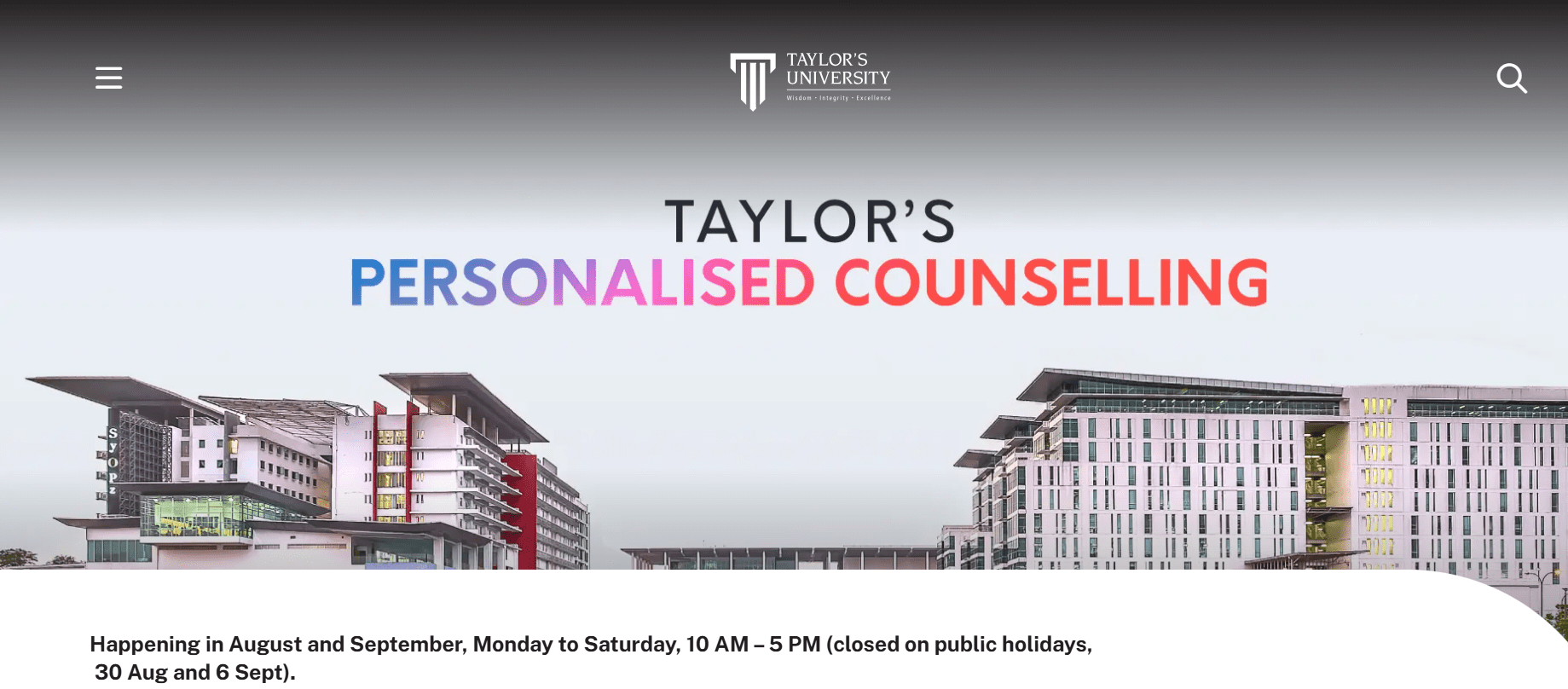
Website: www.university.taylors.edu.my
Features:
- Well-structured course catalog with detailed descriptions.
- Seamless registration and user-friendly student portals.
- Interactive news section and clear navigation.
Review: Taylor’s University sets the standard for educational websites with its visually appealing design, easy-to-use features, and clear structure. The responsiveness across devices makes it ideal for a wide range of users.
2. Monash University Malaysia
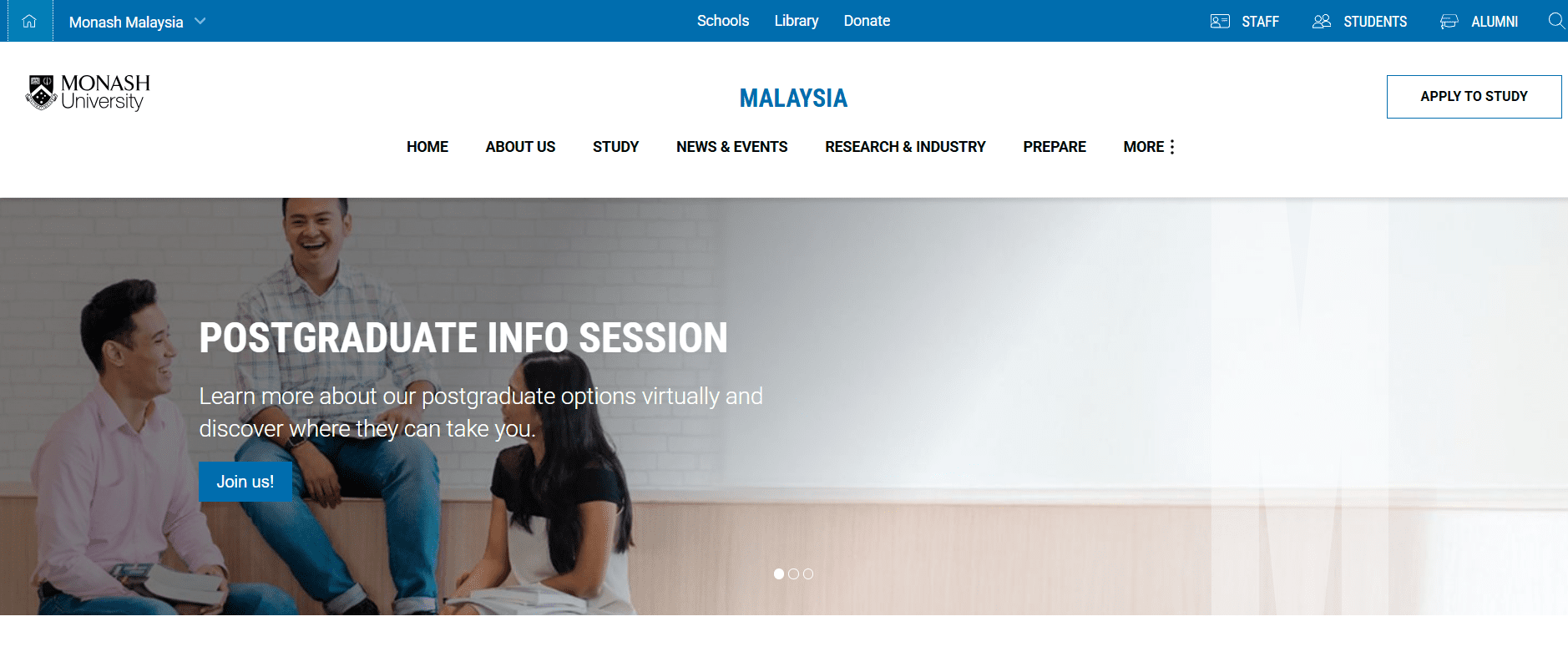
Website: www.monash.edu.my
Features:
- Interactive homepage with a course finder and event announcements.
- Integration with Moodle for course management.
- Clean design with efficient navigation.
Review: Monash University Malaysia delivers a robust, user-friendly experience, offering easy access to courses and academic resources, making it a great example for other universities.
3. Sunway University
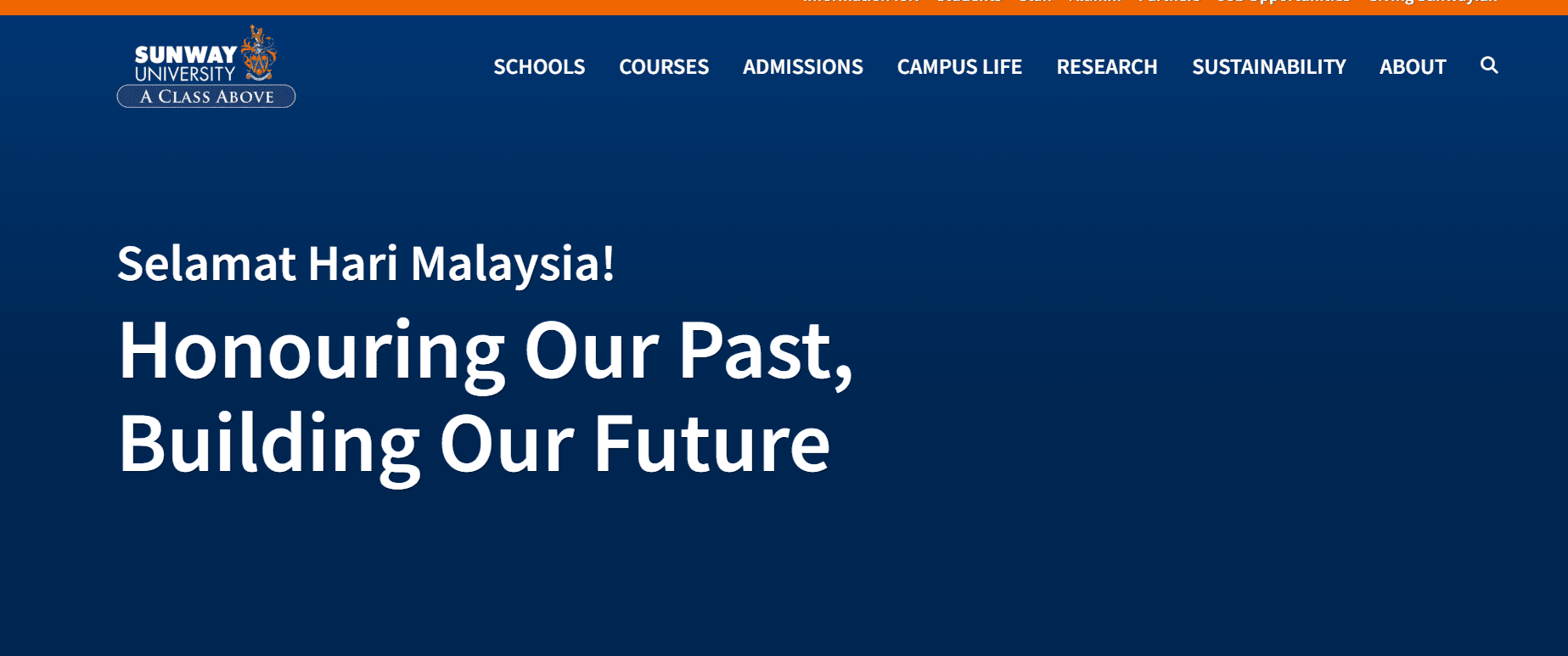
Website: www.university.sunway.edu.my
Features:
- Visually engaging homepage with clear CTAs and a virtual campus tour.
- Detailed program pages and an interactive course search feature.
- Parent and student portals for easy access to resources and progress reports.
Review: Sunway University’s website is a blend of form and function, offering users an intuitive experience with advanced features for both students and parents.
4. HELP University
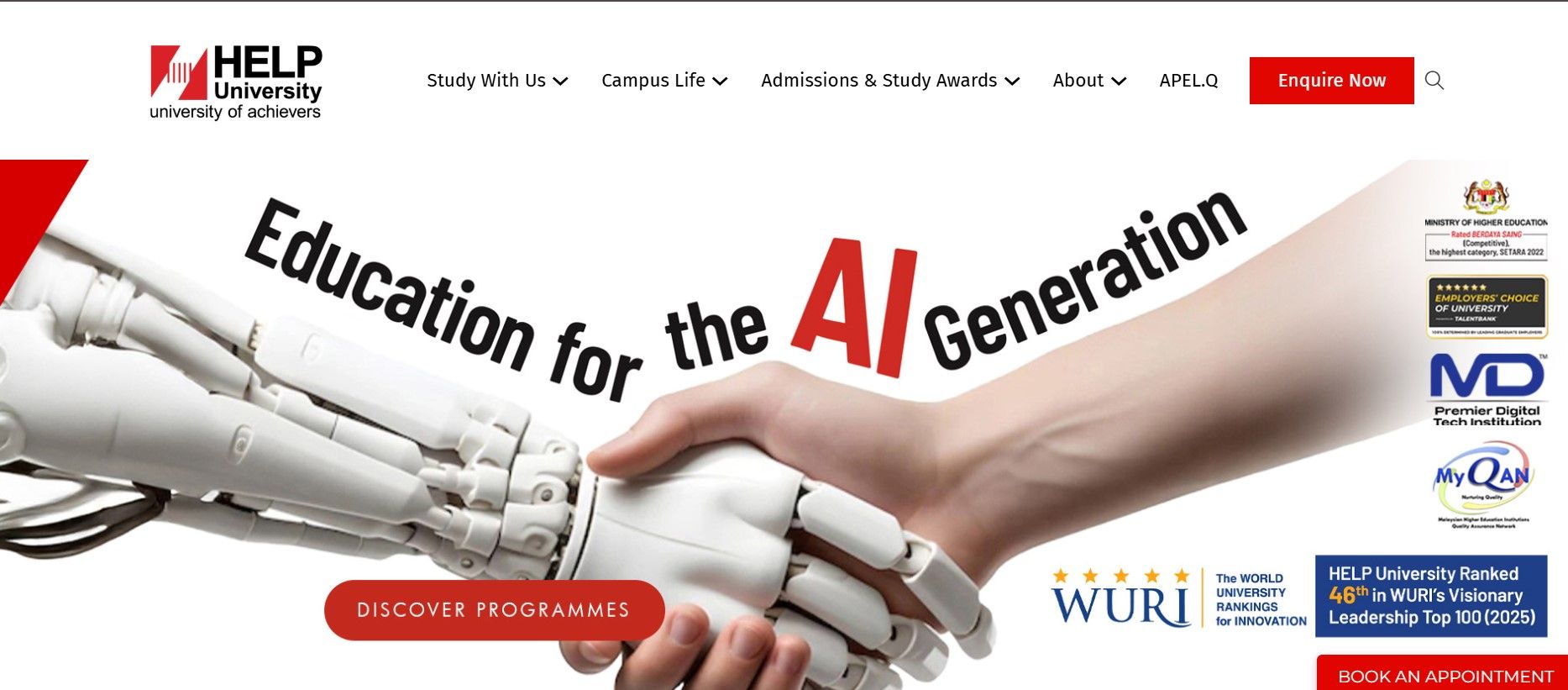
Website: www.university.help.edu.my
Features:
- Comprehensive course listings and testimonials.
- Interactive campus maps and online application forms.
- Secure payment gateways for fee transactions.
Review: HELP University’s website is highly functional, making it easy for prospective students to find the information they need and apply online.
5. University of Malaya

Website: www.um.edu.my
Features:
- Modern design with dedicated sections for admissions, research, and news.
- Fully responsive across devices with intuitive navigation.
- Blog section with academic resources and insights.
Review: The University of Malaya’s website stands out for its well-organized content and high level of responsiveness, providing a great user experience across platforms.
Conclusion
A great education website is a perfect blend of design, functionality, and security. From detailed course management systems and student dashboards to responsive designs and strong security measures, the best education websites cater to a wide variety of users while maintaining a clean and modern look. By incorporating these essential features and learning from the best examples in Malaysia, institutions can provide an outstanding digital experience for their students, parents, and educators.
